+852 46135220

I. Understanding Water Pollution Control Strategies
1. Heavy Metal Pollution Control
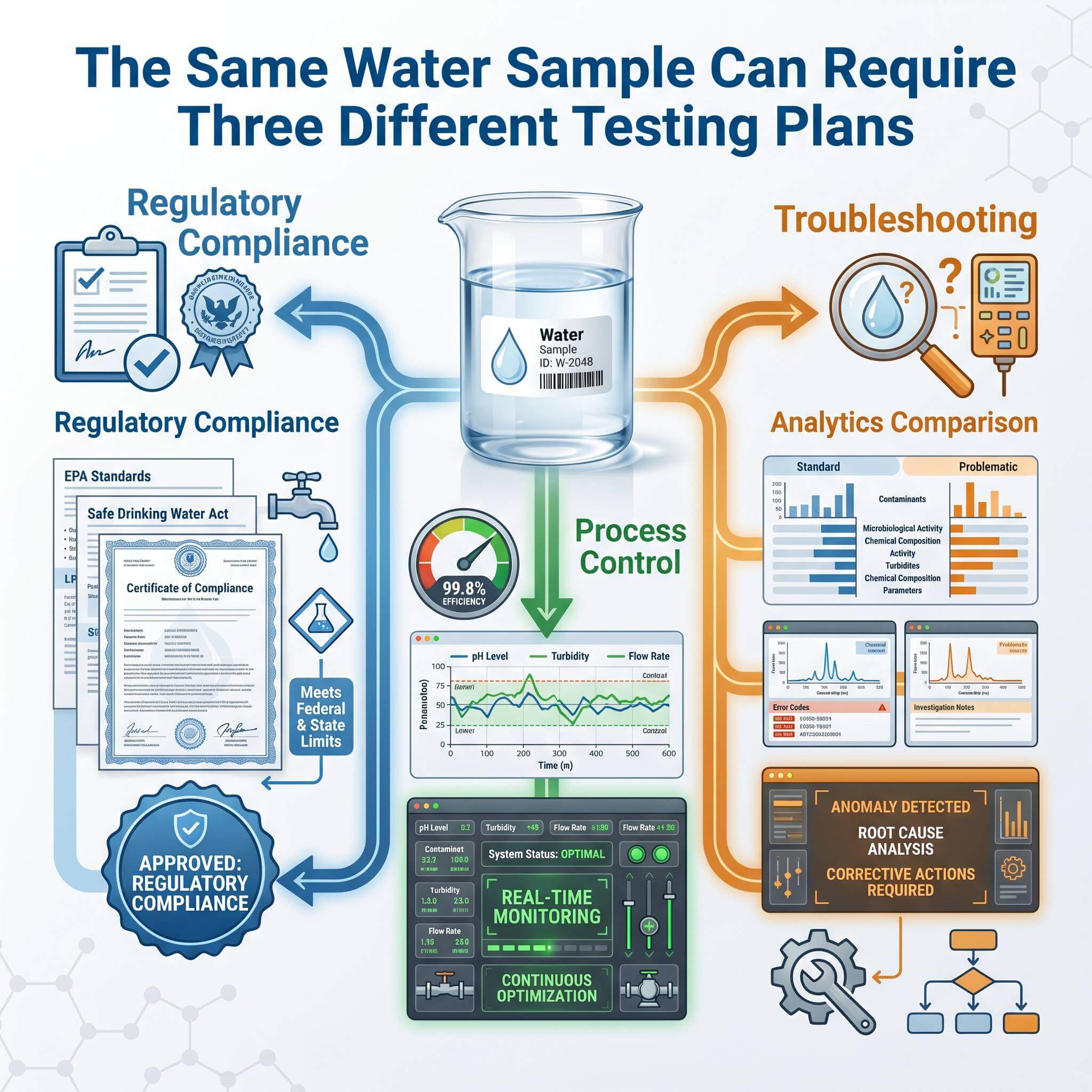
Water pollution caused by heavy metals discharged from industries such as metallurgy, electroplating, petrochemicals, and machinery manufacturing was among the earliest environmental issues recognized for its serious impacts on human health and ecosystems. Environmental protection efforts initially focused on controlling heavy metal contamination in water bodies, and enterprises discharging industrial wastewater with heavy metals are now required to implement treatment measures. At present, heavy metal pollution is generally under control by industrial wastewater. Concentrations of heavy metals in most water environments meet regulatory standards, although occasional exceedances may still occur in specific periods or localized river sections.
2. Control of Oxygen-Consuming Organic Pollution and Eutrophication
Most water systems suffer from varying degrees of pollution by oxygen-consuming organic substances. Key indicators such as CODMn, COD, BOD₅, ammonia nitrogen, volatile phenols, and mineral oils frequently exceed regulatory limits. In lakes, reservoirs, and coastal waters, total nitrogen (TN) and total phosphorus (TP) concentrations are often elevated. Under certain meteorological conditions, excessive nutrients can lead to algal blooms in lakes and reservoirs and red tides in marine environments. Therefore, controlling oxygen-consuming organic pollution and preventing eutrophication have become central priorities in water quality protection. Comprehensive control strategies include industrial structure optimization, promotion of cleaner production technologies, construction of treatment facilities, and non-point source pollution management.
3. Control of Trace and Emerging Organic Pollutants
Many countries are now facing challenges related to trace organic pollutants. After addressing conventional organic pollution, regulatory focus has shifted toward trace and ultra-trace toxic organic contaminants. Although present at low concentrations, these substances may exhibit carcinogenic, mutagenic, teratogenic, endocrine-disrupting, reproductive, and chronic toxic effects. To protect public health, significant resources have been invested in developing monitoring systems for trace organic pollutants. This includes establishing analytical methodologies, conducting environmental surveys, identifying pollution sources, formulating regulations and standards, strengthening regulatory oversight, and preparing for long-term pollution control.
II. Integrated Water Quality Monitoring and Assessment
A water body is a natural integrated system consisting not only of water itself, but also suspended solids, sediments, and aquatic organisms. Comprehensive monitoring and evaluation of a water system must therefore include:
l Aqueous phase (water column),
l Solid phase (suspended matter and sediments),
l Biological phase (aquatic organisms).
Only through integrated analysis can accurate and complete conclusions be drawn. For example, certain heavy metals entering a water system may rapidly hydrolyze and precipitate into sediments, resulting in low dissolved concentrations. Sediment analysis can therefore provide valuable insights into historical pollution trends and overall contamination levels.
III. Development of Water Quality Monitoring Technologies
(A) Inorganic Pollutant Monitoring Technologies
Early water pollution investigations focused on substances such as mercury (Hg), cadmium (Cd), cyanide, phenols, and hexavalent chromium (Cr⁶⁺), primarily using spectrophotometric methods. With the expansion of environmental monitoring requirements, more advanced and highly sensitive analytical instruments and methods have been rapidly developed.
1. Atomic Absorption and Atomic Fluorescence Spectrometry
Flame atomic absorption spectrometry (FAAS), hydride generation AAS, and graphite furnace AAS have been widely developed and can determine most trace and ultra-trace metal elements in water.
2. ICP-OES (ICP-AES) for Multi-Element Analysis
ICP-AES means Inductively Coupled Plasma Atomic Emission Spectrometry. It has developed rapidly in recent years and is widely used for multi-element analysis in clean water matrices, wastewater, sediments, and biological samples. Its sensitivity and accuracy are comparable to FAAS, while offering significantly higher efficiency, allowing simultaneous determination of 10–30 elements from a single sample injection.
3. ICP-MS for Ultra-Trace Metal Detection
ICP-MS means Inductively Coupled Plasma Mass Spectrometry. It uses ICP as an ionization source and provides sensitivity that is 2–3 orders of magnitude higher than ICP-AES, particularly for elements with atomic masses above 100. Detection limits are significantly lower. In Japan, ICP-MS has been adopted as a standard method for determining Cr⁶⁺, Cu, Pb, and Cd in water.
4. Ion Chromatography for Anions and Cations
Ion chromatography is a modern technique for separating and determining common anions and cations in water with high selectivity and sensitivity. Using conductivity detection and anion columns, ions such as F⁻, Cl⁻, Br⁻, NO₂⁻, SO₃²⁻, SO₄²⁻, H₂PO₄⁻, and NO₃⁻ can be analyzed. Cation columns enable determination of NH₄⁺, K⁺, Na⁺, Ca²⁺, and Mg²⁺. Electrochemical detectors can further measure I⁻, S²⁻, CN⁻, and certain organic compounds.
5. Spectrophotometry and Flow Injection Analysis (FIA)
Spectrophotometric methods based on highly sensitive and selective color reactions remain widely used in routine monitoring. When combined with flow injection analysis, operations such as distillation, extraction, reagent addition, color development, and measurement can be integrated into a single automated process.
This technology is extensively applied in laboratory automation and online water quality monitoring systems. It offers advantages including low sample consumption, high precision, rapid analysis, and reduced reagent usage. Parameters such as NO₃⁻, NO₂⁻, NH₄⁺, F⁻, CN⁻, CrO₄²⁻, Ca²⁺, Mg²⁺, Pb²⁺, Zn²⁺, Cu²⁺, and Cd²⁺ can be analyzed using FIA, with detectors including spectrophotometric, atomic absorption, and ion-selective electrodes.
6. Speciation and Valence State Analysis
Pollutants may exist in different chemical forms in aquatic environments, exhibiting vastly different toxicities and ecological impacts. For example:
l Cr⁶⁺ is more toxic than Cr³⁺
l As³⁺ is more toxic than As⁵⁺
l NO₂⁻ is more toxic than NO₃⁻
l Methylmercury (CH₃Hg⁺) is more toxic than inorganic mercury
Water quality standards often specify measurements for different species, such as total mercury vs. alkyl mercury, hexavalent chromium vs. total chromium, and different nitrogen forms. In environmental research, speciation analysis is essential for understanding pollutant transport, transformation, redox processes, and biological methylation.
(B) Organic Pollutant Monitoring Technologies
1. Monitoring of Oxygen-Consuming Organic Matter
Comprehensive indicators such as CODMn, CODCr, BOD₅, TOC, and TOD are commonly used to assess organic pollution and wastewater treatment efficiency. Although correlated, these parameters have distinct physical meanings and cannot replace one another due to variability in organic composition.
2. Category-Based Monitoring of Organic Pollutants
Category monitoring provides a practical screening approach. If abnormal results are detected, further compound-specific analysis can be performed. For example, if AOX exceeds limits, GC-ECD can be used to identify specific halogenated hydrocarbons and assess toxicity and sources.
3. VOC and Semi-VOC Analysis by GC-MS
l GC-MS with purge-and-trap for VOCs
l GC-MS with liquid–liquid extraction or SPME for semi-VOCs
l GC detectors such as FID, ECD, NPD, and PID
l HPLC with UV or fluorescence detectors for PAHs, phenols, phthalates, aldehydes, and ketones
4. Total Emission Monitoring Control
Total Emission Monitoring Control typically measure parameters such as temperature, color, turbidity, dissolved oxygen, pH, conductivity, CODMn, CODCr, TN, TP, and ammonia nitrogen. These parameters are routinely measured in environmental laboratories using digestion instruments combined with spectrophotometers water quality analyzers, and electrochemical meters. Such monitoring technologies are widely applied in drinking water treatment plants, wastewater treatment facilities, and environmental monitoring agencies.
Large industrial enterprises are required to install standardized discharge outlets, flow measurement devices, and online continuous monitoring instruments to verify pollutant discharge loads.
5. Rapid Monitoring for Water Pollution Emergencies
Emergency monitoring methods include:
Portable instruments: portable DO meters, pH meters, GC, FTIR
Rapid test kits and detection tubes: H₂S tubes, CODCr rapid test tubes, heavy metal test kits
Field sampling followed by laboratory analysis
IV. Recommended Laboratory Instruments for Water Pollution Monitoring
Applications
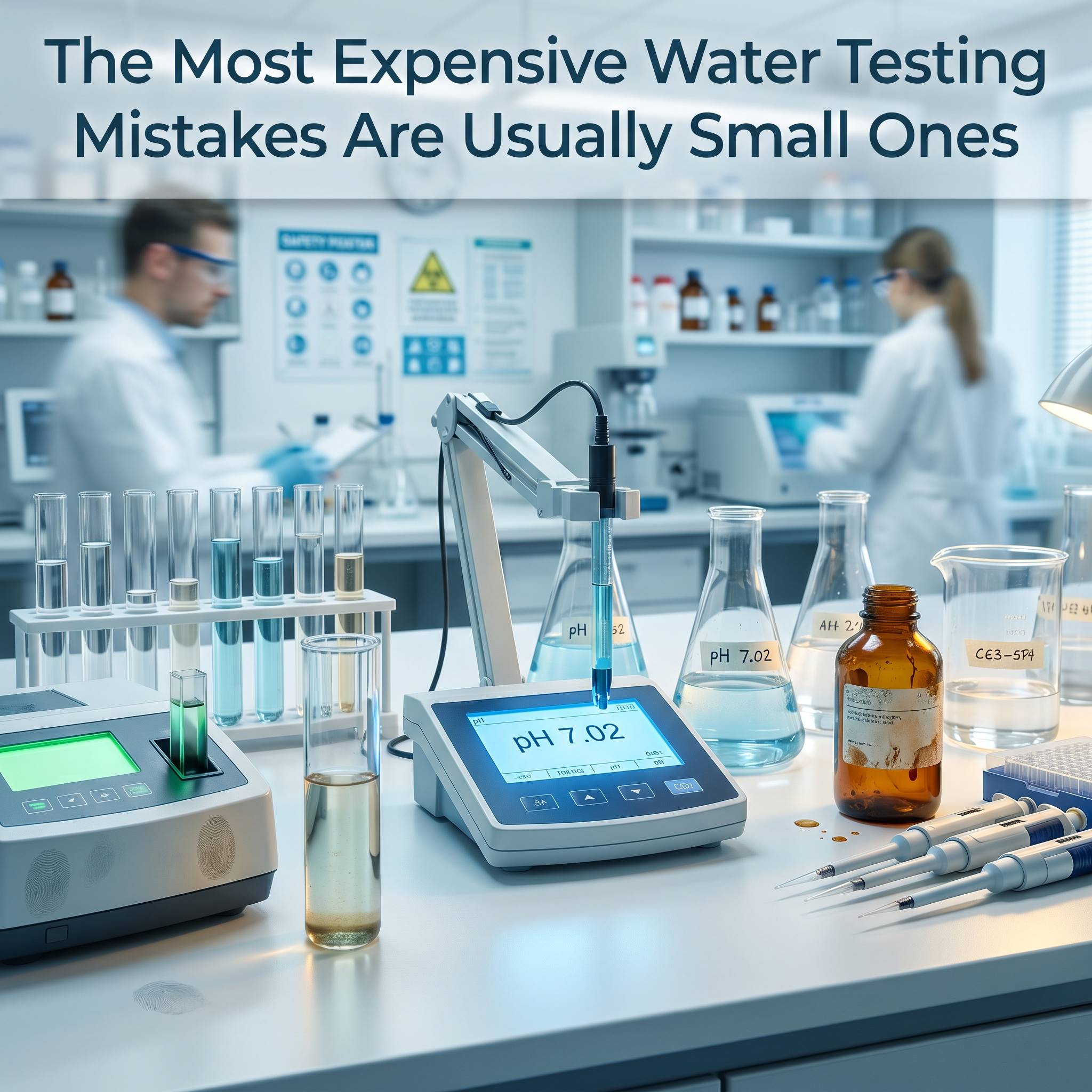
To effectively implement water pollution control and monitoring programs, reliable analytical instruments are essential for routine testing and regulatory compliance. Based on commonly monitored parameters such as CODMn, CODCr, ammonia nitrogen (NH₃-N), total nitrogen (TN), total phosphorus (TP), pH, and conductivity, the following laboratory instruments are widely recommended:
1. Spectrophotometer
Spectrophotometers water quality analyzers are core instruments in water quality laboratories and are extensively used for the determination of CODMn, ammonia nitrogen, total nitrogen, total phosphorus, nitrate, nitrite, and phosphate through standardized colorimetric methods. They offer high sensitivity, good repeatability, and compatibility with international standard methods such as ISO, APHA, and EPA.
Typical applications:
ü Drinking water quality monitoring
ü Wastewater effluent control
ü Environmental surface water analysis
2. Digestion Instruments
Digestion instruments provide controlled high-temperature conditions required for the oxidation of organic matter and nutrient conversion prior to photometric analysis. They are essential for COD, TN, and TP and other parameters testing.
Modern digestion instruments feature:
ü Precise temperature control
ü Multi-wells batch digestion
ü Enhanced safety and operational consistency
3. Multi-Parameter Electrochemical Meters
Multi-parameter electrochemical meters enable rapid field or laboratory measurement of key physicochemical indicators such as pH, conductivity, dissolved oxygen (DO), and temperature, supporting on-site assessment and routine process control.
4. Ion Chromatograph (IC)
Ion chromatography is widely used for accurate determination of inorganic ions, including chloride, nitrate, nitrite, sulfate, phosphate, and ammonium, especially when high precision or low detection limits are required.
5. Advanced Elemental Analysis Instruments (ICP-OES / ICP-MS)
For trace and ultra-trace metal monitoring in water, sediment, and biological samples, ICP-OES and ICP-MS provide multi-element capability and extremely low detection limits, making them suitable for regulatory and research-level analysis.
Application-Oriented Value Summary
By combining standardized analytical methods with appropriate laboratory instruments, water monitoring laboratories can achieve:
ü Faster sample throughput
ü Improved data accuracy and consistency
ü Compliance with international water quality regulations
ü Reliable support for pollution control and environmental decision-making
These technologies are widely applied in environmental monitoring agencies, water utilities, industrial wastewater laboratories, and research institutions across global markets.