+852 46135220

In routine water testing, conductivity and TDS are often discussed together. Many handheld meters even display both values on the same screen, which makes users assume that they are measuring two separate water quality parameters.
But in many cases, that is not true. In water testing, conductivity and TDS are related but not identical. Conductivity measures how well water conducts electricity, mainly due to dissolved ions. TDS, or total dissolved solids, represents the estimated mass of dissolved substances in water. In most portable EC/TDS meters, TDS is not directly measured; it is calculated from conductivity using a conversion factor. This is why two meters can show different TDS values even when measuring the same water sample.
This difference may seem small, but in practical water testing, it can strongly affect how users interpret water quality data. For drinking water, wastewater, reverse osmosis systems, boiler water, cooling water, aquaculture, laboratory water, and industrial process water, conductivity and TDS can both provide useful information. However, they do not mean exactly the same thing, and they should not be used without understanding their limitations.
A correct understanding of conductivity vs TDS helps laboratories, engineers, distributors, and water treatment users avoid one common mistake: treating a calculated TDS value as if it were a direct and complete measurement of water quality.
What Is Conductivity in Water Testing?
Conductivity, often shown as EC or electrical conductivity, measures the ability of water to conduct electrical current. In water quality testing, conductivity is often used as a fast indicator of the total ionic strength of a water sample. It does not identify individual ions, but it helps users quickly understand whether the dissolved ion concentration is low, stable, or changing.
Pure water conducts electricity very poorly. When dissolved ions are present, such as sodium, chloride, calcium, magnesium, bicarbonate, sulfate, nitrate, or phosphate, the conductivity increases.
In simple terms: The more dissolved ions in the water, the higher the conductivity usually becomes.
Conductivity is commonly reported in:
l µS/cm, microsiemens per centimeter
l mS/cm, millisiemens per centimeter
For most water testing applications, conductivity is measured with a conductivity electrode or conductivity cell. The meter applies an electrical signal and measures how easily current passes through the water sample. Because conductivity is strongly affected by temperature, most modern meters include automatic temperature compensation and report values normalized to 25°C.
This is important because the same water sample may show different conductivity values at different temperatures if compensation is not properly applied.
What Is TDS in Water Testing?
TDS means Total Dissolved Solids. In theory, TDS refers to the total amount of dissolved substances in water that pass through a filter and remain after the water is evaporated. This may include inorganic salts and some dissolved organic substances.
In a strict laboratory method, TDS can be determined gravimetrically:
1.Filter the water sample.
2.Evaporate a measured volume of filtrate.
3.Dry the remaining residue.
4.Weigh the dissolved solids left behind.
This gives a direct mass-based result, usually reported in mg/L.
However, this laboratory method is time-consuming and not suitable for most field testing or routine quick monitoring. Therefore, it is important to distinguish between laboratory TDS and meter-displayed TDS. Laboratory TDS is a gravimetric measurement based on drying and weighing dissolved residues. Meter-displayed TDS is usually an estimated value calculated from electrical conductivity. Both can be useful, but they should not be treated as exactly the same result.
That is why most portable TDS meters do not directly measure TDS. Instead, they measure conductivity and then estimate TDS using a conversion factor.
A simplified formula is: TDS ≈ Conductivity × Conversion Factor. For example, many meters use a factor such as 0.5, 0.64, 0.65, or 0.7, depending on the instrument setting or assumed water type.
This is where many misunderstandings begin.
Conductivity Is Measured. TDS Is Often Estimated.
The most important difference is this: Conductivity is usually measured directly. TDS is often estimated from conductivity.
This does not mean TDS readings from meters are useless. They can be very useful for quick checks, field screening, and process monitoring.
But users need to understand what the TDS value actually represents. If a TDS value comes from a conductivity meter, it is not a direct measurement of all dissolved solids. It is an estimated value based on how the dissolved ions in the water conduct electricity. This works reasonably well when the ionic composition of the water is stable and known. But when the water composition changes, the same conversion factor may no longer be accurate.
A simple way to understand the difference is shown below:
Item | Conductivity | TDS |
Full meaning | Electrical conductivity | Total dissolved solids |
Common unit | µS/cm or mS/cm | mg/L or ppm |
What it reflects | Ability of water to conduct electricity | Estimated amount of dissolved solids |
Measurement type | Usually directly measured | Often calculated from conductivity |
Main limitation | Does not identify specific ions | Depends on the conversion factor |
Best use | Ionic trend monitoring and process control | Simple screening and general comparison |
Why the Conductivity-to-TDS Conversion Factor Is Not Universal
The common relationship used by many EC/TDS meters is: TDS (mg/L) = Conductivity (µS/cm) × TDS factor
For example, if the conductivity is 1000 µS/cm, a meter using a 0.5 factor may display 500 mg/L TDS, while a meter using a 0.65 factor may display 650 mg/L TDS. The conductivity is the same, but the calculated TDS value is different.
Many users assume that one fixed conversion factor can be applied to all water samples. In practice, this is not correct. Different ions conduct electricity differently. For example, water dominated by sodium chloride does not behave exactly the same as water dominated by calcium bicarbonate, magnesium sulfate, nitrate, phosphate, or mixed industrial salts.
Two water samples may have the same conductivity but different actual TDS values because their ionic compositions are different. Similarly, two water samples may have similar TDS values but different conductivity readings if their dissolved solids have different ionic mobility. This means the conversion factor between conductivity and TDS depends on the water matrix.
Commonly used conversion factors include:
l 0.5 for some sodium chloride-based assumptions
l 0.64 or 0.65 for many natural water applications
l 0.7 for some mixed salt or higher mineral content waters
But these are only approximations. In routine testing, the selected factor should match the water type and application as closely as possible. Otherwise, the displayed TDS value may look precise but still be misleading.
Why TDS Can Be Misleading in Routine Water Testing
TDS is popular because it is easy to understand. A value in mg/L feels simple and practical.
However, TDS can be misleading because it gives a single number for dissolved solids without showing the chemical composition of those solids. It is a useful screening parameter, but it is not a complete water quality diagnosis.
1. TDS Does Not Tell You Which Substances Are Present
A TDS value may tell you that dissolved substances are present, but it does not identify what they are.
A TDS reading cannot tell you whether the dissolved solids are mainly:
u sodium chloride
u calcium and magnesium hardness
u bicarbonate alkalinity
u nitrate
u sulfate
u phosphate
u industrial salts
u dissolved metals
u treatment chemicals
This matters because different ions have very different meanings in water quality control.
For example, high TDS caused by harmless mineral content is not the same as high nitrate, high chloride, or contamination from an industrial discharge. TDS gives a general indication, not a detailed diagnosis.
2. Low TDS Does Not Always Mean Good Water Quality
One common misconception is that low TDS automatically means good water quality.
This is not always true.
Low TDS water may still contain:
u bacteria
u organic contaminants
u pesticides
u heavy metals at low concentrations
u ammonia
u residual chlorine
u dissolved gases
u specific toxic substances
Some of these may not strongly affect conductivity or calculated TDS. For example, organic pollutants may contribute to COD or TOC but may not significantly increase conductivity if they are not strongly ionic. Therefore, low TDS should never be used as the only proof that water is safe, clean, or suitable for a specific application.
3. High TDS Does Not Always Mean the Water Is Unsafe
High TDS is also easy to misinterpret. In some cases, high TDS may indicate a problem, especially in drinking water, RO permeate, boiler feedwater, or certain industrial processes.
But in other applications, higher dissolved mineral content may be expected. For example:
u natural groundwater may have relatively high mineral content
u aquaculture systems may require controlled mineral balance
u cooling water often contains dissolved salts due to concentration cycles
u some industrial process waters naturally contain higher ionic strength
The meaning of TDS depends on the application. A number alone is not enough. The key question is: Is this TDS level acceptable for the intended use of the water?
4. TDS Cannot Replace Specific Parameter Testing
TDS is useful as a general screening indicator, but it cannot replace specific water quality parameters. For example:
u TDS cannot replace hardness testing.
u TDS cannot replace chloride testing.
u TDS cannot replace nitrate or ammonia testing.
u TDS cannot replace COD or BOD testing.
u TDS cannot replace heavy metal analysis.
u TDS cannot replace alkalinity testing.
u TDS cannot replace microbiological testing.
This is especially important in environmental monitoring, wastewater treatment, industrial water control, and laboratory analysis. If the decision depends on a specific contaminant or process parameter, then a specific test is required.
Where Conductivity Is More Useful Than TDS
Conductivity is often more useful when users need a stable, repeatable, and directly measured indicator of ionic content.
It is widely used in:
* Reverse Osmosis System Monitoring
In RO systems, conductivity is commonly used to monitor feed water, permeate water, and rejection performance. A sudden increase in permeate conductivity may suggest membrane leakage, scaling, fouling, or system performance decline. In this application, conductivity is often more meaningful than calculated TDS because it directly reflects ionic leakage.
*Pure Water and Ultrapure Water Monitoring
For pure water and ultrapure water, conductivity is one of the most important indicators of ionic contamination. Very small changes in conductivity can indicate contamination from:
l carbon dioxide absorption
l piping or storage leaching
l resin exhaustion
l poor system maintenance
l microbial by-products
l process instability
In high-purity water applications, conductivity is generally preferred over TDS because TDS estimation becomes less reliable at very low ionic concentrations.
*Boiler Water and Cooling Water Control
In boiler and cooling water systems, conductivity is used to monitor dissolved ionic concentration, blowdown control, concentration cycles, and treatment stability.
For these systems, conductivity can act as a practical control signal. However, it should still be interpreted together with other parameters such as pH, hardness, alkalinity, chloride, silica, phosphate, and corrosion indicators.
*Wastewater and Industrial Process Water
In wastewater treatment and industrial discharge monitoring, conductivity can help detect changes in ionic load. For example, a sudden conductivity increase may suggest:
l chemical discharge
l salt contamination
l process leakage
l cleaning solution carryover
l wastewater mixing changes
But conductivity alone cannot explain the source of the change. It must be combined with other tests when troubleshooting is required.
Where TDS Is Still Useful
Although TDS has limitations, it remains useful in many routine applications. TDS is especially helpful when users need a simple, easy-to-understand value for general comparison.
Typical applications include:
l drinking water screening
l household water filters
l RO system user display
l aquaculture field checks
l irrigation water assessment
l groundwater comparison
l general mineral content monitoring
l customer-facing water quality explanation
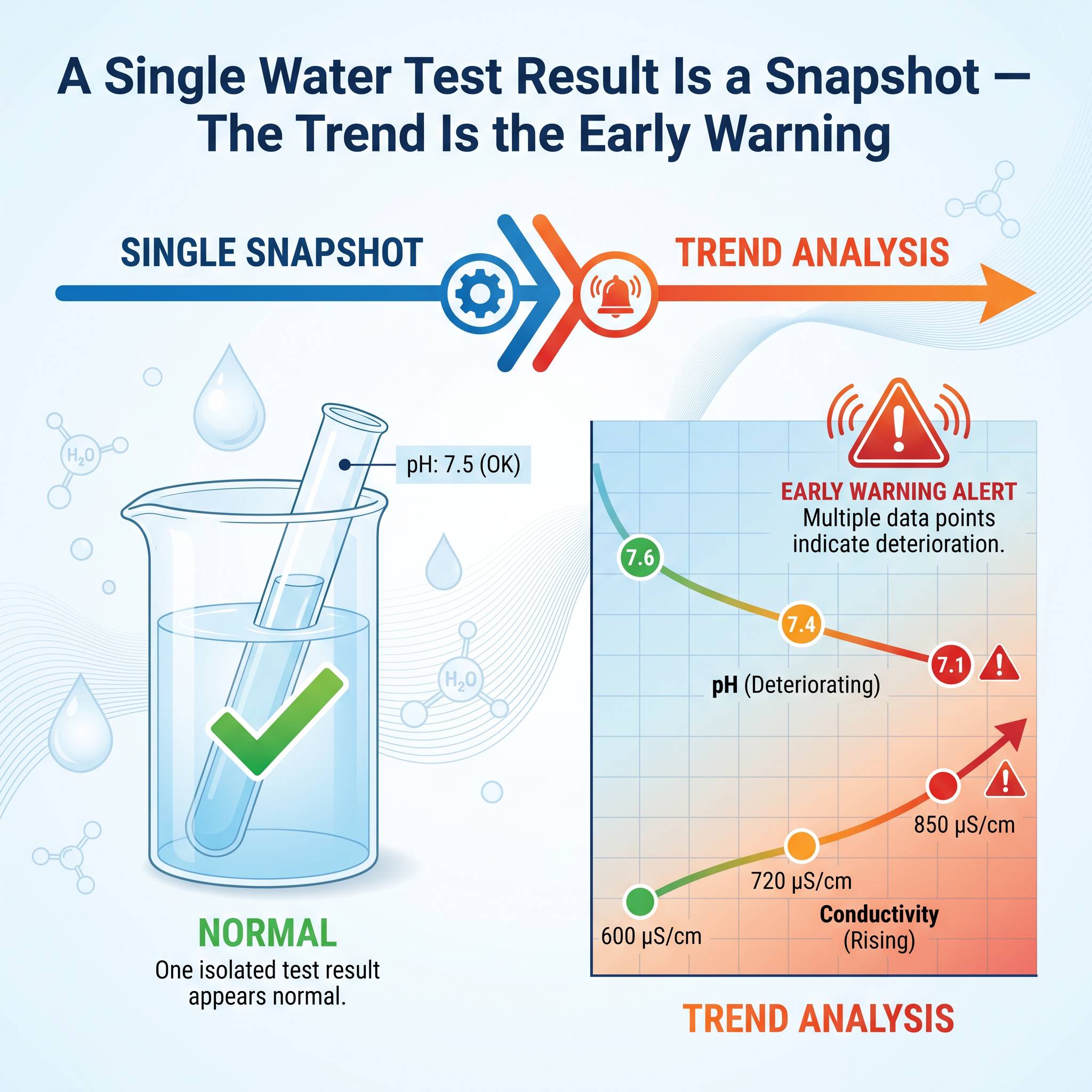
TDS is also useful when the same water source is monitored over time using the same instrument and the same conversion factor. In this case, even if the absolute TDS value is approximate, changes in the value may still provide useful trend information.
The key is consistency. Users should use the same meter, same calibration approach, same conversion factor, and same temperature compensation method when comparing data over time.
Common Mistakes When Using Conductivity and TDS Meters
Mistake 1: Assuming TDS Is Directly Measured
Many users read the TDS display and assume the instrument is directly detecting all dissolved solids.
In most portable meters, this is not the case. The instrument measures conductivity first, then converts it to TDS. This should always be understood when interpreting the result.
Mistake 2: Ignoring the Conversion Factor
Two meters may measure the same conductivity but display different TDS values if they use different conversion factors.
For example, one meter may use 0.5, while another uses 0.65. This can create confusion when comparing results between instruments.
Before comparing TDS values, users should check:
l the conductivity reading
l the TDS conversion factor
l the temperature compensation setting
l the calibration standard used
l the unit displayed
Without this information, TDS comparison may not be reliable.
Mistake 3: Using TDS to Judge Water Safety
TDS is not a complete safety indicator.
A low TDS value does not prove that water is microbiologically safe or free from chemical contamination.
A high TDS value does not automatically mean the water is dangerous.
Water safety depends on the specific application and relevant regulatory or process requirements.
Mistake 4: Comparing Data Without Temperature Control
Conductivity changes with temperature. If temperature compensation is disabled, incorrect, or inconsistent between instruments, results may vary significantly.
This is especially important in field testing, where sample temperature can change quickly.
For reliable data, conductivity and TDS measurements should be temperature-compensated and preferably reported at 25°C.
Mistake 5: Choosing a Meter Only by Displayed Parameters
Many users choose a meter because it displays pH, EC, TDS, salinity, and temperature.
But more displayed parameters do not always mean more directly measured parameters.
In many instruments:
l EC is measured.
l TDS is calculated from EC.
l Salinity may also be calculated from EC.
l Resistivity may be calculated from conductivity.
l Temperature is measured for compensation.
So when choosing an instrument, users should understand which parameters are directly measured and which are calculated.
How to Choose Between Conductivity and TDS in Practical Water Testing
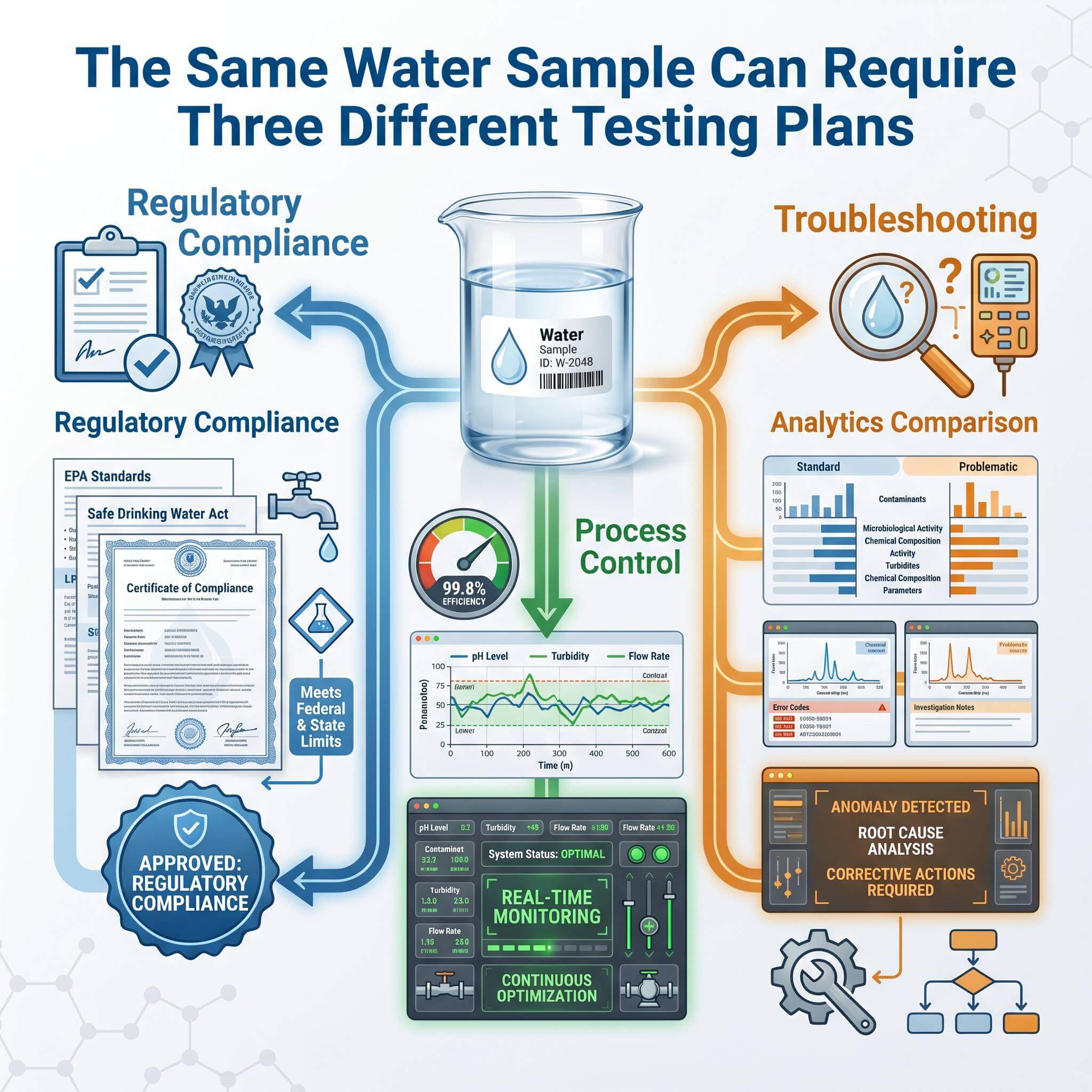
The choice depends on the testing purpose.
Use Conductivity When:
ü you need a direct measurement of ionic content
ü you are monitoring RO performance
ü you are checking pure water or ultrapure water quality
ü you are controlling boiler or cooling water
ü you need trend data for process stability
ü you want to detect sudden changes in dissolved ions
ü you need better repeatability for technical decision-making
Use TDS When:
ü you need a simple field screening value
ü you are communicating water mineral content to non-technical users
ü you are checking general drinking water or filter performance
ü the water source is relatively stable
ü the conversion factor is known and consistently applied
ü approximate results are acceptable for the application
Use Specific Tests When:
ü you need to know which contaminant is present
ü you need regulatory compliance data
ü the decision depends on nitrate, ammonia, phosphate, chloride, hardness, COD, BOD, metals, or microbiology
ü the water matrix is complex or changing
ü the result affects process safety, product quality, or environmental discharge
Practical Example: Same Conductivity, Different Meaning
Imagine two water samples show similar conductivity. Sample A comes from groundwater with calcium, magnesium, and bicarbonate. Sample B comes from industrial wastewater with sodium chloride and other process salts. The conductivity values may look similar, but the water quality meaning is completely different.
Sample A may mainly indicate natural hardness and mineral content.
Sample B may indicate industrial contamination or process discharge.
If users only look at TDS, they may miss the real difference. This is why conductivity and TDS should be treated as screening indicators, not complete water quality explanations.
Practical Example: RO System Monitoring
In an RO system, conductivity is often used to evaluate membrane performance. If feed water conductivity is high and permeate conductivity remains low, the system may be working properly.
If permeate conductivity starts to increase, it may suggest:
u membrane damage
u seal leakage
u scaling
u fouling
u poor maintenance
u changes in feed water quality
A TDS display may also show this trend, but the underlying measurement is usually conductivity. For technical troubleshooting, conductivity data is usually more useful than only looking at calculated TDS.
Practical Example: Drinking Water Testing
For drinking water users, TDS is often used as a simple quality indicator. It can help compare:
u tap water
u filtered water
u RO water
u bottled water
u groundwater
However, TDS does not tell the full story. A water sample with acceptable TDS may still require testing for microbiological safety, heavy metals, nitrate, chlorine residual, or other parameters depending on the application and local requirements. This is why TDS is useful for general screening, but not enough for complete drinking water safety evaluation.
Why This Difference Matters for Laboratories and Distributors
For laboratories, understanding conductivity vs TDS helps prevent incorrect reporting and overinterpretation. For distributors and instrument suppliers, it helps customers choose the right meter and understand the data correctly.
Many customer complaints about “different TDS readings” are not caused by instrument failure. They are often caused by:
l different conversion factors
l different calibration standards
l different temperature compensation settings
l different electrode conditions
l different water matrices
l misunderstanding of calculated parameters
Explaining this clearly can improve customer trust and reduce unnecessary technical disputes.
Best Practices for Reliable Conductivity and TDS Measurement
To improve data reliability, users should follow several practical rules:
1.Calibrate the conductivity meter regularly with suitable standards.
2.Check whether the meter uses automatic temperature compensation.
3.Confirm the TDS conversion factor before reporting TDS.
4.Use the same factor when comparing data over time.
5.Rinse the electrode properly between samples.
6.Avoid air bubbles around the conductivity cell.
7.Allow the reading to stabilize before recording data.
8.Understand whether the displayed parameter is measured or calculated.
9.Do not use TDS as a replacement for specific chemical analysis.
10.Interpret results based on the water application, not the number alone.
These steps are simple, but they can greatly improve the value of routine water testing data.
Conclusion
Conductivity and TDS are closely related, but they are not the same. Conductivity is usually a directly measured indicator of ionic content in water. TDS, in many routine instruments, is estimated from conductivity using a conversion factor. This difference matters because the conversion between conductivity and TDS depends on the ionic composition of the water.
TDS is useful for quick screening, general comparison, and simple field communication. But it cannot identify specific contaminants, cannot fully describe water safety, and cannot replace detailed parameter testing.
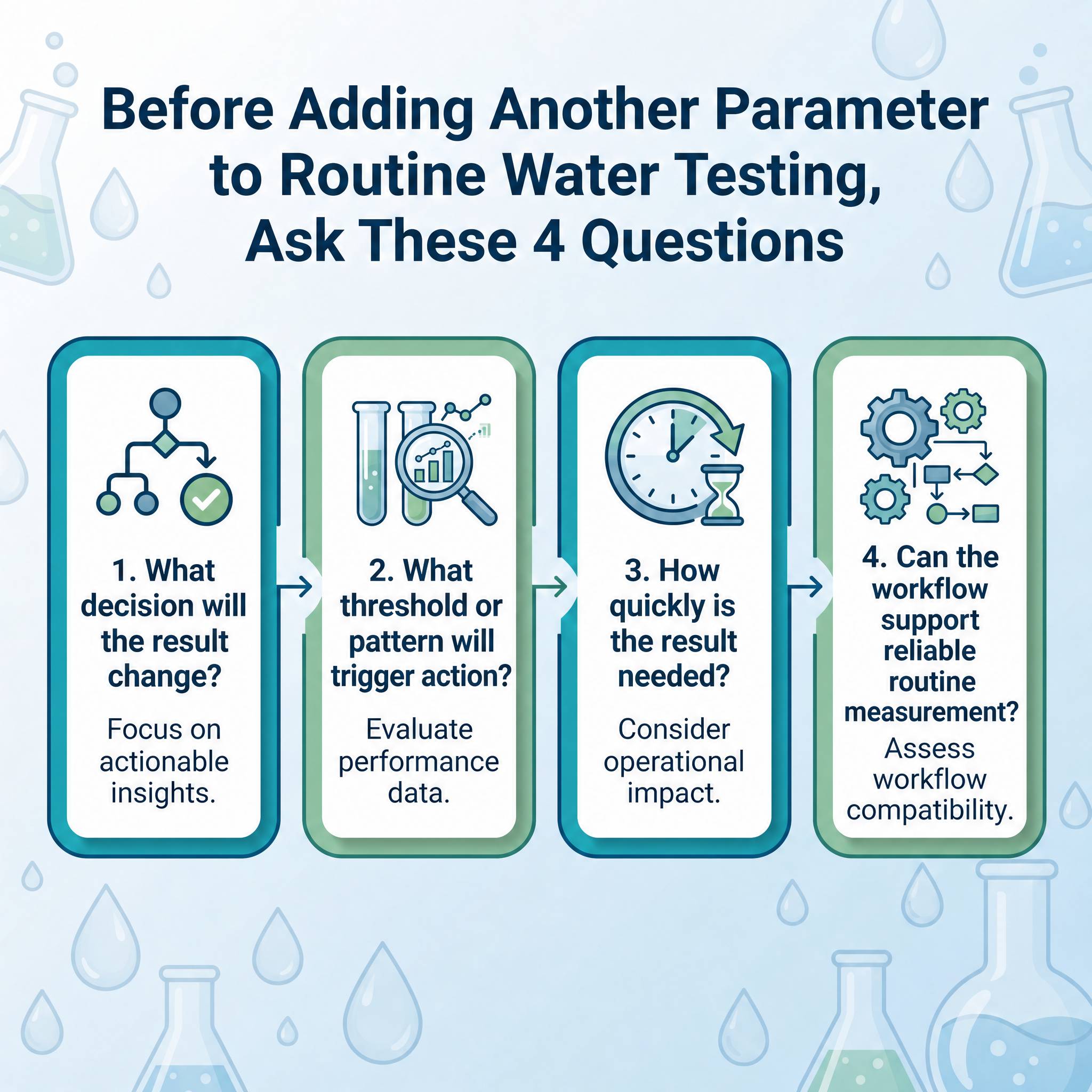
In practical water analysis, the better question is not simply: What is the TDS value?
The better question is: What decision are we trying to make from this value?
The practical difference is simple: conductivity is better for monitoring ionic changes, while TDS is better for simple estimated comparison. Neither parameter can fully explain water quality by itself. For reliable routine water analysis, users should understand whether the value is directly measured, calculated, or only useful as a screening indicator.