+852 46135220

Quick Answer for Water Quality Testing
In water quality testing, photometers are generally recommended for routine, high-frequency measurements of predefined parameters, while spectrophotometers are more suitable for method development, research applications, and full-spectrum analysis. Choosing the appropriate instrument depends on whether efficiency or analytical flexibility is the primary requirement.
Introduction
When you step into water quality testing, like wastewater treatment, environmental monitoring, drinking water labs, or industrial process control, one question comes up more often than any other: “Should I use a photometer or a spectrophotometer?”
Both instruments are standard tools in water quality testing laboratories, they measure light base on Lambert–Beer Law. The law states that the absorbance of a solution at a specific wavelength is directly proportional to its concentration. The darker the color of the solution, the more light it absorbs, and the higher the concentration of the substance being measured.
Lambert–Beer Law:
T=I/ Io
A=KCL=-logI/Io
Where:
· T – Transmittance
· A – Absorbance
· C – Concentration of the solution
· K – Absorption coefficient of the solution
· L – Optical path length of the solution
· I – Intensity of light reaching the photodetector after passing through test sample
· I₀ – Intensity of light reaching the photodetector after passing through reference sample
From a practical laboratory perspective, both instruments rely on the same optical principle, but differ significantly in workflow efficiency, operational complexity, and application scope. Choosing the wrong one often means higher costs, longer testing times, or unnecessary operational complexity.
What Is a Photometer?
A fast, stable tool designed for routine water quality testing
A photometer measures absorbance by specific LEDs or filters to produce single or a limited number of fixed wavelengths of light. Think of it as a flashlight with only specific colors—you can only use it to illuminate and measure substances corresponding to those colors. Common water quality parameters, like COD, total phosphorus, ammonia, nitrate, chromium and more, all have well-established absorption peaks by specific wavelengths.
A photometer is optimized for water quality parameters that already have defined colorimetric chemistry. You simply insert the cuvette or reaction tube and read the result, and no need to select wavelength and scan spectrum.
So, you can say that photometers are ideal for routine water quality testing:
ü Instant startup — LED light sources stabilize nearly immediately
ü Excellent accuracy for predefined parameters
ü Very low maintenance — LEDs rarely require replacement
ü Minimal training — ideal for wastewater stations, small labs, and field teams
ü Consistent results — optimized for colorimetric test kits
In fact, 80–90% of water quality parameters measured worldwide rely on fixed-wavelength colorimetry, making a photometer the most efficient choice for daily work. For most wastewater treatment plants, environmental monitoring stations, and routine laboratory operations, photometers represent the most cost-effective and operationally efficient choice.
What Is a Spectrophotometer?
A flexible research-focused instrument for full-spectrum analysis
Unlike photometers, spectrophotometers use a monochromator as core component to continuously disperse white light into monochromatic light of different wavelengths. You can imagine it as a "rainbow generator" that can precisely select light of any required wavelength to illuminate the sample, which make it very flexible. The continuous wavelength range is commonly 320–1000 nm.
Spectrophotometers are needed when you do the job as below:
ü Identify absorption peaks
ü Perform full-spectrum scans
ü Validate or develop new analytical methods
ü Work with unconventional parameters
ü Analyze colorimetric reactions that do not use standard LEDs
ü Fine-tune calibration curves
So, spectrophotometer is a better tool in research labs, academic environments, and facilities that work beyond routine regulatory parameters.
But flexibility comes with trade-offs
u Higher cost
u Longer measurement time
u More complex optical components
u More frequent maintenance
u More training required
u Not as convenient for fast routine checks
As a result, spectrophotometers are generally not recommended for laboratories focused primarily on routine regulatory parameters, where fixed-wavelength methods already provide sufficient accuracy and repeatability. A spectrophotometer can perform nearly every photometer task—but is often overkill for standard water labs that mostly test fixed water quality parameters.
Photometer vs. Spectrophotometer: Key Differences
Feature | Photometer | Spectrophotometer |
Light Source | Pre-set LED wavelengths | Full-spectrum wavelength selection |
Use Cases | Routine COD, TN, TP, ammonia, nitrate, chromium, etc. | Research, method development, spectral scanning |
Speed | Fast, optimized for daily testing | Slower due to wavelength adjustments |
Complexity | Simple, beginner-friendly | Requires training and method understanding |
Cost & Maintenance | Low cost, minimal maintenance | Higher cost, more optical care needed |
Decision-Oriented Summary
In routine water quality monitoring, instrument selection is driven more by workflow efficiency and reproducibility than by maximum analytical flexibility.
As a general rule:
l Photometers are preferred for standardized parameters with established colorimetric chemistry
l Spectrophotometers are reserved for non-standard, research, or method-validation tasks
Which One Should You Choose?
Typical Application Scenarios in Water Quality Testing
Photometers are commonly used in:
l Wastewater treatment plants (COD, ammonia, total phosphorus, nitrate)
l Environmental monitoring laboratories
l Drinking water utilities
l Field and on-site testing programs
And if you need:
ü Fast routine measurements
ü Preprogrammed water quality parameters
ü High repeatability
ü Low operational cost
ü Minimal maintenance
ü Easy training for new staff
Spectrophotometers are commonly used in:
l Research and academic laboratories
l Method development and validation
l Advanced industrial analysis
l Applications requiring spectral scanning or customized wavelengths
And if You Need:
ü Adjustable, continuous wavelengths
ü Full-spectrum scanning
ü Research-grade capabilities
ü Custom calibration curves
ü Advanced analytical flexibility
Final Thoughts
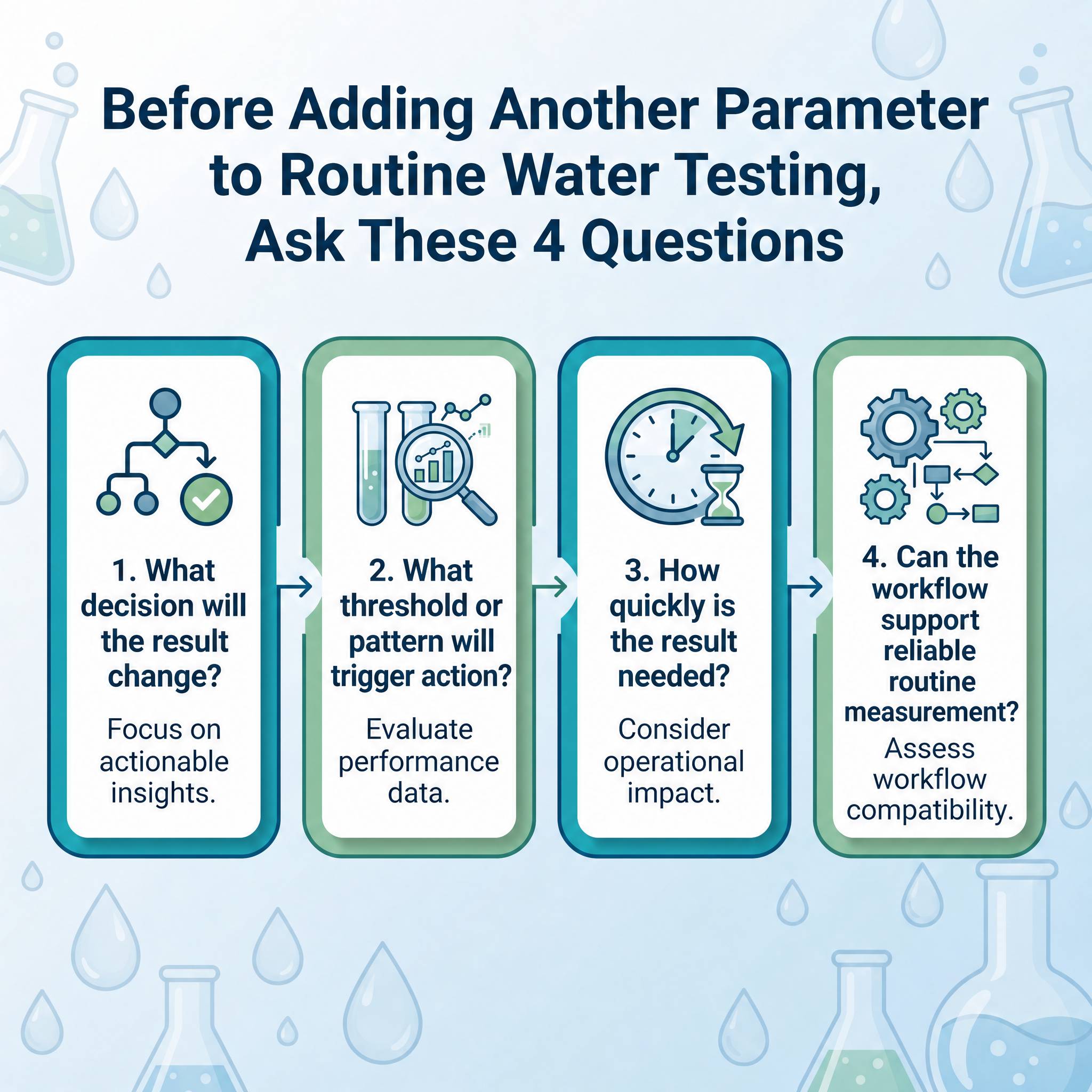
Before purchasing, ask yourself a single question:
“Do I need flexibility, or do I need efficiency?”
u If your goal is efficiency, choose a photometer
u If your goal is flexibility, choose a spectrophotometer
Choosing the right instrument not only improves accuracy—it also saves time, reduces operational cost, and ensures your testing workflow matches your real analytical needs. From a water quality testing perspective, selecting the right optical instrument is less about technical superiority and more about matching the instrument to real operational needs. Laboratories that prioritize speed, consistency, and cost control will benefit most from photometers, while those requiring analytical flexibility will continue to rely on spectrophotometers.
Recommended Water Quality Analyzers: