+852 46135220

In water quality testing, many users wait for one thing before recording a result: a stable reading.
When the value on the screen stops moving, it feels safe to assume that the measurement is reliable. Whether the test is for pH, conductivity, dissolved oxygen, turbidity, COD, ammonia, nitrate, phosphate, or chlorine, a stable number often gives users confidence. But this is one of the most common misunderstandings in routine water analysis. A stable reading is important. But stability alone does not prove accuracy.
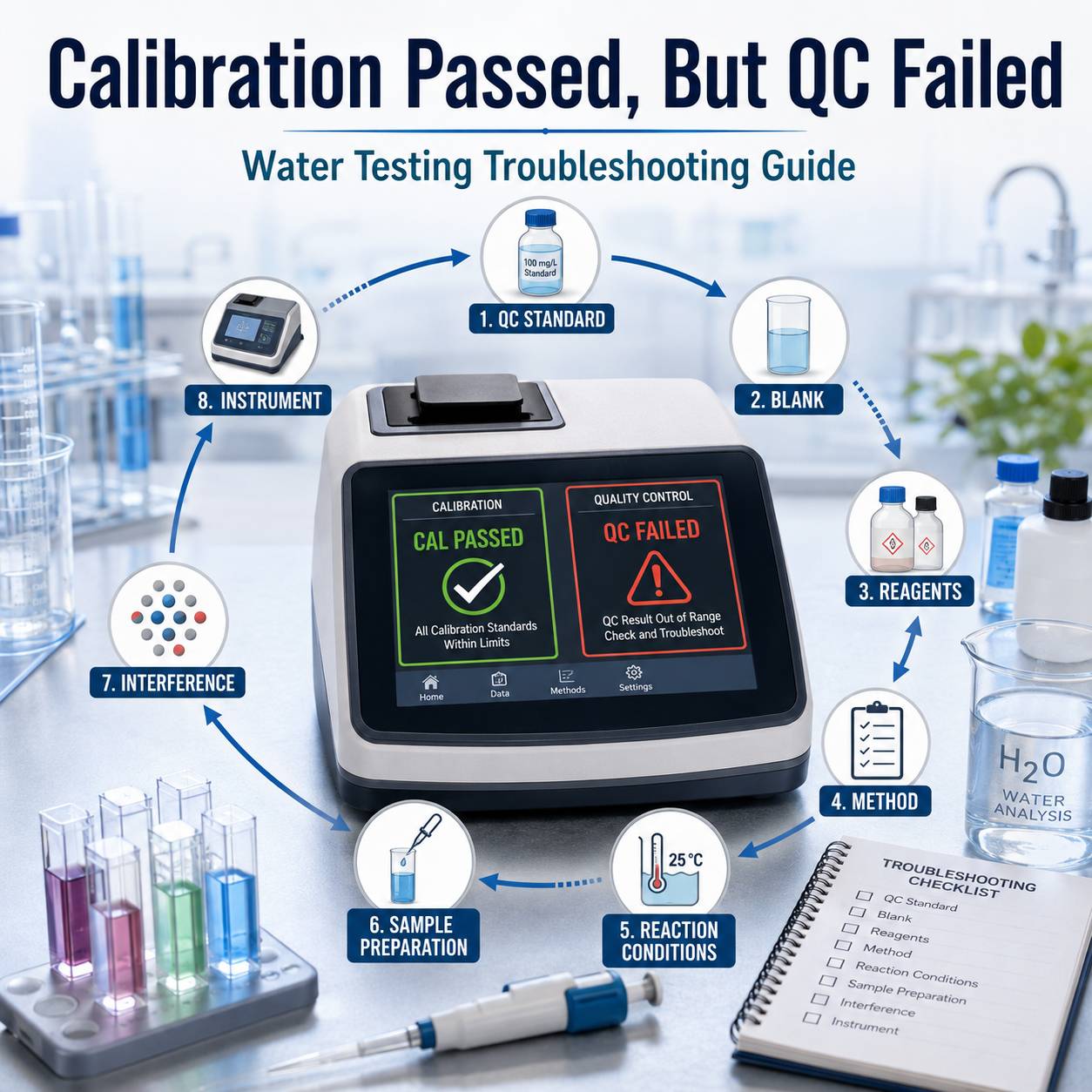
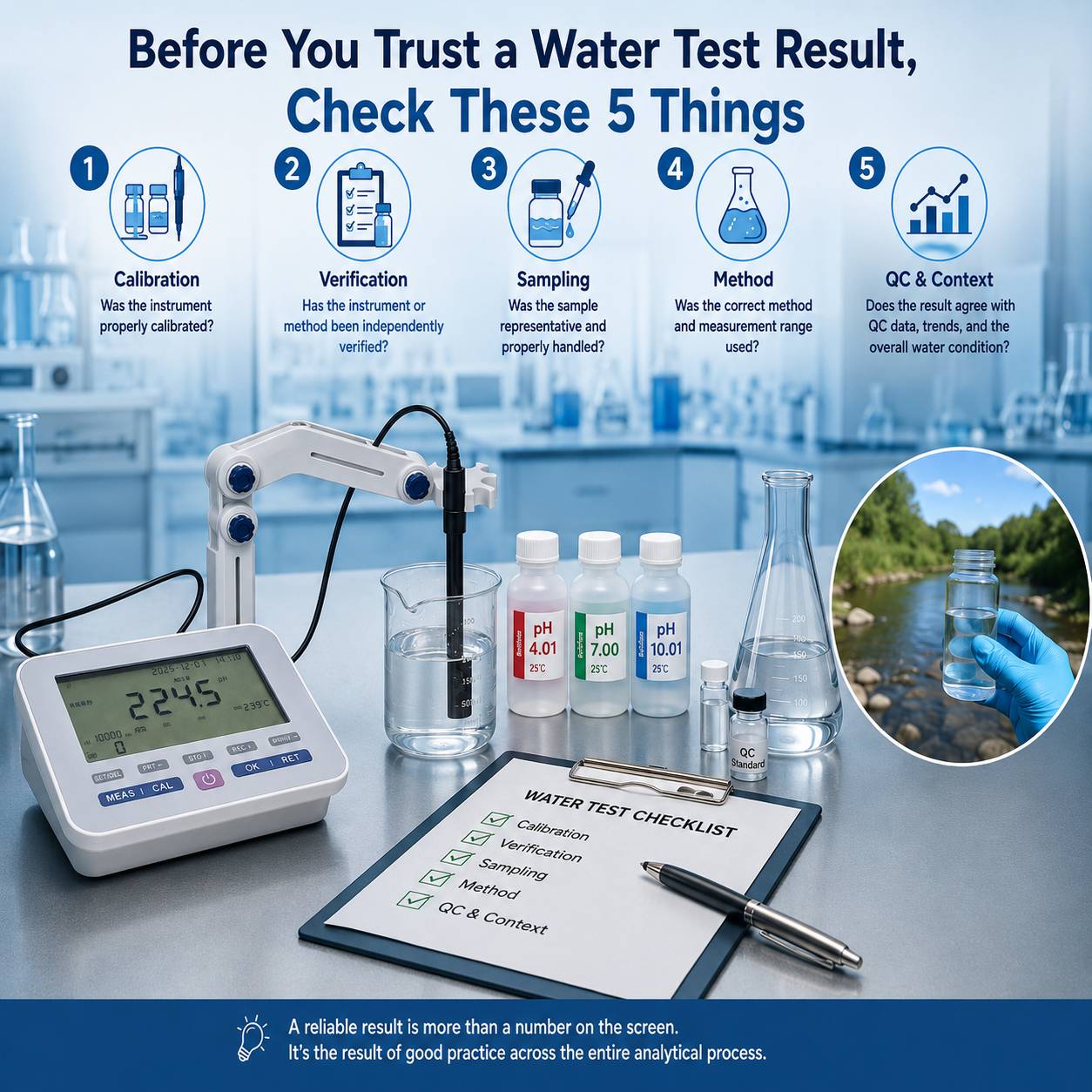
A stable reading in water quality testing only means that the instrument signal has stopped changing within a certain range. It does not automatically mean the result is accurate. A reading can remain stable even when the instrument is poorly calibrated, the probe is contaminated, the reagent is expired, the wrong method is selected, or the sample has changed before testing. To confirm whether a stable reading is correct, users must check calibration, probe condition, sample handling, method suitability, interference, temperature control, and quality control results.
In other words:
Stable means the signal has stopped changing.
Correct means the result truly represents the sample.
These are not the same thing.
1. What Does a “Stable Reading” Really Mean?
A stable reading usually means that the instrument signal has reached a relatively constant value within a certain time or fluctuation range. For example:
l A pH meter may show 7.21, then 7.22, then 7.21 again.
l A conductivity meter may stop changing after temperature compensation.
l A dissolved oxygen meter may slowly reach a steady value after probe polarization or sample equilibration.
l A photometer may display a fixed absorbance or concentration after the reaction time is complete.
From the instrument’s point of view, the signal is no longer changing significantly. But this only tells us that the instrument has reached internal stability under the current testing conditions. It does not confirm that those conditions are correct. If the probe is not calibrated, the reagents are expired, the sample is contaminated, or the method is not suitable for the water matrix, the reading can still become stable at the wrong value.
2. Why Stability Can Be Misleading in Water Testing
A stable number creates a strong visual impression. Users may feel that a digital display is more reliable than manual observation because it looks precise.
But an instrument can only process the signal it receives. If the signal is already affected by external problems, the final displayed value may be stable but still inaccurate.
In routine water testing, many users treat stability as the final confirmation step. Once the value stops moving, they record the result immediately. However, stability is only one part of measurement quality. It does not confirm that the instrument was calibrated correctly, the probe was clean, the reagent reaction was complete, or the sample was still representative. This misunderstanding is common because digital instruments often look precise. A value such as 7.21 pH or 0.05 mg/L chlorine appears more trustworthy than a visual observation. But precision on the screen does not always mean accuracy in the result.
The problem is not always the instrument itself. Very often, the problem comes from the measurement environment, the method, or the sample.
3. Common Reasons Why a Stable Reading May Still Be Wrong
3.1 The Instrument Was Not Properly Calibrated
Calibration is one of the most direct factors affecting measurement accuracy.
A pH meter can quickly show a stable value even if it was calibrated with old buffer solution, contaminated buffer, wrong buffer sequence, or insufficient calibration points. A conductivity meter can also display a stable value even if the conductivity standard was not fresh, the cell constant is incorrect, or temperature compensation was not properly applied. For photometers and spectrophotometers, calibration curves, blank correction, wavelength selection, and reagent quality all influence the final result.
Calibration should also be verified, not only performed. For example, after calibrating a pH meter, users can measure a buffer solution again to confirm whether the reading returns close to the expected value. For conductivity, a standard solution near the actual sample range is usually more meaningful than a standard far away from the working range. For photometric methods, blank measurement and standard check solutions can help confirm whether the method response is still valid. A calibration process that is completed but not verified may give users false confidence.
3.2 The Probe or Sensor Is in Poor Condition
For electrochemical measurements, probe condition is critical. In pH measurement, a dirty, aged, dehydrated, or blocked electrode may still produce a stable reading, but the response may be slow or biased. A pH electrode that has not been stored properly may not respond correctly to changes in hydrogen ion activity. The display may eventually stabilize, but the final value may not reflect the true sample pH.
For dissolved oxygen testing, membrane condition, electrolyte quality, air bubbles, probe fouling, and sample flow all affect the result. A DO probe can show a stable value even when the membrane is damaged or the sensor response is not healthy.
For conductivity measurement, deposits on the cell, poor rinsing, or residues from previous samples may affect the reading. The value may stop changing, but it may be influenced by contamination.
A slow but eventually stable reading should not always be accepted as normal. In many cases, slow stabilization is already a warning sign. It may indicate an aged pH electrode, blocked junction, contaminated sensor surface, damaged DO membrane, weak electrolyte condition, or poor contact between the sensor and the sample. For routine testing, users should pay attention not only to the final value, but also to the response speed. A healthy sensor should normally respond in a reasonable and repeatable way under the same testing conditions.
3.3 Temperature Effects Were Not Controlled
Many water quality parameters are temperature-sensitive. pH electrode response changes with temperature. Conductivity is strongly influenced by temperature. Dissolved oxygen saturation depends heavily on temperature. Reaction-based colorimetric methods may also be affected by reaction temperature and timing.
Automatic temperature compensation can help, but it cannot solve every problem. For example, if the sample temperature is changing during measurement, or if the probe and sample have not reached thermal equilibrium, the reading may appear stable too early or stabilize at a biased value. Temperature compensation adjusts part of the measurement, but it does not correct poor testing practice.
A stable reading under unstable temperature conditions should be treated carefully.
3.4 The Sample Changed Before Testing
Water samples are not always chemically stable after collection. Some parameters can change quickly due to:
u Gas exchange with air
u Biological activity
u Precipitation or dissolution
u Oxidation or reduction
u Temperature change
u Loss of volatile components
u Reaction with the sample container
u Delayed analysis
This is one reason why some parameters are better measured directly in the field instead of waiting for laboratory analysis. Parameters such as temperature, dissolved oxygen, residual chlorine, and sometimes pH can change quickly after sampling. If these parameters are measured too late, the reading may be stable in the laboratory, but it may no longer describe the original field condition. That's also why the water sample can be the biggest source of error in water quality testing.
For this reason, a practical water testing workflow should clearly define which parameters must be measured on site and which parameters can be transported to the laboratory under proper preservation conditions.
3.5 The Wrong Method or Range Was Selected
For photometers and spectrophotometers, method selection matters. Many water quality analyzers contain multiple methods for different parameters and concentration ranges. If the wrong method, wrong wavelength, wrong reagent, or wrong measuring range is selected, the instrument can still generate a stable value. But the result may not be valid.
For example:
u A low-range method may be used for a high-concentration sample.
u A sample may need dilution, but dilution was not performed.
u The reaction time may not be followed.
u The wrong blank may be used.
u The sample color or turbidity may interfere with optical measurement.
u The selected method may not match the required testing standard.
In these cases, the instrument is not unstable. The testing process is incorrect. When a result is close to the upper or lower limit of the method range, users should be especially careful. A stable value near the range limit may not be fully reliable. In high-concentration samples, dilution may be required before measurement. In very low-concentration samples, reagent blank, cuvette cleanliness, and instrument resolution become more important.
A stable number outside the suitable method range should not be treated as a valid analytical result.
3.6 Sample Matrix Interference Was Ignored
The sample matrix refers to everything in the water sample besides the target analyte. In real water samples, especially wastewater, industrial water, aquaculture water, and environmental water, the matrix can be complex. The sample may contain:
l Suspended solids
l Color
l Organic matter
l High salinity
l Oxidants or reducing agents
l Metal ions
l Surfactants
l Residual disinfectants
l Oil or grease
l Other chemicals that react with reagents
These components can interfere with measurement. For colorimetric testing, sample color and turbidity may affect light absorption. For electrochemical testing, ionic strength and interfering ions may influence sensor response. For COD digestion, chloride interference or incomplete digestion may affect the result. The instrument may still display a stable value because the optical or electrical signal is stable. But the signal may not come only from the target parameter.
That is why matrix awareness is essential in water quality analysis.
4. Parameter Examples: Stable but Not Necessarily Correct
Different water quality parameters fail in different ways. Some errors come from sensors, some from reagents, some from sample preservation, and some from optical or chemical interference. This is why the meaning of a “stable reading” must be understood according to the parameter being tested.
pH
A pH meter may show a stable value, but the result can be wrong if the electrode is dry, contaminated, aged, poorly calibrated, or not suitable for low-ionic-strength water. Pure water and ultrapure water are especially difficult for pH measurement because the low ionic strength makes the reading less stable and more sensitive to contamination and carbon dioxide absorption. A stable pH value does not always mean the pH electrode is healthy. That's why pH is one of the most misunderstood parameters in routine water testing.
Conductivity
Conductivity readings often stabilize quickly, but incorrect temperature compensation, dirty conductivity cells, wrong cell constants, or poor rinsing can affect accuracy. In low-conductivity water, even small contamination from glassware, hands, containers, or previous samples can significantly change the result. A stable conductivity value may simply mean the contamination level has stabilized.
Dissolved Oxygen
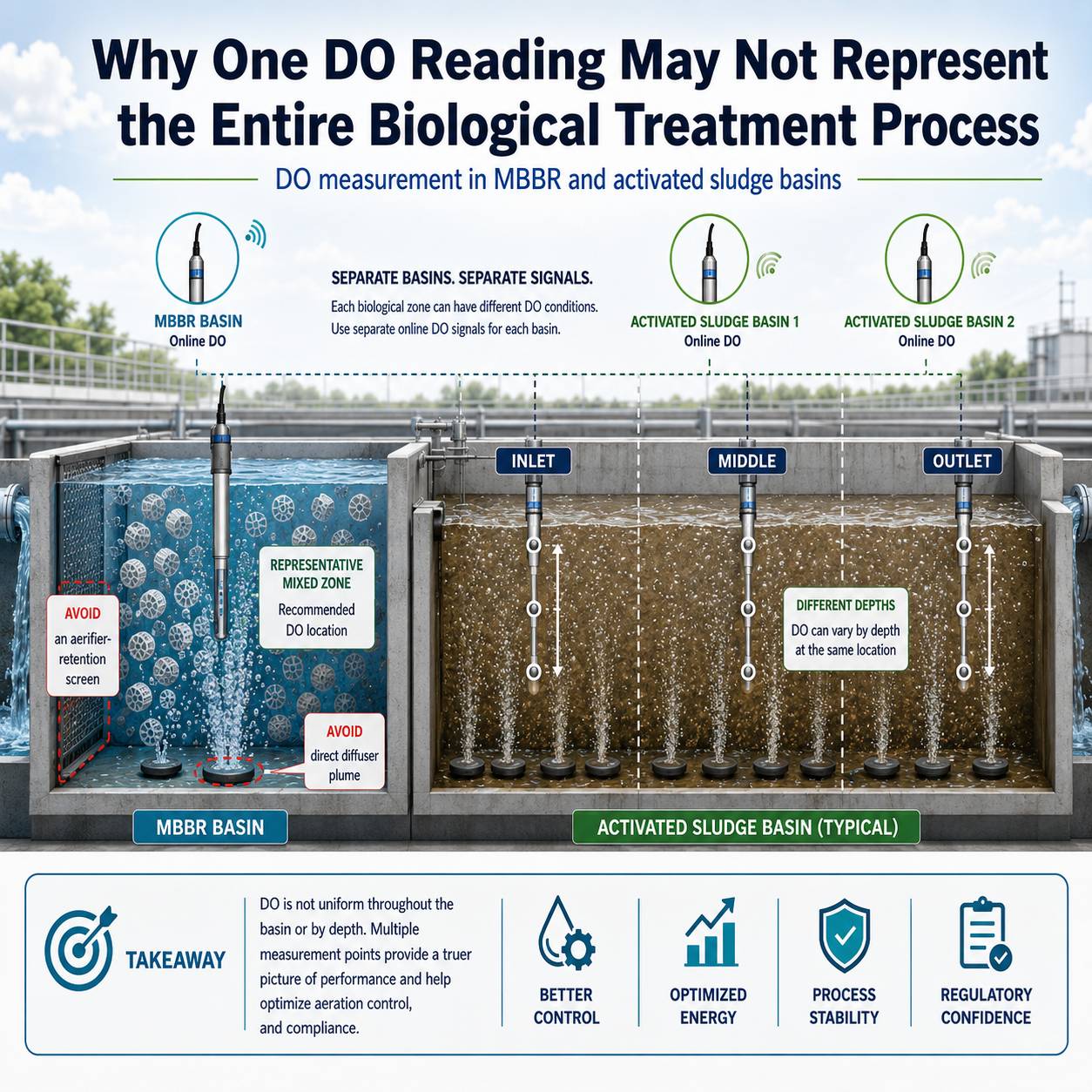
DO measurement depends on probe condition, membrane integrity, electrolyte, temperature, sample flow, and air bubbles. A DO meter may show a stable value even if the probe response is slow, the membrane is fouled, or the sample has changed during handling. For field testing, DO should usually be measured as close to the sampling point as possible because oxygen levels can change during transport.
Turbidity
Turbidity readings may stabilize after the sample is placed into the instrument, but bubbles, fingerprints on cuvettes, scratches, settling particles, and poor mixing can all affect the result. If suspended particles settle before measurement, the result may be stable but lower than the actual turbidity of the original sample.
COD
COD testing may produce a final stable photometric reading after digestion and color development, but the result can still be affected by incomplete digestion, wrong reagent selection, chloride interference, improper sample mixing, digestion temperature, digestion time, or dilution errors. For COD, a stable instrument reading is only one part of the process. The digestion and sample preparation steps are equally important.
Ammonia, Nitrate, Phosphate, and Chlorine
Colorimetric nutrient and disinfectant tests depend on correct reagent reaction, timing, sample pH, interferences, and blank correction. If reaction time is too short or too long, or if the water contains interfering substances, the instrument can still display a stable concentration value. The number is stable, but the chemistry behind the test may not be valid.
5. Stable Reading vs Correct Reading: The Key Difference
A stable reading answers the question: “Has the instrument signal stopped changing?”
A correct reading answers a much bigger question: “Does this result accurately represent the parameter in this water sample under the required method conditions?”
To reach a correct reading, several conditions must be controlled:
n The instrument must be calibrated properly.
n The probe or optical system must be clean and functional.
n The correct method and range must be selected.
n The sample must be representative.
n The sample must be handled and preserved correctly.
n Interferences must be considered.
n Reagents must be valid and suitable.
n Temperature and reaction time must be controlled.
n Quality control checks must be included when necessary.
Without these controls, stability alone is not enough.
6. How to Judge Whether a Stable Reading Is Reliable
6.1 Check Calibration Before Trusting the Result
Before routine testing, users should confirm that the instrument has been calibrated with suitable standards or buffers. For pH, this usually means using fresh buffer solutions and checking electrode slope and offset when available. For conductivity, the standard should match the expected measurement range as closely as possible. For photometric instruments, users should confirm method calibration, blank correction, reagent validity, and measuring range.
Calibration should not be treated as a formality. It is the foundation of result reliability.
6.2 Use Quality Control Samples
A quality control sample or standard solution can help confirm whether the instrument and method are working properly. If the instrument gives the expected value for a known standard, the user has more confidence in the measurement process. If the standard result is wrong, then a stable sample reading cannot be trusted.
For routine laboratories, regular QC checks are often more useful than simply repeating the same sample measurement again and again. Repeatability is not the same as accuracy.
6.3 Watch the Response Behavior, Not Only the Final Number
The way a reading becomes stable can tell a lot. For example:
u A healthy pH electrode usually responds smoothly.
u A very slow response may indicate electrode aging or contamination.
u A drifting reading may indicate unstable sample conditions or sensor problems.
u A sudden jump may suggest bubbles, poor contact, or contamination.
u A reading that stabilizes too quickly may sometimes indicate a blocked or poorly responsive sensor.
Users should not only look at the final number. They should also observe how the instrument reaches that number.
6.4 Confirm the Sample Is Suitable for the Method
Before testing, it is important to ask:
l Is this method suitable for this type of water?
l Is the concentration within the measuring range?
l Does the sample need filtration, dilution, digestion, or preservation?
l Could color, turbidity, salinity, or organic matter interfere?
l Is the holding time acceptable?
l Has the sample changed after collection?
These questions are especially important for wastewater, industrial discharge, seawater, aquaculture water, and heavily polluted environmental samples. The more complex the sample, the more careful the method selection must be.
6.5 Repeat the Test in a Meaningful Way
Repeating the same test can help, but only if the repeat test is meaningful. If the same wrong method, same contaminated cuvette, same expired reagent, or same uncalibrated probe is used again, the repeated result may simply confirm the same error.
Useful repeat testing may include:
ü Testing a fresh portion of the sample
ü Recalibrating before measurement
ü Running a blank
ü Testing a standard solution
ü Diluting the sample and checking recovery
ü Comparing with another method when necessary
ü Checking the result against expected process conditions
Repetition improves confidence only when the testing process is controlled.
7. Practical Checklist Before Recording a Stable Reading
Before accepting a stable result, users should ask:
1.Was the instrument calibrated correctly?
2.Are the standards or buffer solutions fresh and suitable?
3.Is the probe clean, hydrated, and in good condition?
4.Is the correct method selected?
5.Is the sample within the measuring range?
6.Are reagents valid and properly stored?
7.Was the blank prepared correctly?
8.Was the reaction time followed?
9.Was the sample mixed properly?
10.Could sample color, turbidity, salinity, or chemicals interfere?
11.Was the sample tested within the proper holding time?
12.Is the result reasonable compared with process knowledge or previous data?
If the answer to several of these questions is uncertain, the reading should not be accepted only because it looks stable.
FAQ
Does a stable reading mean the water test result is accurate?
No. A stable reading only means that the instrument signal has stopped changing significantly. Accuracy still depends on calibration, probe condition, sample handling, reagent quality, method selection, temperature control, and possible sample interference.
Can a pH meter show a stable but wrong reading?
Yes. A pH meter can show a stable but incorrect value if the electrode is dirty, aged, dry, poorly calibrated, or unsuitable for the sample. Low-ionic-strength water, such as pure water or ultrapure water, can also make pH measurement more difficult.
Why can a conductivity reading be stable but inaccurate?
A conductivity reading can be stable but inaccurate if the conductivity cell is contaminated, the cell constant is incorrect, temperature compensation is not suitable, or the sample has been contaminated during handling. This is especially important in low-conductivity water.
Can COD results be wrong even if the photometer reading is stable?
Yes. COD results can be affected by sample mixing, digestion temperature, digestion time, reagent selection, chloride interference, blank correction, and dilution errors. The photometer may show a stable final reading, but the COD result can still be wrong if the preparation process was not controlled.
What should users check before accepting a stable water quality reading?
Users should check calibration, probe condition, reagent validity, sample holding time, method range, blank correction, temperature control, possible interferences, and whether the result is reasonable compared with previous data or process conditions.
Conclusion
A stable reading is a useful signal in water quality testing. It tells the user that the instrument has reached a steady measurement condition.
But a stable reading does not automatically mean a correct reading. Accuracy depends on calibration, sensor condition, sample handling, method selection, reagent quality, temperature control, matrix effects, and operator practice.
In routine water analysis, the goal is not only to get a number that stops changing. The real goal is to get a result that can be trusted. That means every stable reading should still be checked against the full testing process. Because in water quality testing, a stable number may look reliable — but only a properly controlled measurement can be truly correct.