+852 46135220

In many wastewater laboratories, spectrophotometers are often regarded as a “standard” or even a “must-have” analytical instrument. As a result, some laboratories invest in spectrophotometers prematurely, before clearly defining their actual monitoring needs.
However, from a practical wastewater engineering and laboratory management perspective, most routine wastewater laboratories do not truly require a fully featured spectrophotometer. In the majority of cases, a carefully selected dedicated photometer or multi-parameter water quality analyzer can fully meet regulatory, operational, and quality-control requirements. If can offer lower acquisition and maintenance costs, simpler operation, and higher long-term reliability.
This article explains this conclusion by examining real wastewater monitoring needs, standard analytical methods, and daily operational realities.
1. Core Differences: Spectrophotometer vs. Dedicated Photometer
Spectrophotometer: Designed for Versatility and Research
Core capabilities: Spectrophotometers measure absorbance over a continuous wavelength range (typically 190–1100 nm), allowing full-spectrum scanning, custom method development, unknown compound analysis, and research-oriented measurements.
Typical applications: Universities, research institutes, method-development laboratories, and R&D facilities handling highly uncertain or novel samples.
Engineering limitations in wastewater labs: The complex optical systems (e.g., diffraction gratings, variable slits), precision mechanical components, and advanced software result in higher instrument cost, greater sensitivity to environmental conditions (temperature, vibration), and more demanding maintenance and calibration. Under wastewater matrix interference, full-spectrum scanning provides little added value for routine parameter testing.
Dedicated Photometers / Water Quality Analyzers: Optimized for Routine Analysis
Core capabilities: Operate at predefined fixed wavelengths optimized for specific water quality parameters (e.g., COD, ammonia nitrogen, total phosphorus). Instruments typically include pre-programmed standard calibration curves based on recognized methods.
Typical applications: Municipal and industrial wastewater laboratories focused on standardized, high-frequency testing such as COD, ammonia nitrogen, total phosphorus, total nitrogen, nitrate, and nitrite.
Engineering advantages: More robust construction, fixed optical paths, and superior long-term stability. User interfaces are intuitive, results are displayed directly as concentrations, and the risk of operator-induced setup errors is greatly reduced. Maintenance is simpler, and total cost of ownership is significantly lower.
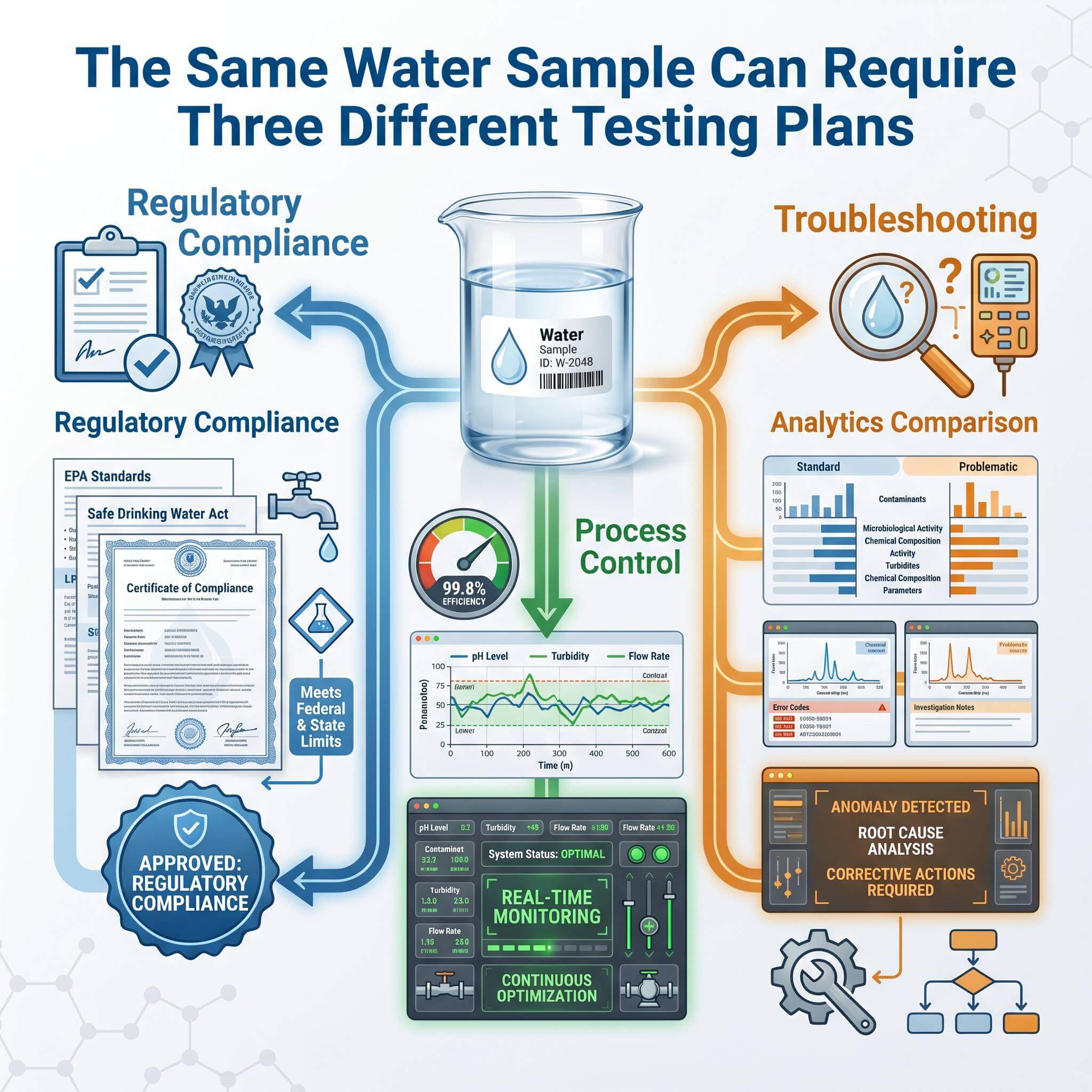
2. The Real Work Profile of Wastewater Laboratories: Compliance and Process Control
For most wastewater laboratories, the primary mission is to support plant operation and meet regulatory compliance—not to conduct research and development.
Typical daily tasks include:
l Batch analysis according to national or international standard methods
l Providing timely data for process control (e.g., aeration adjustment, carbon dosing)
l Completing regulatory discharge monitoring reports
Tasks rarely involved:
u Development of new analytical methods
u Identification of completely unknown organic compounds
u Acquisition of full spectral data for qualitative or structural analysis
As a result, the “versatility” offered by spectrophotometers is rarely utilized in these laboratories and effectively represents functional redundancy.
3. Standard Methods and Compliance: Fixed Wavelengths Are Sufficient
A critical technical fact is that mainstream wastewater monitoring standards explicitly specify endpoint measurements at fixed wavelengths.
Typical examples:
ü COD (dichromate method): After digestion, the absorbance of trivalent chromium is measured at a specified wavelength and compared with a standard curve. Spectral scanning is unnecessary.
ü Ammonia nitrogen (salicylate or Nessler method): The colored complexes formed exhibit maximum absorbance at fixed visible wavelengths.
ü Total phosphorus / total nitrogen: After digestion and oxidation, the final determination step is always a fixed-wavelength photometric measurement.
The essence of compliance: Regulators recognize data generated by strict adherence to standard methods, include sample preparation, digestion, color development, and measurement at the specified wavelength. Using a spectrophotometer does not automatically make results “more compliant” or “more accurate.” Accuracy depends on disciplined execution of the method, not on instrument complexity alone.
4. The True Bottleneck of Data Accuracy: Process Control, Not Instrument Complexity
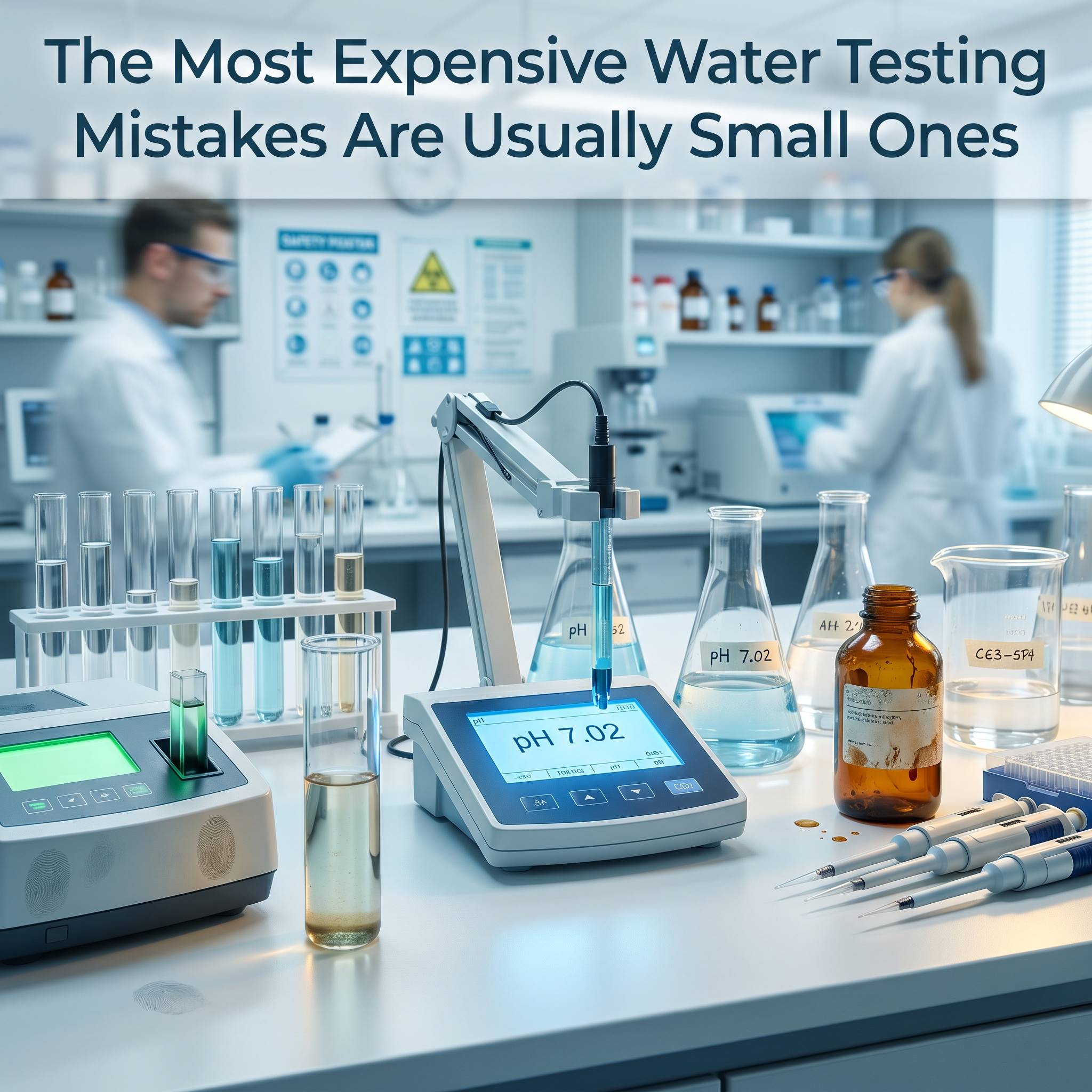
From an engineering standpoint, accuracy for COD and nutrient analysis depends far more on sample handling and process control than on the sophistication of the instrument.
Primary sources of error (ranked by impact):
1.Sample representativeness (collection, mixing, preservation)
2.Pretreatment and digestion (temperature uniformity, time control, chloride masking)
3.Reagent quality and preparation accuracy
4.Operator consistency and quality-control practices (duplicates, spikes, blanks)
Role of the instrument: When good process control is in place, a properly calibrated, stable dedicated photometer can deliver precision and accuracy fully sufficient for process control and Class-A compliance monitoring. A spectrophotometer cannot compensate for errors introduced upstream. If upstream steps such as sampling, preservation, or digestion are poorly controlled, increasing instrument complexity will not improve data accuracy and may even introduce additional variability.
5. Operating Cost and Practicality: Often Overlooked Engineering Factors
Hidden burdens of spectrophotometers
u Higher training requirements: operators must understand more complex software and optical concepts
u More demanding calibration and verification: wavelength accuracy, photometric linearity, stray light checks
u Higher maintenance needs and failure risk due to precision moving parts
u Greater risk of operator error, especially incorrect wavelength selection
Engineering advantages of dedicated photometers
ü Ready-to-use operation with built-in methods
ü Rapid staff training and easier standardization
ü Rugged design suitable for industrial environments
ü Simplified maintenance, often manageable in-house
In high-throughput, repetitive wastewater laboratory settings, ease of use and stability directly translate into higher efficiency and more consistent data quality.
In long-term operation, total cost of ownership in wastewater laboratories is dominated by labor, error correction, downtime, and retraining rather than initial instrument purchase price.
6. When Is a Spectrophotometer Truly Necessary?
Investment in a spectrophotometer is justified when laboratories:
l Participate in national or industry standard method development or validation
l Handle emergency or research samples with unknown or highly complex composition requiring spectral scanning
l Support academic teaching and research involving optical principles or method development
For most production-oriented wastewater laboratories focused on operation and compliance, such scenarios are rare.
7. An Engineering-Driven Smart Selection Strategy
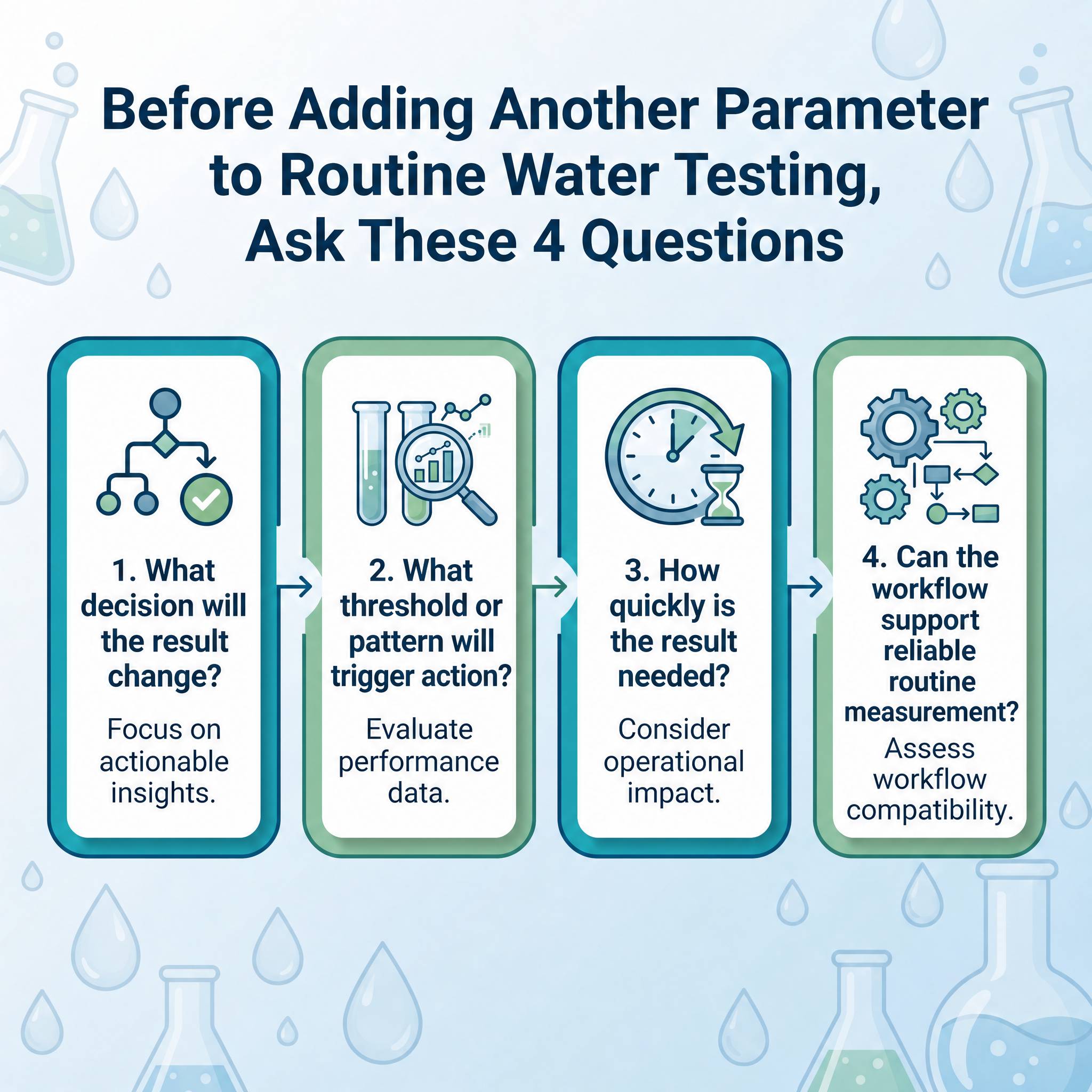
Rather than asking “Do we need a spectrophotometer?”, engineers and laboratory managers should systematically answer:
l Testing profile: Which parameters account for 95% of routine testing? (Typically COD, ammonia, total phosphorus, total nitrogen—fewer than 10 parameters)
l Method standardization: Do these parameters have clearly defined standard methods with fixed wavelengths?
l Throughput and staffing: What is the daily sample volume, and what is the technical background of operators?
l Core objective: Maximum research flexibility, or stable, efficient, error-resistant production-grade data?
In most cases, the answers clearly point to:
Core configuration: A high-performance multi-parameter water quality photometer/analyzer covering the majority of laboratory needs
Critical support equipment: A precisely temperature-controlled intelligent digestion system
Quality foundation: A rigorously implemented laboratory quality management system, including calibration, reagent management, staff training, and QC sample analysis
Conclusion
For the vast majority of wastewater treatment plant laboratories, a spectrophotometer is not a necessity but an example of functional over-specification. Routine wastewater monitoring is built on standardized methods, fixed-wavelength measurements, and stable, repeatable execution.
In this application context, dedicated photometers or water quality analyzers typically deliver equivalent analytical validity while offering superior usability, cost efficiency, and long-term operational reliability. Smart instrument selection is not only about choosing the most technically complex tool but is about choosing the tool that best fits real requirements.
When instrument selection aligns precisely with actual monitoring needs, wastewater laboratories achieve better data quality, smoother daily operations, and more reliable support for process optimization and stable plant performance. In engineering practice, “fit for purpose” is always more valuable than “highest specification.”
Recommend photometer water quality analyzer for wastewater laboratories:
iWannaMP Multi-Parameter Photometer Water Quality Analyzer