+852 46135220

In water quality testing, many users first focus on the instrument.
They may ask:
u Is the photometer accurate enough?
u Is the pH meter properly calibrated?
u Is the COD reactor stable?
u Is the spectrophotometer suitable for this method?
u Is the test range wide enough?
These questions are important. But in many routine water quality testing applications, the biggest source of error may already appear before the sample enters the instrument.
It may come from the sample itself.
A good instrument can only measure the sample it receives. If the sample is not representative, changes during storage, or is handled improperly, even a high-quality instrument may produce a result that looks precise but does not reflect the real water condition.
In routine water quality testing, sample-related errors often come from non-representative sampling, delayed analysis, unsuitable containers, poor mixing, improper filtration, incorrect preservation, matrix interference, or dilution mistakes. These factors can affect common parameters such as pH, conductivity, dissolved oxygen, residual chlorine, COD, ammonia nitrogen, nitrate, phosphate, turbidity, and color. Therefore, reliable water testing depends not only on instrument accuracy, but also on how the sample is collected, stored, prepared, and handled before measurement.
1. The Instrument Measures the Sample, Not the Original Water Body
This is one of the most important concepts in routine water quality testing. When a water sample is collected from a pool, river, discharge outlet, cooling system, aquaculture pond, or process pipeline, it becomes a small representative portion of a much larger water system.
The instrument cannot directly measure the entire system. It measures the water sample:
n at that sampling point;
n at that specific time;
n in that specific container;
n after a specific storage period;
n under specific handling conditions;
n with or without filtration, mixing, preservation, or dilution.
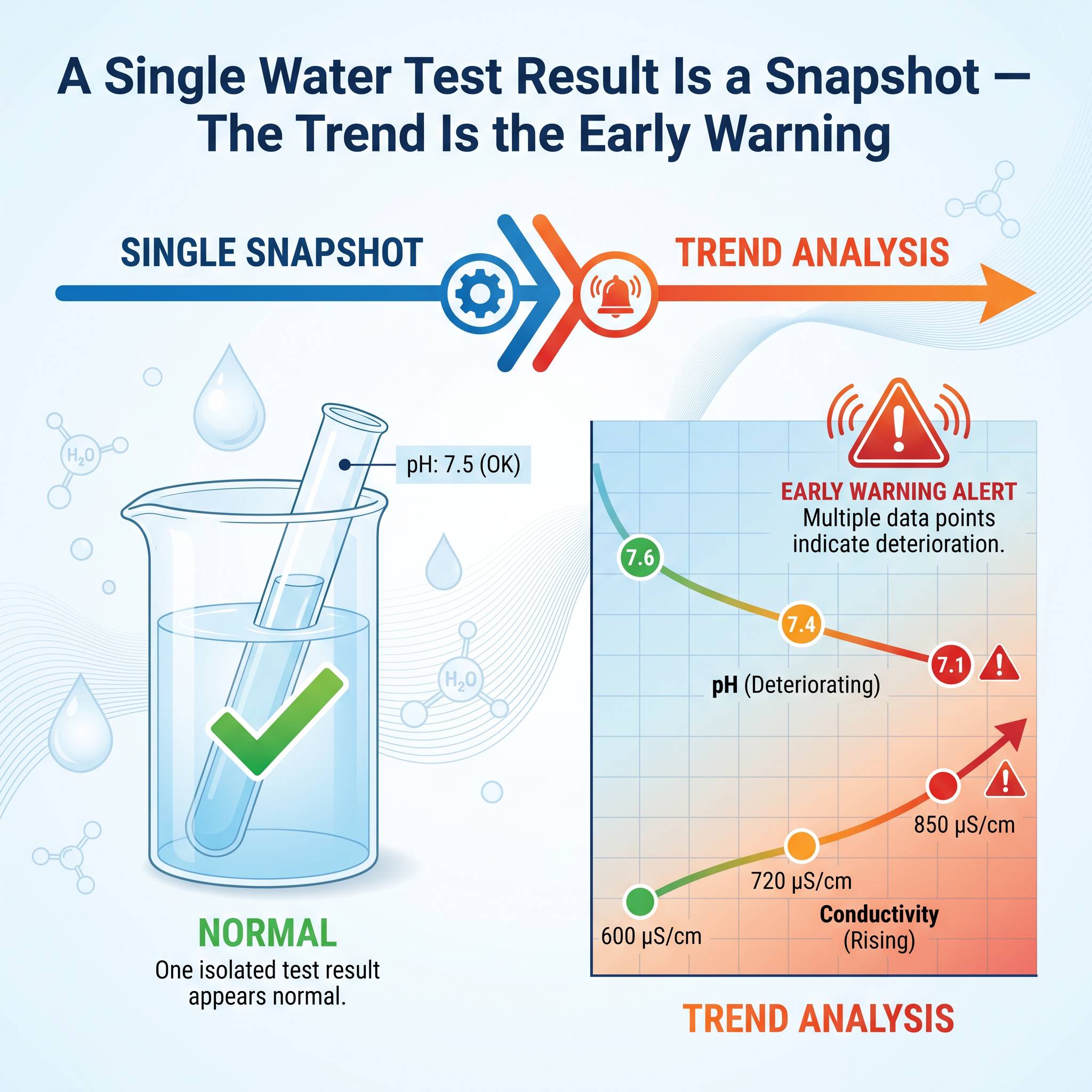
If any of these steps are poorly controlled, the result may no longer represent the real water condition. For example, a wastewater sample collected from the wrong location may show a COD value lower than the actual discharge level. A pH sample tested several hours later may no longer reflect the original on-site pH value. A sample containing suspended solids may produce different results depending on whether it is fully mixed before testing.
In these cases, the problem is not necessarily the instrument. The problem is that the sample has changed, or it was not representative from the beginning.
In practical water analysis, a representative sample is the foundation of reliable data. If the sample does not represent the real water body or process condition, the final result may be technically correct for that bottle, but wrong for the actual system.
2. A Non-Representative Sample Leads to Misleading Results
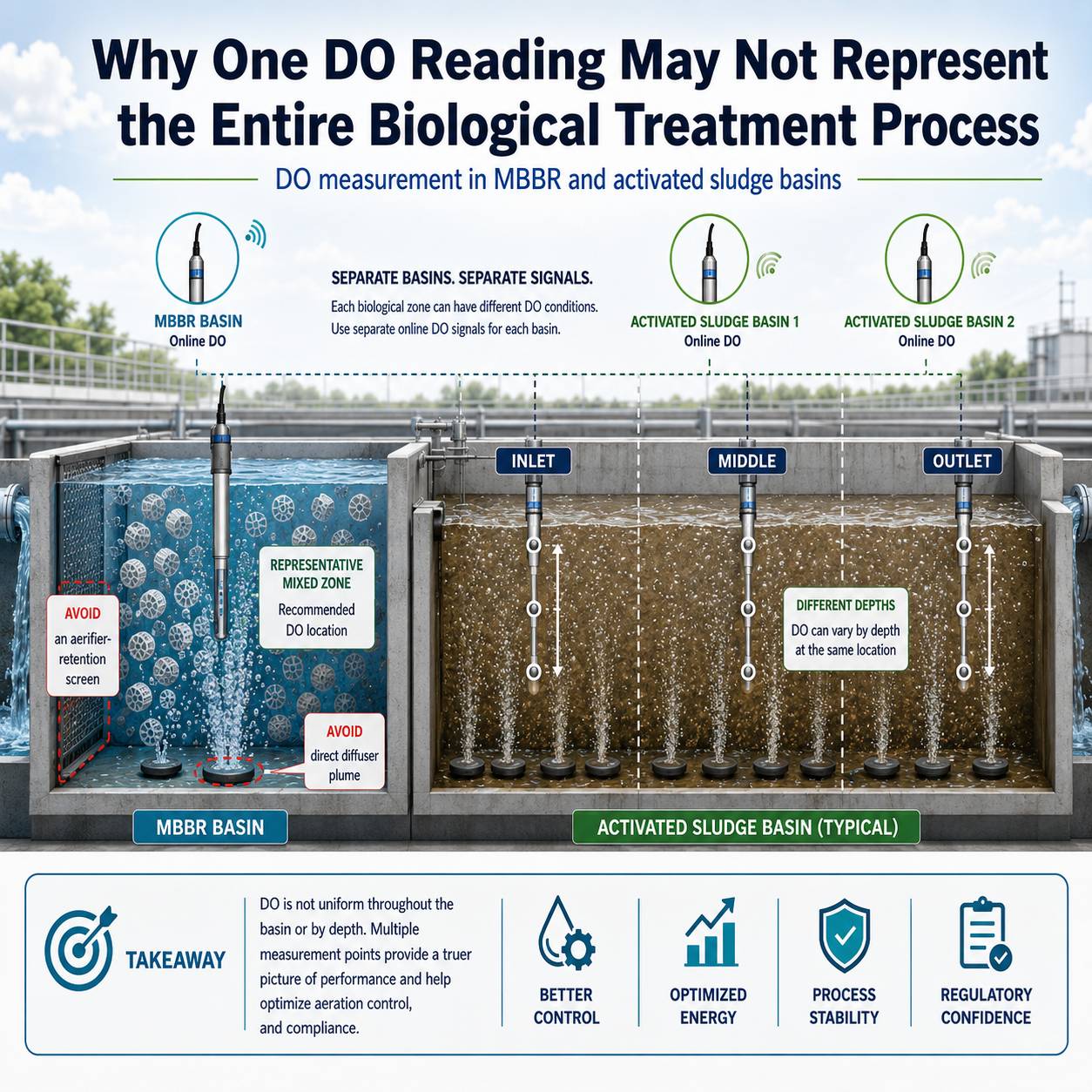
One of the most common mistakes in water quality testing is assuming that any collected sample can automatically represent the whole water system. In reality, water quality can vary significantly with location, depth, time, flow condition, and treatment stage.
In wastewater treatment
Influent and effluent quality may change throughout the day. Industrial discharge may fluctuate by batch. COD, ammonia nitrogen, color, pH, and suspended solids may all change due to production schedules, cleaning cycles, chemical dosing, and hydraulic loading. A sample collected during a low-load period may appear acceptable, while the system may fail during peak discharge.
In aquaculture
Water quality may differ between the surface and lower water layers. Dissolved oxygen, ammonia nitrogen, pH, and temperature may change between morning and afternoon. A single sample collected from one corner of a pond may not represent the real environment experienced by fish or shrimp.
In industrial process water
Cooling water, boiler feedwater, rinse water, and recycled water may show different quality depending on the point of use. Sampling from the wrong valve or a stagnant pipeline section may produce data that looks normal but does not reflect the actual operating process.
In environmental monitoring
River, lake, and groundwater samples may be affected by flow direction, rainfall, sediment disturbance, depth, and nearby discharge sources.
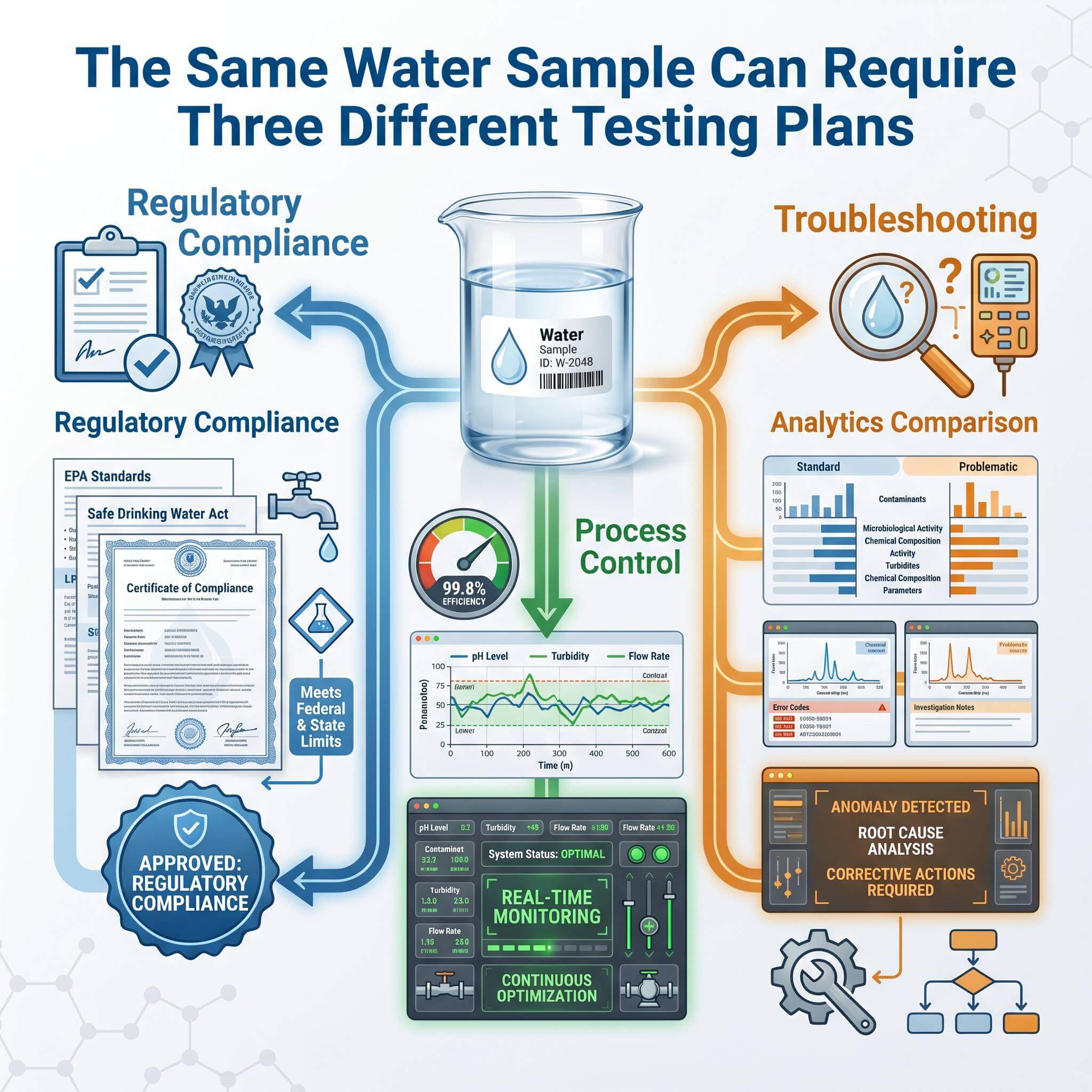
This is why sampling location and sampling method must be selected according to the testing purpose. A water quality test result is useful only when the sample represents the question being asked. In some applications, a grab sample is useful because it reflects the water condition at one specific time. In other cases, especially where wastewater quality changes throughout the day, a composite sample may provide a better picture of average discharge conditions. The right sampling strategy depends on whether the user needs a snapshot result, a daily average, or process troubleshooting data.
3. Water Samples May Change After Collection
Another major source of error is sample change after collection. Once water leaves its original environment, it is not always stable. Physical, chemical, and biological changes may continue inside the sample bottle. Some parameters can change quickly.
pH
pH may change due to carbon dioxide exchange with air, biological activity, chemical reactions, or temperature changes. This is especially important for low-buffer water, pure water, aquaculture water, and certain wastewater samples.
Dissolved Oxygen
Dissolved oxygen may change rapidly after sampling due to oxygen exchange, microbial respiration, temperature changes, and sample agitation. In many applications, dissolved oxygen should be measured directly on site or as soon as possible.
Residual Chlorine
Residual chlorine can decay quickly, especially in the presence of organic matter, reducing substances, sunlight, or microbial contamination. Delayed testing may underestimate the actual chlorine level at the sampling point.
Ammonia Nitrogen
Ammonia nitrogen can be affected by biological activity, pH, temperature, and sample preservation. In wastewater and aquaculture applications, delayed testing or improper preservation may affect the reliability of ammonia nitrogen results.
COD
COD is usually more stable than some field parameters, but it can still be affected by insufficient mixing, uneven distribution of suspended solids, biological activity, and preservation conditions. For samples with high suspended solids or complex industrial wastewater, sample handling is especially important.
Turbidity and Suspended Solids
Particles may settle during storage. If the sample is not fully mixed before testing, the result may be lower or higher than the actual condition. The longer the delay between sampling and testing, the greater the risk that the result no longer represents the original sample condition.
As a general rule, field-sensitive parameters such as temperature, pH, dissolved oxygen, residual chlorine, and sometimes conductivity should be measured as close to the sampling point and sampling time as possible. Laboratory parameters such as COD, ammonia nitrogen, nitrate, phosphate, total phosphorus, and color may allow more controlled analysis, but still require proper preservation and holding time.
4. The Sample Container Also Matters
The sample container is often overlooked. But it can affect the result in many ways. A poor container may introduce contamination, adsorb target substances, react with the sample, or fail to protect the sample from light, air, or temperature changes.
Important factors include:
l container material;
l cleanliness;
l residual detergent;
l contamination from previous samples;
l cap sealing;
l light exposure;
l bottle volume;
l headspace;
l suitability for the target parameter.
For routine water quality testing, the sample bottle should be clean, suitable for the target parameter, and clearly labeled. For trace analysis, trace metals, organic compounds, microbiological testing, or sensitive parameters, container selection and pretreatment become even more important. Even for common parameters such as pH, conductivity, COD, ammonia nitrogen, phosphate, nitrate, and turbidity, poor container handling may still introduce unnecessary error.
A clean and suitable container is not a small detail. It is part of data quality control. For routine testing, sample bottles should not be selected only by convenience. The bottle should match the parameter, the sample type, and the expected holding time. For example, samples for microbiological testing, metals, organic compounds, and general chemical parameters may require different containers and different preparation procedures.
5. Poor Mixing Can Change the Result
Many water samples are not completely uniform. This is especially true for:
l wastewater;
l sludge-containing samples;
l industrial discharge;
l river water after rainfall;
l samples containing suspended solids;
l aquaculture pond water;
l colored wastewater;
l high-turbidity water.
If the sample contains particles, sediment, oil droplets, biomass, or unevenly distributed chemicals, the portion transferred into the test vial may not represent the whole sample.
For example:
u COD may be affected if organic solids are unevenly distributed.
u Turbidity may change if particles settle before testing.
u Phosphate or metals may be affected if substances are attached to suspended particles.
u Particles or sample color may interfere with colorimetric tests.
u Ammonia nitrogen or nitrate results may vary if the sample is not homogeneous.
Before testing, the sample should usually be mixed according to the method requirements. However, mixing must also be controlled. Excessive shaking, aeration, or unnecessary filtration may affect some parameters. The key is not to shake every sample aggressively. The key is to understand the requirements of the method.
6. Filtration Is Not Always a Neutral Step
In water quality testing, filtration is sometimes necessary, especially when the method requires measuring the dissolved form of a parameter. But filtration can also change the meaning of the result. For example:
u unfiltered COD may represent total oxidizable substances;
u filtered COD may mainly represent dissolved organic matter;
u unfiltered phosphate may include particulate phosphorus;
u filtered phosphate may represent dissolved orthophosphate;
u metal results may differ depending on whether total metals or dissolved metals are measured;
u filtration can reduce turbidity and color interference, but the sample may no longer represent overall water quality.
This is why filtration should not be performed casually just to make the sample “easier to test.”
Before filtering a sample, users should ask:
n Does the method require a filtered or unfiltered sample?
n Am I measuring total concentration or dissolved concentration?
n Will filtration remove part of the target substance?
n Will the result still match the testing purpose?
A filtered result does not automatically become more accurate. It may simply answer a different question. Filtration should be treated as a method-defined preparation step, not as a general way to improve sample appearance. A clearer sample is not always a more representative sample.
7. Time and Temperature Can Affect Testing Accuracy
Water samples are often transported from the field to the laboratory. During transportation, the sample may experience:
u temperature changes;
u sunlight exposure;
u microbial activity;
u gas exchange;
u sedimentation;
u chemical reactions;
u pressure changes;
u excessive storage time.
These factors may affect different parameters in different ways. For example, warm storage may accelerate biological reactions. Sunlight may affect residual chlorine and some reactive compounds. Long storage may allow suspended solids to settle. Air exposure may affect pH, dissolved gases, and some oxidation-reduction conditions.
For sensitive parameters, on-site measurement or immediate testing is usually preferred. Parameters such as pH, temperature, dissolved oxygen, residual chlorine, and conductivity are usually measured quickly because they may change after sampling. For laboratory parameters such as COD, ammonia nitrogen, nitrate, phosphate, and total phosphorus, preservation method and holding time should follow the method requirements.
The basic principle is simple: The less stable the parameter, the more important timely testing becomes.
8. Preservation Must Match the Parameter
Sample preservation is used to reduce changes between collection and analysis. But the preservation method must be suitable for the parameter being tested. Common preservation methods may include:
l cooling;
l acidification;
l protection from light;
l chemical preservatives;
l immediate analysis;
l special containers;
l limited holding time.
However, the wrong preservation method can create new problems. For example, acidification may be suitable for some analyses but not for others. Cooling may slow biological activity, but it cannot solve every stability issue. If used incorrectly, chemical preservatives may interfere with certain test methods.
Therefore, one bottle, one preservation method, and one holding time cannot reliably serve all water quality parameters. Good sample preservation must be parameter-specific. In routine testing, it is common to collect separate samples for different parameter groups, especially when preservation requirements are different. Good sample management means knowing which parameters can share one sample and which parameters require separate handling.
9. Sample Matrix Can Make Testing More Difficult
The same test method may perform differently in different sample matrices. Testing COD in relatively clean surface water is different from testing COD in dyeing wastewater, food processing wastewater, landfill leachate, pharmaceutical wastewater, or high-salinity industrial discharge.
The sample matrix may contain substances that interfere with the test. Common matrix-related problems include:
u strong color;
u high turbidity;
u suspended solids;
u high salt concentration;
u oxidizing agents;
u reducing agents;
u oil and grease;
u metals;
u high organic load;
u abnormal pH;
u surfactants;
u complex industrial chemicals.
For photometric and colorimetric testing, sample color and turbidity are especially important because they affect light absorption and scattering. A colored sample may interfere with the color reaction. A turbid sample may interfere with optical readings. Suspended solids may affect reproducibility. High-concentration samples may require dilution, but dilution introduces another source of error.
This is why method selection should consider not only the parameter name but also the sample type. This is especially important for industrial wastewater testing. Dyeing wastewater, food processing wastewater, pharmaceutical wastewater, landfill leachate, high-salinity wastewater, and chemically complex effluents may require additional attention to interference control, dilution, blank correction, digestion efficiency, or method validation. In these samples, the main challenge is often not whether the instrument can read a value, but whether the method can produce a reliable value.
10. Dilution Can Help, But It Also Adds Error
Dilution is commonly used when the sample concentration is higher than the test range. For example, high concentrations of COD, ammonia nitrogen, nitrate, phosphate, or color may require dilution before measurement.
Dilution can make the sample measurable, but it is not harmless. Possible problems include:
u inaccurate pipetting;
u poor mixing;
u wrong dilution factor;
u contamination from dilution water;
u concentration falling below the detection limit after dilution;
u changes in sample chemistry;
u increased calculation error;
u operator inconsistency.
The higher the dilution factor, the more important technique becomes. If performed carefully, a 2× dilution may introduce limited error. But a 50× or 100× dilution requires much stronger control of pipetting, volume measurement, and mixing.
For routine laboratories, dilution should be clearly recorded, and the final result should be calculated carefully. In routine testing, dilution should not be used as a habit. It should be used only when the expected concentration is above the method range or when the sample matrix requires controlled preparation. Whenever possible, choosing a method range close to the normal sample concentration is better than relying on large dilution factors..
11. Common Sample-Related Errors in Routine Water Quality Testing
Many routine testing errors can be traced back to sample handling rather than instrument failure. Common examples include:
Sampling from the Wrong Location: The sampling point does not represent the process, discharge condition, or water body being evaluated.
Testing After Too Long a Delay: The parameter changes before measurement.
Using an Unsuitable Bottle: The sample becomes contaminated, exposed to air, or chemically altered.
Not Mixing the Sample Properly: Suspended solids or unevenly distributed components lead to inconsistent results.
Filtering When the Method Does Not Require It: The test result changes from total concentration to dissolved concentration.
Ignoring Sample Temperature: Temperature-sensitive parameters or instruments may produce unstable or biased readings.
Using Old or Improperly Preserved Samples: The sample no longer represents its original condition.
Diluting Improperly: The final calculated result becomes unreliable.
Treating All Water Samples the Same Way: Clean water, wastewater, industrial water, and aquaculture water have different sample handling requirements.
These problems are common because they are easy to overlook. They happen before measurement starts, so when results appear inconsistent, users may wrongly blame the instrument. When a result looks inconsistent, the first question should not always be “Is the instrument wrong?” A better troubleshooting sequence is to check the sampling point, sample age, container, preservation, mixing, filtration, dilution, reagent condition, and calibration record before making a final judgment.
12. Practical Recommendations for Better Sample Control
For routine water quality testing laboratories, the following practices can help reduce sample-related errors.
Clarify the Purpose Before Sampling: Before collecting water, clarify what decision the result will support. Is the test used for process control, compliance checking, troubleshooting, product quality, aquaculture management, or environmental monitoring?
The sampling strategy should match the purpose.
Choose the Correct Sampling Point: The sample should represent the condition being evaluated. For wastewater, this may mean selecting the correct influent, effluent, or treatment-stage location. For industrial water, it may mean sampling from an active process pipeline instead of a stagnant pipe section. For aquaculture, it may mean considering depth, time, and pond location.
Use Clean and Suitable Containers: Avoid containers with unknown history, detergent residue, or poor sealing. Use containers suitable for the parameter and sample type.
Label Samples Clearly: Record the sample ID, location, time, date, operator, preservation method, and testing purpose.
Test Unstable Parameters Quickly: pH, temperature, dissolved oxygen, residual chlorine, and some field parameters should be measured as soon as possible, preferably on site when required.
Follow Preservation Requirements: Different parameters may require different preservation methods. Do not assume that one sample bottle and one storage method are suitable for all tests.
Mix the Sample Properly Before Taking a Subsample: Especially for wastewater and samples containing suspended solids, mixing should be consistent and follow the method requirements.
Be Careful with Filtration and Dilution: Filter or dilute only when required by the method or sample condition. Record all preparation steps clearly.
Consider Matrix Interference: For colored, turbid, high-salinity, or complex industrial samples, consider whether the selected method is suitable.
Keep the Workflow Consistent: Routine testing depends on repeatability. Consistent sample handling helps reduce differences between operators, shifts, and testing days.
FAQ: Water Sample Errors in Water Quality Testing
1. Can a good instrument still produce misleading water test results?
Yes. A good instrument can still produce misleading results if the water sample is not representative, has changed during storage, or has been handled incorrectly. Instrument accuracy cannot correct poor sampling or improper sample preparation.
2. Which water quality parameters should be tested quickly after sampling?
Parameters such as pH, temperature, dissolved oxygen, residual chlorine, and sometimes conductivity should usually be tested as soon as possible because they can change after sampling.
3. Does filtering a water sample make the result more accurate?
Not always. Filtration may reduce turbidity or particles, but it can also change the meaning of the result. A filtered sample may represent dissolved substances, while an unfiltered sample may represent total concentration.
4. Why does sample matrix matter in water testing?
Sample matrix matters because color, turbidity, suspended solids, salinity, oxidizing agents, reducing agents, oil, metals, and complex chemicals can interfere with testing methods, especially photometric and colorimetric methods.
5. How can laboratories reduce sample-related errors?
Laboratories can reduce sample-related errors by choosing representative sampling points, using suitable containers, testing unstable parameters quickly, following preservation requirements, mixing samples properly, controlling filtration and dilution, and keeping the workflow consistent.
Conclusion
In routine water quality analysis, the sample is not a passive object. It is an active part of the measurement process. If the sample changes, the result changes. So, the data quality does not begin when the instrument starts reading. It begins when the sample is collected.
A water sample is not just water in a bottle. It is the foundation of the entire measurement.
If the sample is representative, stable, properly preserved, and correctly prepared, the instrument has a fair chance to produce useful data. If the sample is poor, the result may be misleading no matter how advanced the instrument is.
This is why good water quality testing starts before the instrument is used. For laboratories, water treatment plants, industrial users, environmental monitoring teams, and aquaculture professionals, improving sample control is often one of the most practical ways to improve testing reliability.
Because in many cases, the biggest source of error is not the instrument. It is the sample.