+852 46135220

Introduction
Ammonia nitrogen is one of the most critical monitoring parameters in biological wastewater treatment processes. It not only directly reflects the influent nitrogen load but also profoundly affects microbial activity, treatment performance, and final effluent compliance. Under conditions of fluctuating influent quality, increasing process complexity, and ever-tightening discharge standards, effective ammonia nitrogen monitoring has become a core engineering tool for precise process control, prevention of system failure, reduction of operating energy consumption, and long-term stable compliance.
From an engineering practice perspective, this article provides an in-depth discussion of the multiple roles of ammonia nitrogen monitoring in biological wastewater treatment, covering process relevance, advanced control strategies, sample pretreatment, and practical measurement considerations.
1. Ammonia Nitrogen in Wastewater: Forms, Sources, and Process Significance
Ammonia nitrogen refers to the total nitrogen present in water in the form of free ammonia (NH₃) and ammonium ions (NH₄⁺). The ratio between these two species dynamically changes with pH and temperature, with higher pH and temperature favoring the formation of free ammonia.
Main sources include:
l Domestic wastewater (urine and protein degradation)
l Industrial wastewater (food processing, chemical, pharmaceutical, coking industries)
l Landfill leachate and agricultural runoff
Dual role in treatment processes:
ü Substrate: An essential nutrient for the metabolism, growth, and reproduction of nitrifying bacteria.
ü Inhibitor: High concentrations of free ammonia are highly toxic to microorganisms, particularly sensitive nitrifiers and anaerobic ammonium oxidation (anammox) bacteria.
2. Core Importance of Ammonia Nitrogen Monitoring in Biological Treatment
2.1 Early-Warning Indicator for Influent Load Shocks
Real-time or rapid ammonia nitrogen measurements provide the most direct indication of nitrogen load shocks in the influent. Sudden increases often signal industrial discharge impacts or pretreatment failures, allowing engineers to adjust process conditions in advance.
2.2 Key Parameter and Performance Benchmark for Nitrification
Ammonia nitrogen is the starting point of the nitrification process. Residual ammonia concentration at the end of the aerobic zone directly indicates whether nitrification is complete and helps diagnose issues such as insufficient dissolved oxygen, alkalinity deficiency, or inadequate sludge age.
2.3 Sentinel for Free Ammonia Toxicity Prevention
When combined with pH monitoring, ammonia nitrogen data enable real-time assessment of free ammonia inhibition risk, allowing timely corrective actions to protect nitrifying biomass.
3. Advanced Applications in Process Control and Optimization
3.1 Intelligent Aeration Control for Energy Savings
Feedback control based on ammonia nitrogen setpoints at the end of the aerobic zone allows dynamic adjustment of aeration intensity, typically achieving energy savings of 10–30% while maintaining stable treatment performance.
3.2 Sludge Age Management and Microbial Population Optimization
Effluent ammonia nitrogen concentration is a key indicator of whether the sludge retention time (SRT) meets the growth requirements of nitrifying bacteria. It guides sludge wasting strategies and helps balance biological nutrient removal performance.
3.3 “Command Variable” in Advanced Nitrogen Removal Processes
In advanced processes such as anammox and shortcut nitrification, ammonia nitrogen serves as a core control variable for regulating reaction pathways and material ratios. It is also used in conventional processes to calculate precise external carbon dosing.
4. Sample Pretreatment: The Critical Role of Digestion
For industrial wastewater containing complex matrices, organic amines, or protein-bound nitrogen, direct measurement may not accurately reflect total ammonia nitrogen. In such cases, digestion becomes a critical pretreatment step.
Purpose of digestion: Under strong acidic conditions and elevated temperatures, digestion converts organic nitrogen compounds and complexed ammonium into free ammonium ions, enabling unified and accurate determination.
Common digestion methods:
l Sulfuric acid–potassium sulfate digestion:
A classical method suitable for most wastewater samples. In the presence of catalysts (e.g., mercury sulfate or copper sulfate), heating under strongly acidic conditions decomposes organic matter and converts nitrogen into ammonium salts.
l Microwave digestion:
Uses microwave heating in sealed high-pressure vessels to rapidly complete digestion. Advantages include fast processing, low reagent consumption, low blanks, and reduced loss of volatile components, making it well suited for batch processing and high-chloride wastewater.
l Steam distillation separation:
The sample is alkalized and distilled, releasing ammonia gas that is absorbed in an acidic solution. This method effectively separates most interferences (e.g., color, turbidity, metal ions) and is ideal for high-accuracy measurements and complex matrices.
Engineering selection guidance: Routine municipal wastewater may not require digestion. However, for food, chemical, and pharmaceutical wastewater, digestion pretreatment must be evaluated and validated. Laboratories should select appropriate equipment—electric heating digesters, microwave digesters, or distillation units—based on sample characteristics, throughput, and safety requirements.
5. Practical Engineering Analysis of Measurement Methods
5.1 Comparison and Selection of Mainstream Analytical Methods
Nessler Reagent Spectrophotometric Method
Advantages: A classical method with a long application history, mature procedures, and high sensitivity; widely cited in standard methods.
Engineering challenges: The reagent contains highly toxic mercury iodide, imposing strict safety requirements and generating hazardous mercury-containing waste, increasing compliance and disposal costs. It is also susceptible to interference from calcium, magnesium, residual chlorine, and turbidity, requiring stringent pretreatment for complex industrial samples.
Salicylate (Indophenol Blue) Spectrophotometric Method
Advantages: Environmentally friendly with no highly toxic reagents; generally better resistance to interferences and now adopted in many updated international and national standards.
Engineering considerations: Color development conditions must be well controlled, and reagent quality has a direct impact on measurement accuracy.
Ammonia Gas-Sensing Electrode Method
Advantages: Rapid measurement and suitable for continuous online monitoring; no liquid chemical reagents required, simplifying routine operation.
Engineering challenges: The selective membrane is prone to fouling by oil and proteins and requires regular cleaning, calibration, and replacement. Samples must be adjusted to high pH prior to measurement. High suspended solids, turbidity, or oily wastewater increase maintenance workload and affect data reliability.
Summary and Selection Recommendations
Both Nessler and salicylate methods are reliable laboratory techniques for routine analysis. Method selection should be based on:
ü Safety and environmental compliance: Laboratory safety capabilities and hazardous waste disposal costs
ü Sample matrix characteristics: Expected interferences and complexity
ü Standards and regulatory acceptance: Methods recognized by applicable regulations
For most modern laboratories, the salicylate method has become the preferred choice due to its safety and overall performance. The Nessler method remains applicable where safety infrastructure is adequate and standards explicitly allow its use. Gas-sensing electrode methods are mainly suitable for online monitoring or rapid field screening, provided that strict maintenance protocols are implemented.
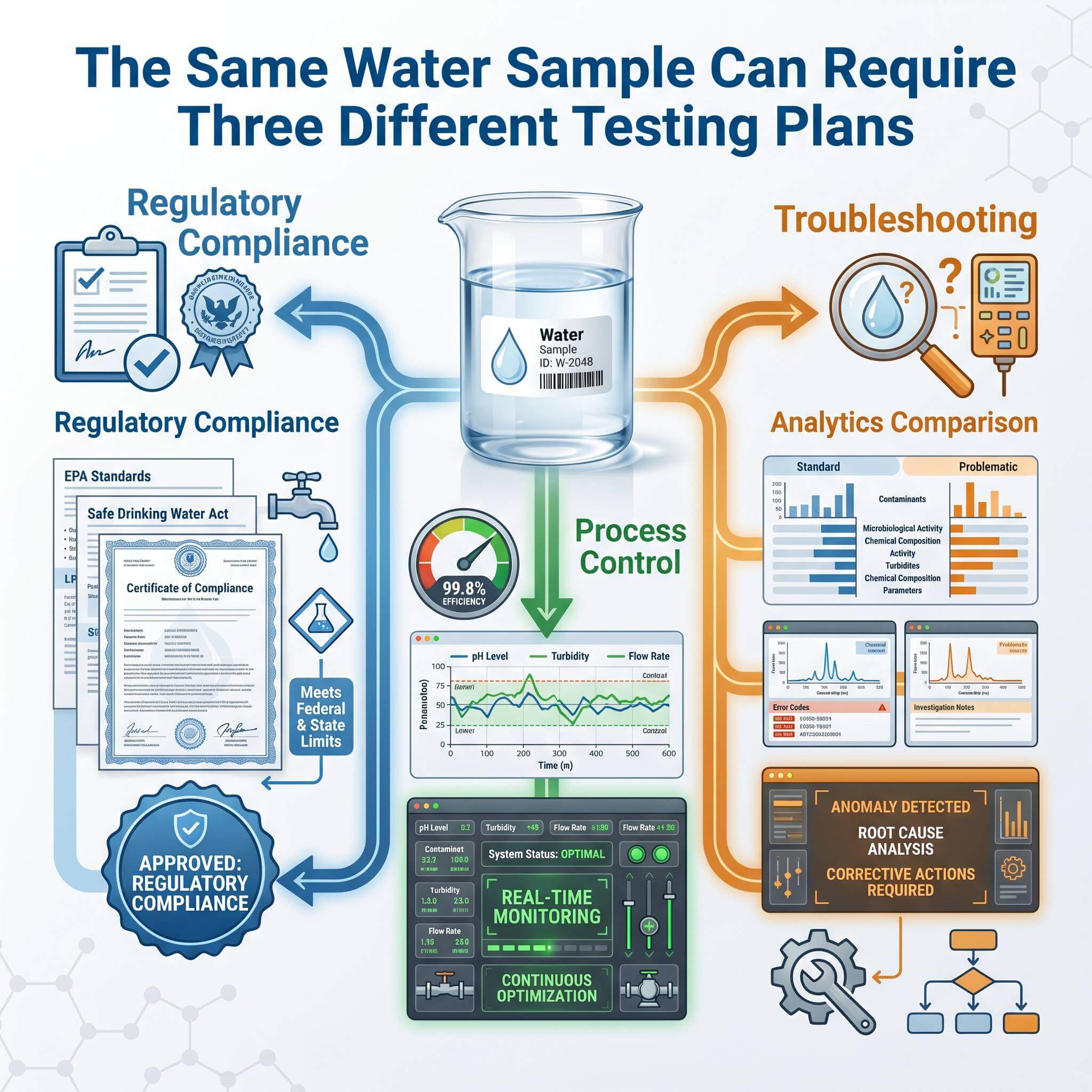
5.2 Online Monitoring vs. Laboratory Analysis: Role Definition
l Online ammonia analyzers: Used for real-time process control. Reliability of sample pretreatment units (filtration, degassing) is critical. Routine comparison with laboratory standard methods (daily or weekly) is essential.
l Laboratory analysis (with digestion if required): Serves as the final reference for compliance verification, method arbitration, instrument calibration, and diagnosis of complex samples.
6. Engineering Considerations for Instrument Selection
When selecting ammonia nitrogen analyzers for biological wastewater treatment, the following factors should be evaluated:
l Compliance with recognized standard methods
l Resistance to interferences and sample adaptability, including digestion compatibility
l Measurement range and accuracy covering both low process concentrations and high influent shock loads
l Maintenance intensity and total cost of ownership
l Data integration capability for connection to control systems
7. Typical Application Scenarios
Ammonia nitrogen monitoring is applied across all biological nitrogen removal processes. Strategic selection of monitoring points (e.g., anaerobic, anoxic, aerobic zones, and final effluent) forms a “sensor network” that provides a comprehensive understanding of process performance.
Conclusion
Ammonia nitrogen monitoring is the foundation of refined and intelligent operation in biological wastewater treatment plants. It goes beyond simple concentration measurement to become a diagnostic tool for process health, a control lever for energy and material consumption, and an early-warning system for compliance risks. For complex industrial wastewater, digestion-based pretreatment is a prerequisite for obtaining reliable ammonia nitrogen data.
By deploying robust ammonia nitrogen monitoring strategies—typically combining online monitoring with laboratory analysis—and deeply integrating the data into process control logic, wastewater treatment plants can transition from passive response to proactive prediction and optimization, ultimately achieving stable operation, cost savings, and superior environmental performance.
Recommend water quality testing instruments for ammonia nitrogen: