+852 46135220

In routine water quality testing, a result that falls within the acceptable range is often regarded as a sign that everything is normal.
l The pH is within the limit.
l The COD value is acceptable.
l The turbidity looks normal.
l The conductivity has not exceeded the specification.
l The ammonia nitrogen result remains below the control threshold.
At first glance, this may seem sufficient to conclude that the water system is operating normally. But in real water quality management, a normal water test result means that one measured value is within a defined limit at a specific moment. However, it does not prove that the whole water system is stable, representative, well-controlled, or free from operational risk. To judge whether a system is truly under control, laboratories and operators need to review trends, sampling quality, related parameters, method suitability, instrument verification, and process conditions.
This is an important distinction for water quality laboratories, wastewater treatment plants, industrial water users, drinking water systems, and environmental monitoring programs.
1. “Normal” Only Means the Result Is Within a Defined Limit
In water quality testing, a "normal result" usually means that the measured parameter meets a regulatory limit, internal specification, or operational control target. It should not be confused with full process control, because process control requires the result to be stable, repeatable, representative, and explainable within the actual operating context..
For example:
l pH between 6.5 and 8.5
l COD below the discharge limit
l Ammonia nitrogen below the treatment target
l Turbidity below a specified value
l Conductivity within the expected range
l Residual chlorine within the required control window
If the measured value falls within the required range, it is often recorded as “normal.”
But this only answers one question: Did the measured value pass the required limit at that moment?
It does not automatically answer deeper operational questions, such as:
u Is the process stable?
u Is the result close to the warning limit?
u Has the value changed sharply compared with historical data?
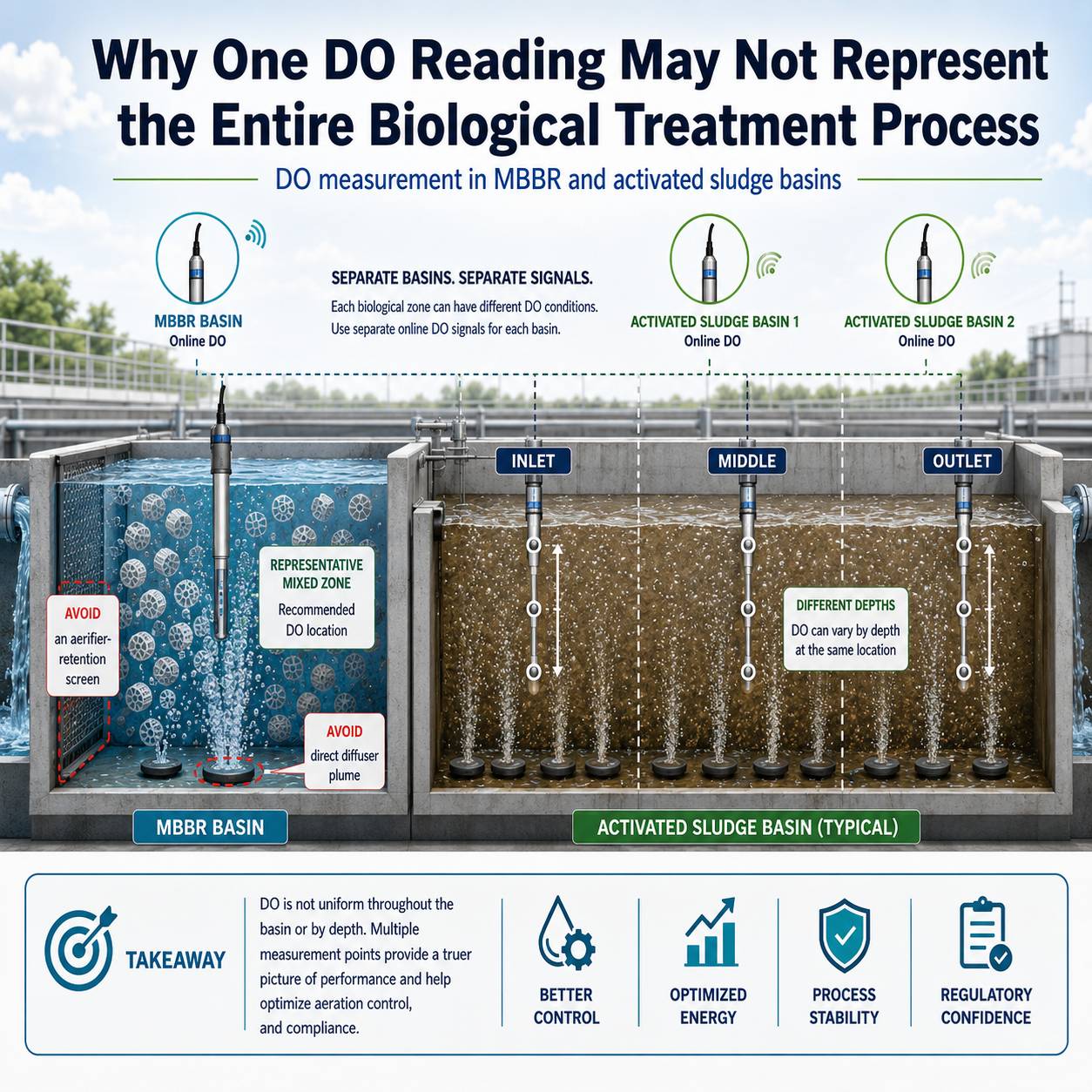
u Is the sampling point representative? For example, in the inlet, middle section, and outlet of a plug-flow aeration tank, the distribution of dissolved oxygen and ammonia nitrogen may differ by orders of magnitude.
u Has the instrument been properly calibrated? For example, is the slope of the pH electrode within 95%–102%? Has the zero potential drifted?
u Is the result consistent with other related parameters?
u Is the water quality likely to remain stable tomorrow?
This is why a normal result should not be interpreted in isolation.
From an engineering perspective, every “normal” value should be accompanied by an understanding of measurement uncertainty and process capability. For example, even if the COD result remains stable at 80% of the discharge limit, if the process capability index is below 1.0, the system may still carry a relatively high risk of exceeding the limit.
2. A Single Result Cannot Reveal the Full Water Quality Trend
Water quality is dynamic. It changes with raw water conditions, treatment efficiency, chemical dosing, rainfall, production load, biological activity, retention time, distribution network conditions, and many other factors.
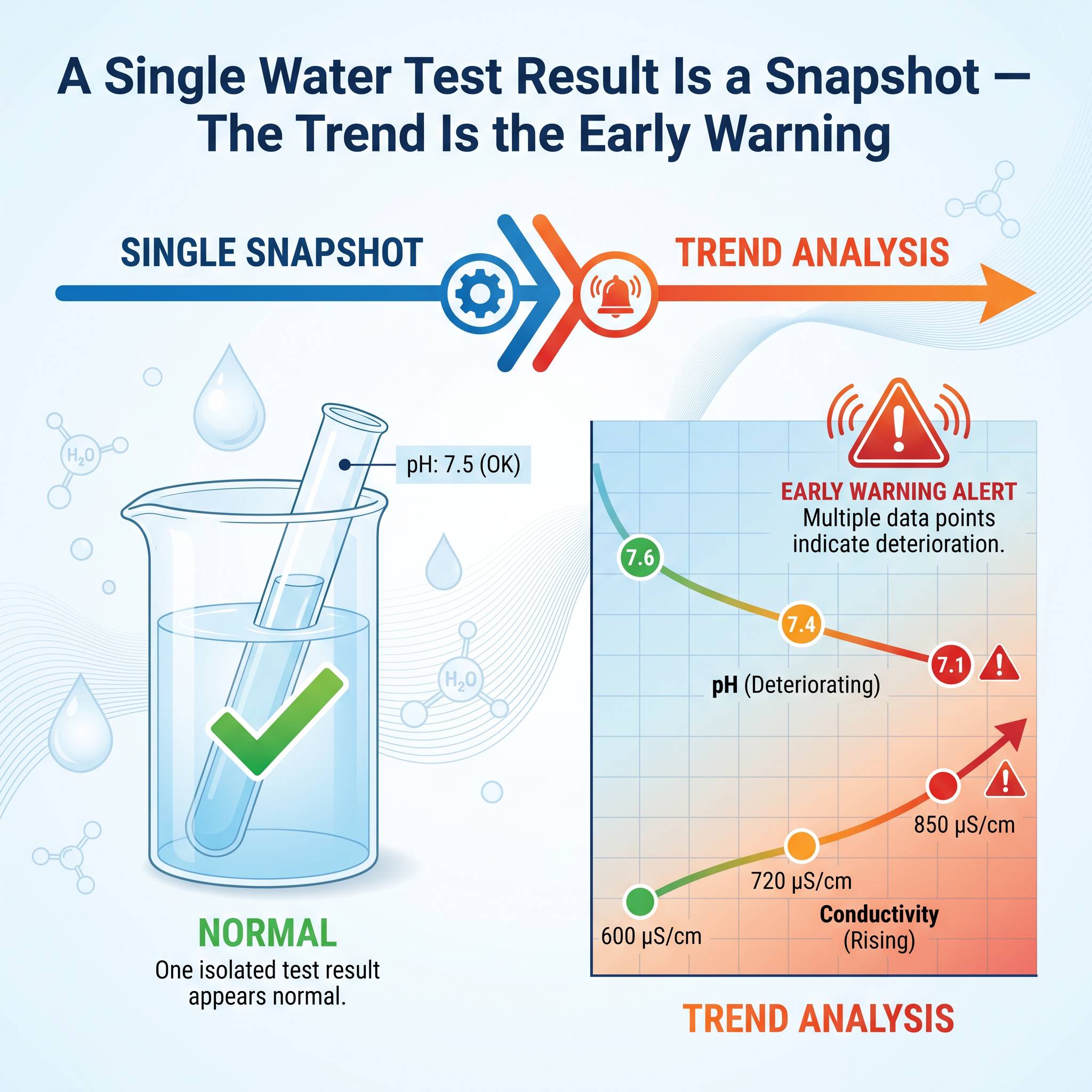
A single test result is only a snapshot. For example, a wastewater sample may show that COD is within the discharge limit today. However, if the COD value has been steadily rising over the past week, the system may already be moving toward instability. Similarly, a drinking water sample may show acceptable turbidity, but if residual chlorine is gradually declining across the distribution network, the protective capacity of disinfection control may be weakening.
A normal result becomes more meaningful only when it is compared with historical data.
The key question is not only: Is the value normal?
A better question is: Is this value normal for this system, at this time, under these operating conditions?
This is where trend analysis becomes essential.
3. A Result Can Be Normal but Still Moving in the Wrong Direction
One of the most common misunderstandings in routine water testing is focusing only on “pass” or “fail.”
In many systems, problems do not appear suddenly. They develop gradually. A parameter may remain within the acceptable range while already showing an early warning signal.
For example:
n The pH remains within range, but gradually drifts downward. For a nitrification system, this may indicate accelerated alkalinity consumption. Without intervention, the pH may quickly fall below the optimal range for nitrifying bacteria, usually around 7.5–8.0, leading to inhibition by free ammonia or nitrite.
n Conductivity is still acceptable, but slowly increases over several days, suggesting that total dissolved solids may be concentrating or that external salts may be entering the system.
n COD remains below the discharge limit, but shows a step increase after receiving a batch of production wastewater.
n Ammonia nitrogen is still acceptable, but the nitrification rate is declining. For example, the specific nitrification rate, measured as the amount of ammonia nitrogen removed per unit of MLVSS per day, has dropped from 0.03 gN/gVSS·d to below 0.015.
n Turbidity remains very low, but the rate of head loss increase in the filter is accelerating, indicating possible filter clogging or the early stage of filter breakthrough.
In these cases, the result may still be “normal,” but the direction of change is critical. For routine water testing, trend analysis is often more important than a single isolated result. A stable system usually shows values that fluctuate within an expected operating band. If the value remains within the official limit but continuously moves upward or downward, the system may already be drifting. This is why daily, weekly, or monthly trend charts are useful for COD, ammonia nitrogen, pH, conductivity, turbidity, residual chlorine, and other routine water quality parameters..
4. Normal Results Can Hide Sampling Problems
The reliability of a water quality test result depends on how well the sample represents the system. Even when the instrument and method are correct, poor sampling practice can produce a misleading “normal” result.
Common sampling-related problems include:
u Sampling from a location that cannot represent the whole system, such as a dead zone near the final discharge outlet of a wastewater treatment plant, or only taking water from the clear surface layer of a clarifier.
u Sampling at the wrong time and missing the period when shock loading occurs.
u Failing to mix the sample properly before testing, resulting in uneven distribution of suspended solids, oil, or microorganisms.
u Testing only after the sample has changed during storage. Parameters such as BOD₅, sulfide, and residual chlorine often require on-site measurement or strict preservation.
u Using contaminated or unsuitable containers. For example, using bottles washed with phosphate-containing detergent for phosphorus testing, or using plastic bottles instead of glass bottles for oil and grease testing.
u Ignoring stratification in tanks or reservoirs. In summer, the dissolved oxygen in the lower layer of a reservoir may approach zero, while the surface layer may become supersaturated due to algal photosynthesis.
u Sampling only during stable operating periods.
u In industrial wastewater applications, if only grab samples are collected instead of 24-hour flow-weighted composite samples, a “normal” COD result may completely miss intermittent high-concentration shock loads.
A water quality result can only represent the system if the sample represents the system. Poor sampling can make an unstable system appear normal, especially in wastewater plants, storage tanks, distribution networks, and industrial discharge monitoring..
5. Normal Results Must Be Checked Against Related Parameters
Many water quality parameters should not be interpreted alone. When compared with related parameters, a single “normal” result may become questionable.
COD and Ammonia Nitrogen
In wastewater testing, COD and ammonia nitrogen should often be interpreted together.
COD reflects the organic pollution load, while ammonia nitrogen reflects nitrogen-related pollution and biological treatment performance.
If COD is normal but ammonia nitrogen continues to rise, the system may still have a biological treatment problem caused by inhibited nitrifying bacteria. Possible causes include low water temperature, insufficient sludge age, inadequate dissolved oxygen, or toxic shock loading.
pH and Alkalinity
The pH result may remain within range, such as around 7.0, but low alkalinity below 50 mg/L as CaCO₃ indicates poor buffering capacity. For nitrification, oxidizing 1 mg of ammonia nitrogen theoretically consumes about 7.14 mg of alkalinity, expressed as CaCO₃. Once the buffering capacity is exhausted, pH may drop sharply, and the system can suddenly become unstable.
Turbidity and Residual Chlorine
Clear water with low turbidity may still lack sufficient disinfection protection. If chlorine-resistant microorganisms are present, low turbidity alone cannot confirm safety. Residual chlorine, CT value — disinfectant concentration multiplied by contact time — and log removal performance must also be considered.
Conductivity may appear stable, but the composition ratio of cations and anions may change. For example, sodium ions may be replaced by calcium and magnesium ions, or the ratio of chloride to sulfate may change. Even if the total conductivity does not change much, the corrosion or scaling tendency in specific industrial applications, such as boiler water or circulating cooling water, may already have changed substantially.
DO and Biological Treatment Performance
In an aerobic biological treatment system, the dissolved oxygen at the end of the aerobic zone may be acceptable, for example 2.0 mg/L. But if ammonia nitrogen removal is worsening, sludge settleability is declining, or microscopic examination shows abnormal protozoa communities, the overall biological system may not be under control.
In routine water analysis, the real value comes from parameter relationships, not isolated numbers.
6. Instrument Accuracy Cannot Replace Process Understanding
Reliable instruments are important. But even a high-quality water quality analyzer cannot determine by itself whether a system is truly under control.
An instrument can measure.
But it cannot automatically understand:
u Whether the sample is representative
u Whether the result matches the process condition
u Whether the trend is abnormal
u Whether the operator selected the correct range. For example, when measuring COD, if the actual COD of the sample exceeds 4000 mg/L but a low-range method is incorrectly selected, the result may appear falsely low because it is outside the linear range of the calibration curve. Recognizing the need for dilution and remeasurement is not something the instrument can always handle automatically.
u Whether reagent storage conditions and reagent validity are suitable. For example, whether Nessler reagent has been protected from light at low temperature, or whether precipitation has occurred.
u Whether the method is suitable for the sample matrix. For high-chloride wastewater, if the conventional dichromate COD method is used without mercury sulfate masking, chloride may be oxidized and cause a false positive bias. When chloride concentration exceeds 1000 mg/L, a chlorine correction method may be required.
u Whether the result should trigger further investigation.
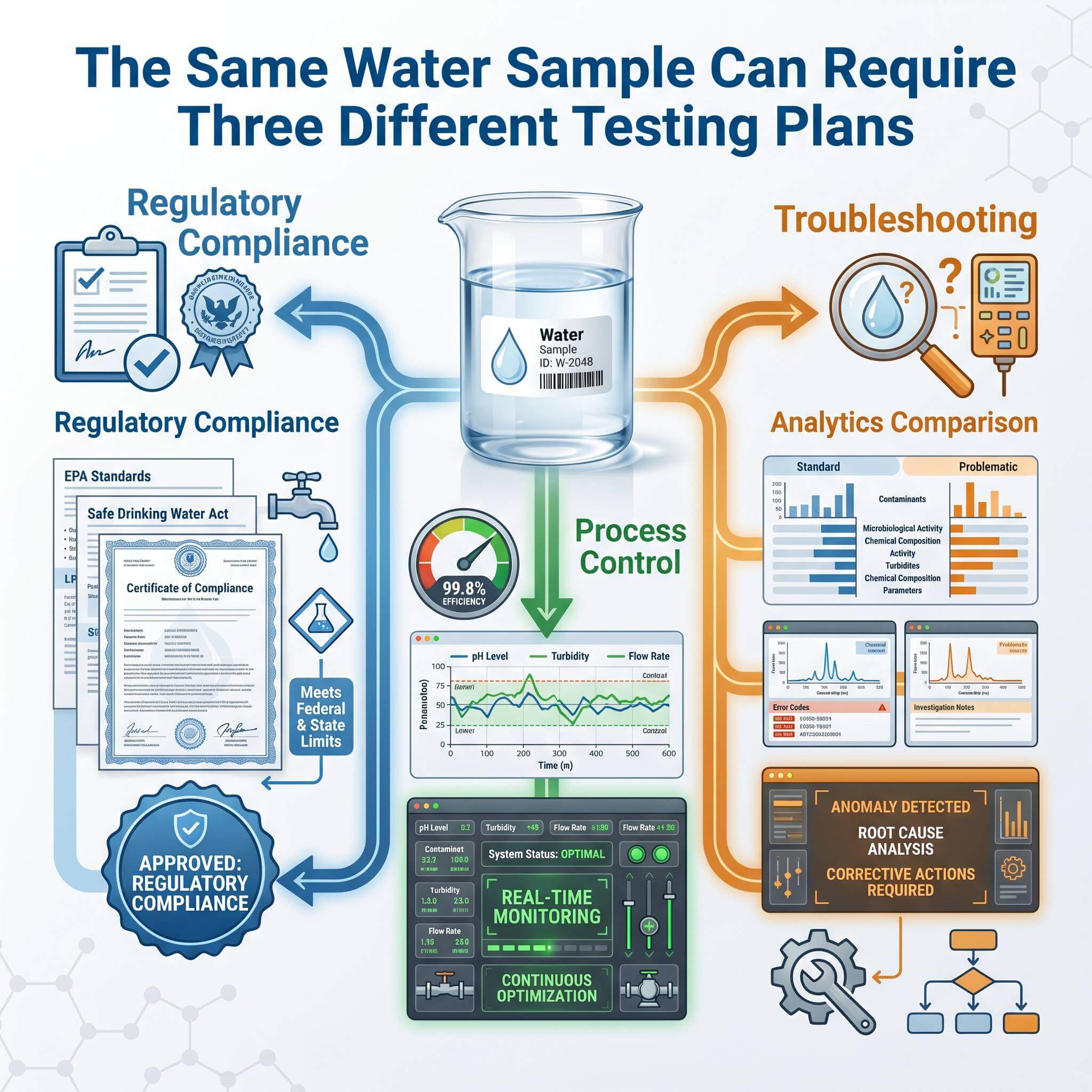
This is especially important in routine testing. For example, a photometer water quality analyzer can provide values for COD, ammonia nitrogen, phosphate, chlorine, or nitrate. The values themselves are useful, but their interpretation depends on the testing purpose.
The same result may have completely different meanings in:
l Secondary clarifier effluent from a municipal wastewater treatment plant
l High-strength industrial wastewater containing refractory organics and high salinity
l Drinking water leaving the treatment plant or water from the end of the distribution network
l Aquaculture water, where ammonia toxicity to fish is strongly affected by pH and temperature
l Boiler water, where conductivity, hardness, and dissolved oxygen requirements are extremely strict
l Circulating cooling water, where scaling and corrosion must be judged together with the concentration cycle
l Laboratory pure water, where even trace contamination may cause conductivity to exceed the limit
l Surface water environmental monitoring, where eutrophication-related indicators must be considered together
This is also why selecting a water quality analyzer should not be based only on the number of parameters or the instrument specification. For routine water analysis, the analyzer must match the sample type, testing range, method requirements, operator capability, and the decisions that the laboratory needs to make.
7. “Within Range” and “Under Control” Are Not the Same Thing
There is an important difference between a value being within specification and a system being under control. A system is more likely to be under control when:
u Results remain stable over time, and variation is mainly caused by random factors.
u Changes can be explained by operating conditions, such as rainfall diluting influent concentration.
u Related parameters are consistent with each other.
u Sampling points are representative.
u The testing method is suitable for the sample characteristics.
u Instruments have been calibrated and verified. For example, certified reference materials are used before each test, and recovery remains within 90%–110%.
u Internal warning limits are used before failure limits are reached.
u Operators understand what action should follow each result, and the operating procedure is not just a data recording form.
In contrast, even if the latest result is normal, the system may still not be under control. This may happen when:
n The result is very close to the limit. For example, if the COD limit is below 100 mg/L and the measured result is 99 mg/L, any small fluctuation may lead to non-compliance.
n The value has changed sharply compared with previous data, even though it has not exceeded the limit. This may indicate an unidentified shock event.
n Different sampling points show inconsistent results. For example, ammonia nitrogen is close to zero in the front section of a biological tank but increases in the rear section, suggesting short-circuiting or abnormal internal recirculation.
n Related parameters do not match. For example, phosphate is low but total phosphorus is high, indicating that a large amount of particulate phosphorus may not have been fully digested.
n Quality control checks are missing, such as standard checks, blanks, or duplicate samples.
n The result cannot be explained by process conditions, and material balance or mass-energy balance cannot support the interpretation.
n Operators only respond passively after a limit is exceeded.
Good water quality management is not only about compliance. It is about process control.
Normal Result vs. System Under Control
Normal Water Test Result | Water System Under Control |
One value is within a defined limit | Results remain stable over time |
Usually based on a single test point | Based on trend, history, and process context |
Confirms compliance at one moment | Confirms consistent and explainable operation |
May overlook sampling or method problems | Requires representative sampling and verified methods |
Often supports pass/fail judgment | Supports preventive action and process control |
Does not always explain why the value is normal | Requires operators to understand why the value is normal |
8. Why Warning Limits Matter
Many laboratories and treatment systems rely only on final allowable limits. For example, if the discharge limit for COD is 100 mg/L, action may only be triggered when the result exceeds 100 mg/L.
But this is a passive response model. A better approach is to set internal warning limits before the final limit is reached. For example, using data from a historically stable operating period, the mean value μ and standard deviation σ can be calculated to define:
l Normal operating range, such as μ ± σ
l Warning range, such as μ ± 2σ, where process personnel should be notified and pay attention
l Action range, such as μ ± 3σ, where immediate investigation and adjustment are required
l Failure or non-compliance range
This helps operators respond earlier.
If COD usually remains around 40–50 mg/L, but suddenly increases to 80 mg/L, it may still be compliant from a regulatory perspective, but it is already a major operational warning signal.
If residual chlorine usually remains around 0.5 mg/L but drops to 0.2 mg/L, some systems may still regard it as having a residual. However, it already indicates a significant weakening of the disinfection barrier, and the end of the distribution network may have no residual chlorine.
If conductivity has long remained within a narrow band, a gradual increase may indicate raw water intrusion, increased concentration cycles, salt accumulation from chemical dosing, or equipment leakage.
Warning limits help transform water quality testing from passive reporting into active process control.
9. Normal Results Can Be Affected by Method and Range Selection
Another reason a “normal” result may be misleading is method selection. Many water quality parameters can be measured using different methods, ranges, reagents, or sample pretreatment procedures.
For example:
l COD methods: The correct digestion conditions and colorimetric range should be selected according to the chloride concentration and expected COD value of the wastewater. For high-chloride samples, if effective chloride interference masking or correction is not applied, the “normal” result may be a false result caused by the high chloride background.That's why COD is useful in routine water testing — but easier to misread than many users think.
l Ammonia nitrogen testing: Both the salicylate method and Nessler reagent method may be affected by sample color, turbidity, calcium, magnesium, and other ions. Predistillation or coagulation-sedimentation pretreatment may be required; otherwise, the result may appear falsely high or falsely low while still looking “normal.”
l Residual chlorine testing: The DPD method requires strict control of reaction time. Temperature affects color development, and combined chlorine may interfere with the reading. Operational delays can introduce error.
l pH measurement: pH depends heavily on electrode sensitivity and the correct calibration buffer sequence. Electrode aging or contamination may produce readings that look normal but respond slowly. Sodium error may cause high-pH readings to be biased low.
l Conductivity measurement: The correct temperature compensation mode is required. A linear compensation coefficient is often around 2%/°C, but different ionic solutions behave differently. Clean electrodes and correct cell constant calibration are also necessary.
l Turbidity measurement: Bubbles, scratched cuvettes, and rapidly settling particles can all shift the reading.
A result may appear “normal” simply because the selected method was not suitable for the actual sample condition. This is why routine testing requires not only instruments, but also well-trained method discipline.
10. The Purpose of Routine Testing Is Not Only to Find Problems
Routine water quality testing is often misunderstood as a “pass/fail” activity.
In reality, its purpose is much broader. Routine testing helps operators:
n Confirm treatment performance
n Monitor process stability
n Identify early warning signals
n Compare current results with historical patterns
n Adjust chemical dosing
n Verify filtration or disinfection efficiency
n Detect abnormal changes in raw water quality
n Support compliance documentation
n Guide preventive maintenance decisions
n Reduce the risk of sudden system failure
A normal result is useful, but only when it supports better decision-making. The most valuable water quality data is not always the most complex data. It is the data that helps users understand what is happening and what should be done next.
11. Practical Questions to Ask After Getting a Normal Result
When a result is normal, the analysis should not stop there. A water laboratory or operator should continue asking:
u Is this result consistent with previous results? A normal value that suddenly changes may still be significant. For example, have three consecutive readings stayed on the same side of the mean?
u Is the result close to a warning limit or control limit? Values near the edge require closer monitoring.
u Does it match related parameters? One normal parameter cannot explain the entire system.
u Was the sample collected from the correct point? Sampling location strongly affects interpretation.
u Was the method suitable for this sample? Matrix effects, range selection, and interferences are never minor details.
u Has the instrument been recently calibrated or verified? Reliable data depends on good measurement practice.
u What action should be taken based on this result? Data without interpretation has very limited value.
u How does the online monitoring result compare with the laboratory result? If the laboratory data is normal but the online reading deviates, the sampling line may be blocked or the instrument baseline may have drifted.
These questions turn routine testing from simple measurement into practical water quality control.
12. How Laboratories Can Move Beyond “Normal Results” to Improve Control
To avoid relying too heavily on a single “normal” result, laboratories and water system operators can improve their workflow in several practical ways.
ü Build a System Baseline
Every system should understand its own normal operating pattern. A result should not only be compared with official limits, but also with the system’s own historical baseline, such as the typical value range under non-rainy, normal-load operating conditions.
ü Use Trend Charts
Trend data often reveals problems earlier than a single result. Even simple daily or weekly trend charts can reveal drift, instability, or abnormal variation. CUSUM, or cumulative sum charts, can detect small but continuous shifts even more sensitively.
ü Set Internal Warning Limits
Internal control limits help identify problems before regulatory failure or process failure occurs.
ü Group Related Parameters Together
Parameters should be grouped according to the decisions they support. For example, COD, ammonia nitrogen, and nitrate in wastewater; or turbidity, residual chlorine, and pH in drinking water.
ü Standardize Sampling Procedures
Sampling time, location, container, preservation method, and transportation process should be clearly defined and written into standard operating procedures.
ü Maintain Instruments Properly
Calibration frequency, reagent quality, electrode condition, cuvette cleanliness, digestion temperature, and method selection all affect result reliability. Regular participation in proficiency testing or measurement audits can also help ensure consistency between laboratories.
ü Train Operators to Interpret, Not Only Measure
Operators should understand what the result means and what should happen next.
Conclusion
A “normal” water test result is important, but it is not the final answer. It tells us that, at a certain moment, a measured value fell within a defined range. It cannot automatically prove that the whole water system is stable, safe, optimized, or under control.
True control comes from a deep understanding of trends, parameter relationships, sampling quality, method suitability, instrument reliability, and process background.
In routine water quality testing, the most important question is not only: “Is the result normal?”
A better question is: “Does this result show that the system is stable, explainable, and under control?”
That is the difference between simply collecting water quality data and using water quality data to make better decisions.