+852 46135220

In photometric and spectrophotometric water testing, absorbance is one of the most important measurement signals. Many common water quality parameters — such as phosphate, ammonia, nitrate, chlorine, silica, COD after digestion, and many metal ions — are measured through a color reaction. The instrument measures how much light is absorbed by the reacted sample, and this optical response is then converted into a concentration result.
Because of this, many users naturally assume that absorbance is the same as concentration. But that is not exactly true. In water quality testing, absorbance is the optical signal measured by a photometer or spectrophotometer after light passes through a sample. It can indicate the intensity of a color reaction and support concentration calculation when the method, calibration, wavelength, path length, and sample preparation are properly controlled. However, absorbance alone cannot confirm that the color came only from the target analyte, that the sample matrix did not interfere, or that the result truly represents the original water sample.
1. What absorbance actually means
Absorbance is a measure of how much light is absorbed by a sample at a selected wavelength. In simple terms, when light passes through a sample, part of the light is transmitted and part is absorbed. The stronger the color or light-absorbing species in the sample, the higher the absorbance.
In many colorimetric methods, the target analyte does not absorb strongly by itself. Instead, it reacts with a reagent to form a colored compound. The intensity of that color is then measured by the photometer or spectrophotometer. For example, in an EPA phosphorus colorimetric method, orthophosphate reacts with ammonium molybdate and antimony potassium tartrate in an acidic medium, and the complex is reduced to an intensely blue-colored compound. The color intensity is proportional to the phosphorus concentration within the method conditions.
The basic principle behind many photometric methods is that absorbance increases when more light-absorbing species are present in the optical path. In a controlled method, this relationship allows the instrument to convert absorbance into concentration. But this relationship is only valid under defined conditions. If the sample is too concentrated, too turbid, strongly colored, poorly reacted, or outside the calibration range, the absorbance value may no longer represent concentration accurately.
One of the most important points in photometric water testing is that absorbance is not concentration by itself. Absorbance is the measured optical response. Concentration is calculated only after that response is compared with a valid calibration curve or method program. This means that two conditions must be true before absorbance becomes a reliable concentration result:
The chemical reaction must produce a color that is specifically related to the target analyte.
The absorbance must fall within the calibrated and validated range of the method.
If either condition is not met, the instrument may still display a number, but the result may not be analytically meaningful.
2. What absorbance can tell you
Absorbance can provide useful information when the test method is properly selected and controlled.
It can show that a color reaction has occurred
If the reagent system reacts with the target analyte, the sample develops a measurable color. The absorbance reading reflects the intensity of that color at the selected wavelength. This is useful for routine water testing because many parameters can be converted into stable colored products under defined conditions. A photometer does not “see” ammonia, phosphate, chlorine, or silica directly. It sees the optical effect created by the method chemistry.
In routine water analysis, absorbance-based methods are widely used because many important parameters can be converted into measurable color reactions. For example, phosphate may be measured through molybdenum blue chemistry, ammonia through indophenol blue chemistry, free chlorine through DPD color formation, and COD through the color change after digestion. In each case, the instrument measures an optical response, while the method defines what that response means.
It can show relative concentration differences
If two samples are tested using the same method, same wavelength, same cuvette path length, same reagent conditions, and same calibration, the sample with the higher valid absorbance usually contains a higher concentration of the measured analyte. This makes absorbance very useful for comparing routine samples, checking process trends, or monitoring whether a treatment system is moving in the right direction. For example, if phosphate absorbance increases after reagent reaction and all method conditions are controlled, this generally suggests a higher phosphate concentration within the calibrated range.
It can support quantitative concentration calculation
Under suitable conditions, absorbance follows the Beer-Lambert relationship: absorbance increases with concentration and optical path length. This relationship is the foundation of many photometric and spectrophotometric methods. However, in real water testing, the instrument usually does not ask the user to calculate concentration manually. Instead, the method program, calibration curve, or stored factory calibration converts absorbance into concentration. This is why calibration matters. The instrument needs a valid relationship between absorbance and concentration before it can report a reliable result.
It can show whether the sample is within the useful range
Every colorimetric method has a practical measurement range. If absorbance is too low, the result may approach the detection limit and become less reliable. If absorbance is too high, the sample may exceed the linear range, and dilution or a higher range method may be required. EPA Method 365.1, for example, defines a linear calibration range as the concentration range over which the instrument response is linear. The same method also states an applicable phosphorus range of 0.01–1.0 mg P/L for that procedure.
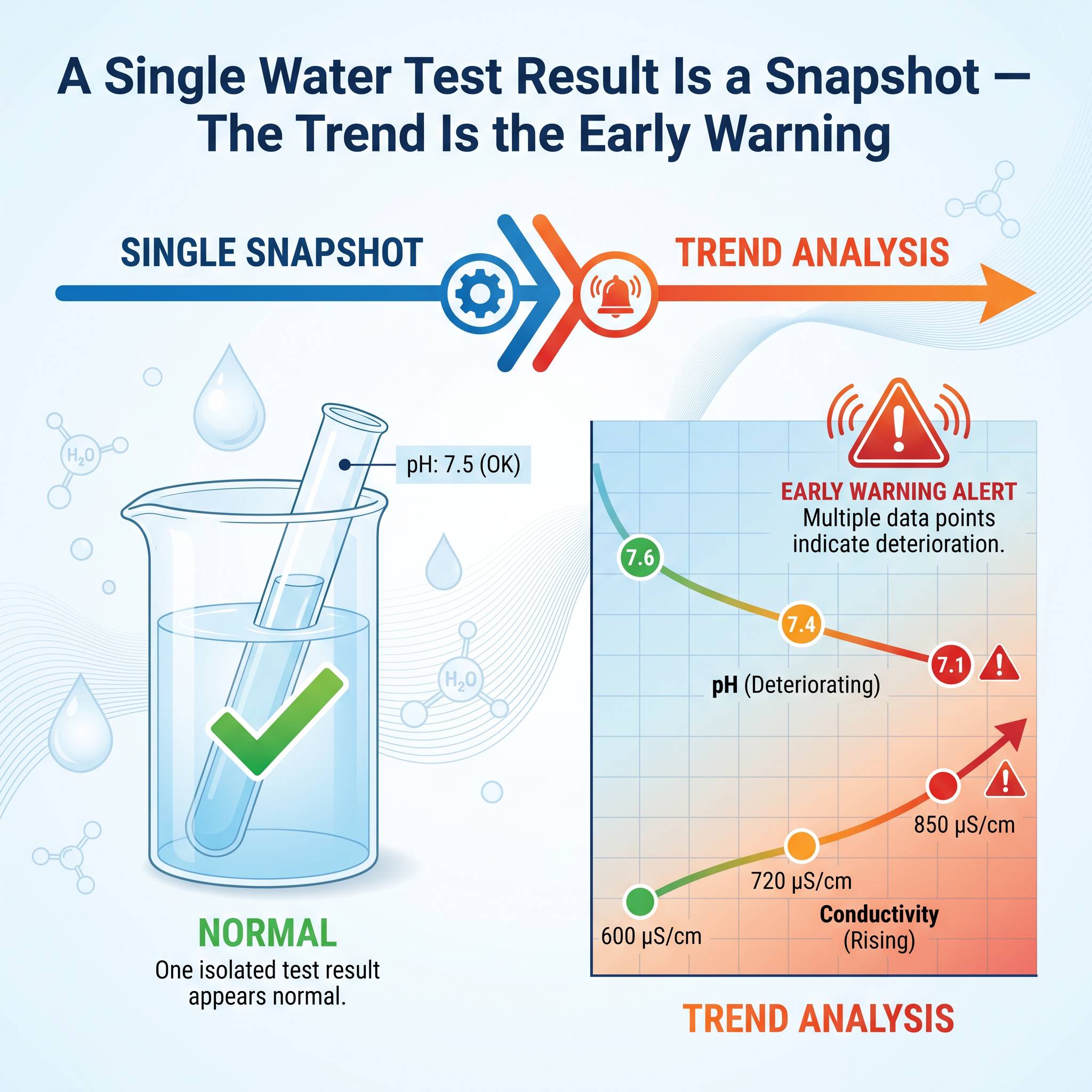
A common mistake is to trust a result simply because it appears on the screen. In absorbance-based testing, the displayed concentration is reliable only when the measured absorbance falls within the method’s working range. Below the lower range, small blank or handling errors can become significant. Above the upper range, the response may become non-linear, and the calculated concentration may be falsely low or unreliable.
3. What absorbance cannot tell you
Absorbance is powerful, but it is not a complete answer by itself.
It cannot tell you whether the color came from the target analyte
A photometer measures light absorption. It does not know whether that absorption came from the intended color reaction, the natural color of the sample, suspended particles, another chemical species, or contamination. This is one of the most common misunderstandings in water testing.
If a wastewater sample is already yellow, brown, green, or cloudy before reagent addition, the instrument may detect absorbance that is not caused by the target reaction. In such cases, part of the signal may come from the sample background rather than the analyte. This is why sample blanks, reagent blanks, and method-specific interference checks are important. In some EPA-related colorimetric methods, color or turbidity correction is specifically addressed. For silica analysis, for example, the NEMI method summary notes that color or turbidity error can be corrected by running blanks prepared without the color reagent.
This is especially important for industrial wastewater, dyeing wastewater, aquaculture water, surface water with algae, and samples containing suspended solids. These samples may already absorb or scatter light before any reagent is added. If the method does not correct for this background, the measured absorbance may include both the target color reaction and the original sample color or turbidity.
It cannot tell you whether the sample matrix caused bias
Water samples are not all the same. Drinking water, surface water, seawater, industrial wastewater, boiler water, cooling water, aquaculture water, and landfill leachate can have very different chemical backgrounds. Salts, metals, oxidants, reducing agents, organic matter, sulfide, surfactants, high COD, strong color, or extreme pH can all affect a colorimetric reaction.
Absorbance may still appear stable, but the result may be biased. EPA Method 365.1 notes that arsenate can be determined similarly to phosphorus and should be considered when present at higher concentrations than phosphorus. It also notes that sample turbidity must be removed by filtration before orthophosphate analysis, while samples for total or total hydrolyzable phosphorus should be filtered only after digestion. Sample color that absorbs in the photometric range will also interfere. This shows an important principle: absorbance must be interpreted within the chemistry of the method and the matrix of the sample.
It cannot confirm that the reaction was complete
Many photometric methods require a defined reaction time. Some color reactions develop quickly. Others need several minutes. Some are stable only for a limited period after reagent addition. If the sample is read too early, the color may not be fully developed. If it is read too late, the color may fade, drift, or continue reacting.
The absorbance value tells you the optical state at the moment of reading. It does not tell you whether the user followed the correct reaction time, temperature, mixing procedure, digestion step, or reagent order. For this reason, routine water testing should not be treated as simply “add reagent and press read.” The method conditions are part of the measurement.
It cannot identify the chemical form unless the method defines it
Absorbance measures the response produced by a specific analytical procedure. It does not automatically identify all chemical forms of an element or compound. Phosphorus is a good example. Orthophosphate can be measured directly by colorimetry, but total phosphorus requires digestion to convert different phosphorus forms into a measurable form. EPA Method 365.1 explains that only orthophosphate forms the blue color directly, while polyphosphates and some organic phosphorus compounds may require hydrolysis or persulfate digestion before measurement.
So, if a user measures phosphate directly, the result may not represent total phosphorus. The absorbance reading is correct only for what the method is designed to measure. The same principle applies to many other parameters. The method defines the meaning of the result.
The same absorbance value does not have a universal meaning across different tests. An absorbance of 0.300 in a phosphate method does not mean the same thing as an absorbance of 0.300 in an ammonia, chlorine, or silica method. The meaning of absorbance is created by the specific reagent chemistry, wavelength, calibration curve, path length, and sample preparation procedure.
It cannot prove that the sample was representative
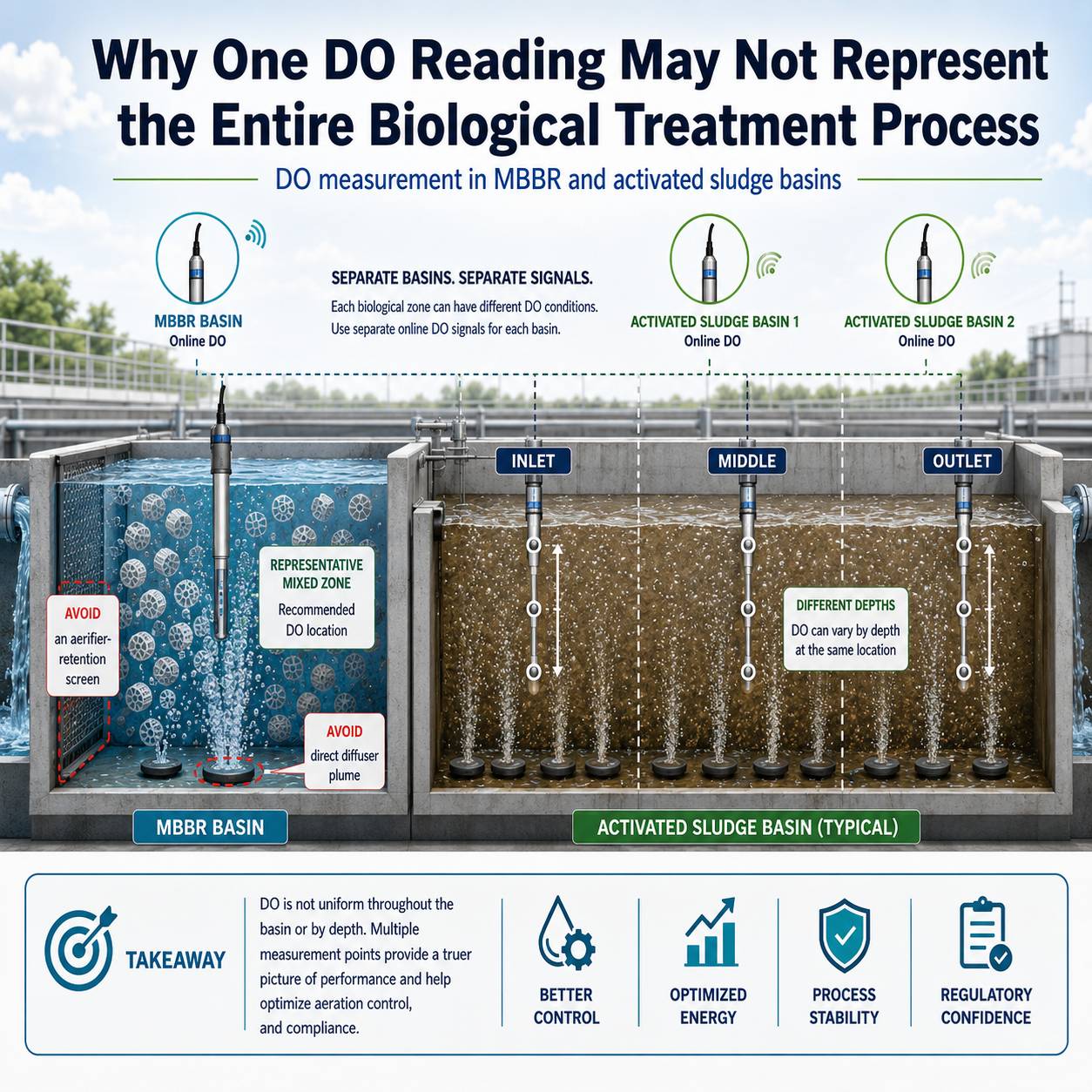
Even if the absorbance reading is technically valid, the result may still be practically misleading if the sample was not representative. A sample collected from the wrong point, after poor mixing, from stagnant water, after sediment disturbance, or after long storage may not represent the actual water system. The instrument can produce a precise number from an unrepresentative sample, but that number may not answer the real question. Absorbance tells you about the tested portion in the cuvette. It does not tell you whether the sample collection was correct.
4. Common situations where absorbance can mislead users
Colored wastewater samples
Industrial wastewater may already contain dyes, organic compounds, humic substances, iron, or other colored materials. These can absorb light at the same or nearby wavelengths used in the test method. If the sample color is not corrected, the result may be falsely high.
Turbid or suspended samples
Suspended solids scatter light and can increase apparent absorbance. This is especially important for samples with sludge particles, clay, algae, corrosion products, or precipitates. However, filtration is not always a simple solution. For some parameters, filtering before analysis changes the meaning of the result. It may convert a “total” result into a “dissolved” or “filtered” result. That is why method instructions must be followed carefully.
High-concentration samples
When a sample concentration is too high, absorbance may move outside the linear range. The instrument may still display a value, but the relationship between absorbance and concentration may no longer be valid. In this case, proper dilution or a higher range method is needed. But dilution must be done carefully, because it can also change detection limits, reaction conditions, and matrix effects.
Low-level samples
At very low concentrations, the absorbance difference between the sample and blank may be small. Small errors from cuvette cleanliness, reagent blank, instrument noise, contamination, or temperature can become significant. Low-level testing is not only about instrument sensitivity. It also requires clean technique, good blanks, appropriate calibration, and careful QC.
Samples with unexpected chemistry
Some substances react similarly to the target analyte. Others suppress the color reaction. Some cause precipitation. Some consume reagents. Some change pH or oxidation state. In these cases, absorbance may look reasonable but still produce an inaccurate concentration.
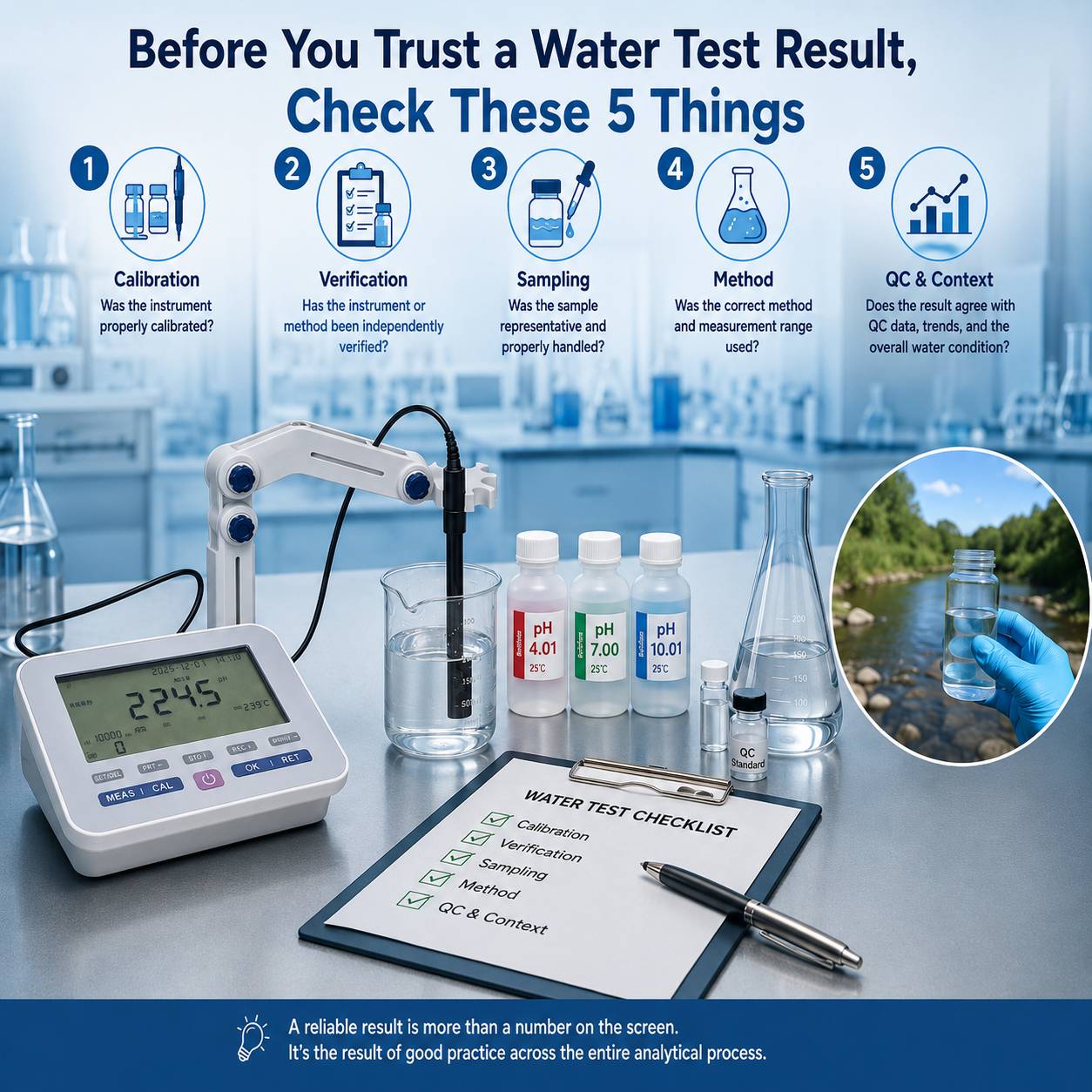
5. What should users check when absorbance-based results look suspicious?
When a photometric result does not match expectations, users should not immediately blame the instrument. The following checks are often more useful:
1.Was the correct method and range selected?
A low-range method used for a high-concentration sample can exceed the linear range.
2.Was the sample visibly colored or turbid before reagent addition?
Background color and turbidity can affect absorbance.
3.Was a proper blank used?
Reagent blanks, sample blanks, and method blanks help identify background signals and contamination.
4.Was the reaction time followed exactly?
Reading too early or too late can change the result.
5.Was the cuvette clean and correctly positioned?
Fingerprints, scratches, bubbles, droplets, and inconsistent positioning can affect optical readings.
6.Was the sample prepared according to the method?
Filtration, digestion, pH adjustment, dilution, and preservation steps can change the meaning of the result.
7.Was the result within the calibrated range?
Results outside the linear range should not be trusted without appropriate dilution or method adjustment.
8.Was QC performed?
Check standards, duplicates, spikes, and control samples help confirm whether the method is under control.
6. Why this matters for routine water testing
Photometers and spectrophotometers are extremely useful tools for routine water analysis. They make water testing faster, easier, and more repeatable than visual comparison methods. They are especially valuable for laboratories, wastewater plants, aquaculture sites, industrial water systems, and environmental monitoring work.
But the strength of photometric testing depends on correct method use. A good instrument can measure absorbance accurately, but it cannot automatically correct every sampling error, matrix interference, wrong reagent step, inappropriate dilution, or misunderstood test objective. This is why professional water testing requires more than reading the final number. It requires understanding what produced that number.
Conclusion
Absorbance can tell you how much light a reacted sample absorbs at a selected wavelength. With the right method, calibration, range, and sample preparation, it can be converted into a useful concentration result.
But absorbance cannot tell you everything. It cannot tell you whether the color came only from the target analyte. It cannot confirm that the matrix did not interfere. It cannot prove that the reaction was complete. It cannot identify chemical forms beyond the method design. It cannot guarantee that the sample was representative.
In water quality analysis, absorbance is not the final truth. It is the optical signal behind the result. The real value comes from combining that signal with proper method selection, sample handling, calibration, quality control, and technical judgment.
A photometer can give a number. A good testing process gives that number meaning.