+852 46135220

Photometer water quality analyzers are widely used in environmental monitoring stations and wastewater treatment laboratories. However, many users still ask a fundamental question: “Which water quality parameters are truly best suited for measurement with a photometer water quality analyzer—and why?”
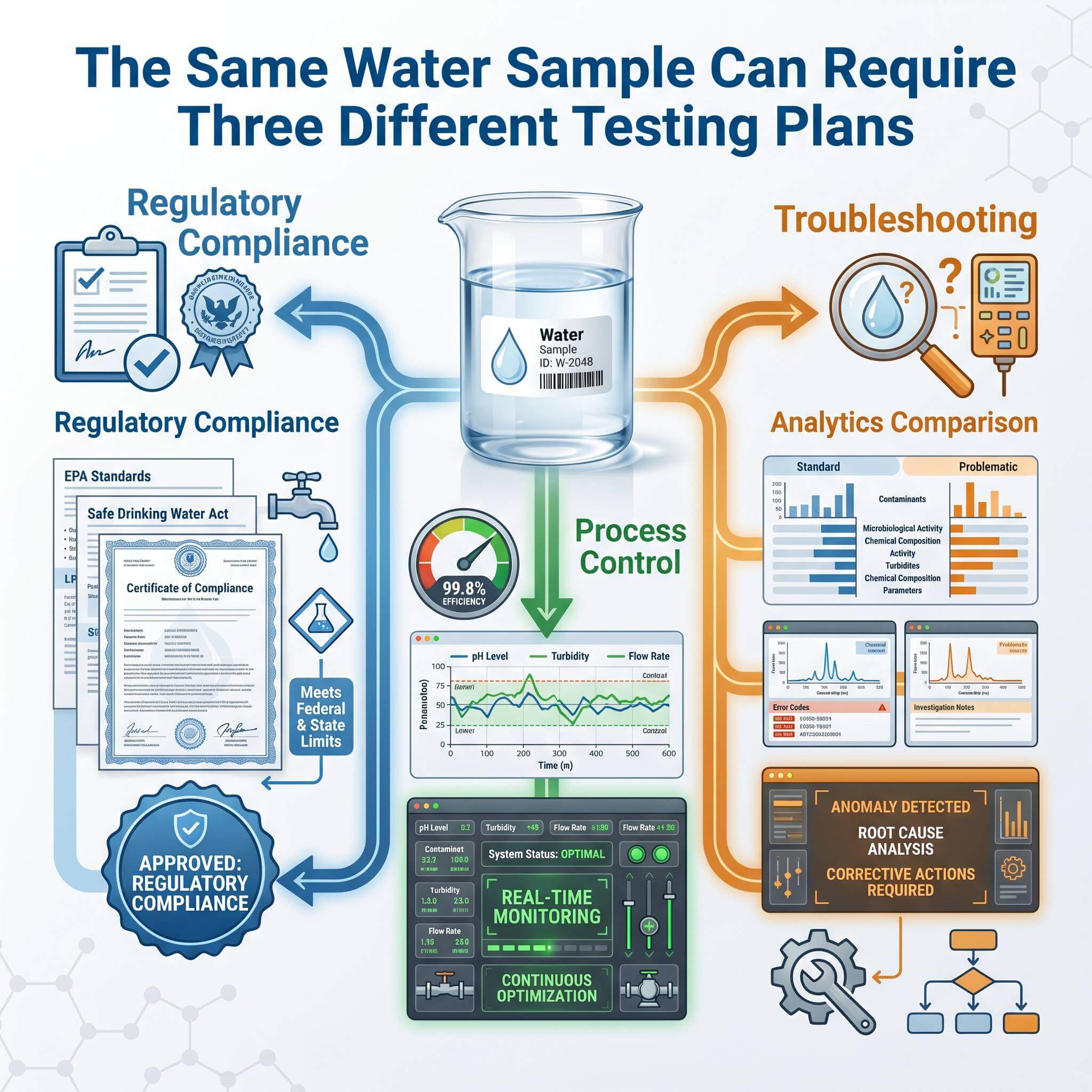
From an engineering practice and laboratory management perspective, the answer is neither “all parameters” nor one driven purely by optical theory. Instead, it depends on multiple factors, including method standardization, reaction chemistry, process repeatability, and regulatory acceptance. Photometer water quality analyzers are best suited for standardized, high-frequency parameters with fixed-wavelength colorimetric endpoints. Their advantage lies in workflow reliability and error prevention rather than optical versatility.
This article examines, from an engineer’s viewpoint, the parameters most suitable for photometer water quality analyzers and explains the technical logic behind these choices.
1. Core Principle: Why Photometer Water Quality Analyzers Excel at Routine Testing
Photometer water quality analyzers are purpose-built for purpose of fixed-wavelength colorimetric analysis based on standardized methods. Their design philosophy makes them best suited for parameters with the following characteristics:
l Well-defined color reactions: The analyte reacts with reagents to form a stable colored compound that follows Beer–Lambert law.
l Fixed wavelength specified by standards: National or industry standards clearly define the endpoint measurement wavelength.
l Stable and controllable chemistry: Reaction time, temperature, and pH are well established.
l High testing frequency: Parameters used routinely for process control or regulatory compliance.
Engineering value: For such parameters, photometer analyzers fully leverage built-in methods, wavelength locking, direct concentration readout, and integrated workflows—minimizing human error while improving data consistency and laboratory throughput.
2. Chemical Oxygen Demand (COD)
COD is one of the most frequently measured parameters in wastewater laboratories and is exceptionally well matched to photometric methods.
Technical explanation:
l Endpoint measurement principle: After dichromate digestion, COD is determined by measuring either trivalent chromium (Cr³⁺) formed during oxidation (absorption ~600–620 nm), or residual hexavalent chromium (Cr⁶⁺) (absorption ~440 nm), depending on the concentration range. Standard methods explicitly require fixed-wavelength endpoint measurement. Full spectral scanning is unnecessary.
l Batch workflow compatibility: COD analysis involves batch digestion followed by rapid photometric reading. Built-in wavelength programs and automatic zeroing significantly improve efficiency.
l Multiple measurement ranges: Professional photometer water quality analyzers typically include both high-range and low-range COD programs, automatically matching wavelength and calculation logic once the range is selected.
Engineering advantages:
ü Eliminates common errors caused by confusing high- and low-range wavelengths.
ü Outputs concentration directly, avoiding manual curve fitting and calculations.
ü Ensures strong data consistency across operators, shifts, and instruments.
Conclusion: COD is one of the most important and best-matched parameters for photometer water quality analyzers. In COD testing, analytical accuracy is governed by digestion control and method consistency. Spectral scanning provides no additional benefit once the correct wavelength is defined by the standard.
3. Ammonia Nitrogen (NH₃-N / NH₄⁺-N)
Ammonia nitrogen is a key control parameter in biological nitrogen removal and a classic application of colorimetric analysis.
Technical explanation:
l Dual-method compatibility:
ü Nessler method (~420 nm): High sensitivity but involves mercury-containing reagents.
ü Salicylate method (~697 nm): Mercury-free, environmentally safer, and more resistant to interference—now widely adopted.
ü Professional photometers usually support both methods, allowing flexible selection based on safety policies and sample matrices.
l Reaction timing control: Color development is time- and temperature-sensitive. Built-in timers with audible alerts ensure consistent reaction conditions across batches.
l Integration with pretreatment: Complex industrial wastewater may require distillation or clarification. Modular photometer systems integrate seamlessly with digestion and distillation equipment.
Engineering advantages:
ü Rapid turnaround (typically 30–60 minutes from sampling to result).
ü Supports timely process control decisions such as aeration adjustment.
ü Reduces operator dependency, even for staff without strong analytical backgrounds.
Engineering note: Accuracy in ammonia analysis is limited more by sample handling and reaction control than by optical complexity—precisely where dedicated photometers add value. For ammonia nitrogen analysis, reaction control and timing consistency have a greater impact on data quality than optical resolution, making photometer water quality analyzers a practical and low-risk choice.
4. Total Phosphorus (TP)
Total phosphorus analysis follows a classic digestion + colorimetry workflow that aligns perfectly with photometer design. Depending on concentration range, two colorimetric methods are commonly used.
High-Concentration Range: Molybdenum Yellow Method
l Application: Influent and industrial wastewater
l Principle: After digestion, orthophosphate reacts with molybdate under acidic conditions to form a yellow phosphomolybdate complex.
l Measurement wavelength: ~420 nm
l Advantages: Stable reaction, simple operation, ideal for higher concentrations.
Low-Concentration Range: Molybdenum Blue Method
l Application: Effluent and surface water
l Principle: Phosphomolybdate is reduced to phosphomolybdenum blue.
l Measurement wavelength: Typically ~700 nm or 880 nm
l Advantages: High sensitivity, widely accepted for low-level phosphorus monitoring.
Engineering advantages:
ü One instrument covers both high and low concentration ranges.
ü Automatic wavelength switching based on selected method.
ü Long-term calibration stability with curve storage and single-point drift correction.
ü Built-in digestion and color development timers standardize workflows.
5. Total Nitrogen (TN)
Although total nitrogen analysis involves multiple chemical steps, the final measurement is still photometric.
Technical explanation:
l Method evolution:
u UV method (220 nm): Fast but highly sensitive to organic interference; requires spectral background correction—better suited to spectrophotometers.
u Colorimetric methods (e.g., chromotropic acid method): Convert nitrate into a stable colored compound measured in the visible range (e.g., ~540 nm), significantly reducing interference.
l Photometer advantages for TN:
ü Stable fixed-wavelength optics ensure long-term accuracy.
ü Built-in reaction timers control critical color development windows.
ü Preloaded calibration curves provide direct concentration readouts.
Engineering benefits:
ü Reduced risk of underestimation due to incomplete reactions.
ü Elimination of manual calculation errors.
ü Improved consistency between analysts.
6. Nitrate Nitrogen (NO₃⁻-N)
Nitrate is an important diagnostic parameter in denitrification processes.
Chromotropic acid method:
l Principle: Nitrate reacts with chromotropic acid in concentrated sulfuric acid to form a yellow complex.
l Measurement wavelength: ~410 nm
l Advantages: Direct measurement without reduction steps, suitable for defined concentration ranges.
Photometer suitability:
u Built-in programs standardize wavelength selection and calculations.
u Reaction timing guidance reduces operator error when handling strong acids.
u High repeatability supports reliable process diagnostics.
Engineering benefits:
ü Provides a standardized and convenient testing tool for laboratories using the chromotropic acid method.
ü High repeatability ensures reliable diagnosis of the denitrification process.
ü Built-in method guidance reduces human timing errors during strong acid operation steps.
7. Other Common Colorimetric Parameters
Photometer water quality analyzers are also well suited for many standardized colorimetric parameters, including:
l Hexavalent chromium (diphenylcarbazide method, ~540 nm)
l Total iron / ferrous iron (phenanthroline method, ~510 nm)
l Total Manganese: Ammonium persulfate oxidation method (permanganate purple) or formaldehyde oxime method, measured at a specific wavelength.
l Free chlorine / total chlorine (DPD method)
l Sulfide (methylene blue method, ~665 nm)
l Silica (molybdenum blue method)
l Permanganate index (CODMn): Acidic digestion-spectrophotometric method, measured at 525 nm
These parameters are suitable for photometer analyzers because their analytical endpoints are clearly defined and do not require spectral interpretation or wavelength optimization.
8. Parameters Not Well Suited to Photometric Analyzers
Photometer water quality analyzers are not intended for:
u Identification of unknown compounds requiring spectral scanning.
u Method development and wavelength optimization.
u Ultra-trace analysis requiring long pathlength cells or preconcentration.
These applications are better served by UV–Vis spectrophotometers or advanced analytical instruments. This limitation is not a weakness of photometer analyzers, but a consequence of their application-driven design focus.
9. Engineering Summary: Best-Fit Selection Criteria
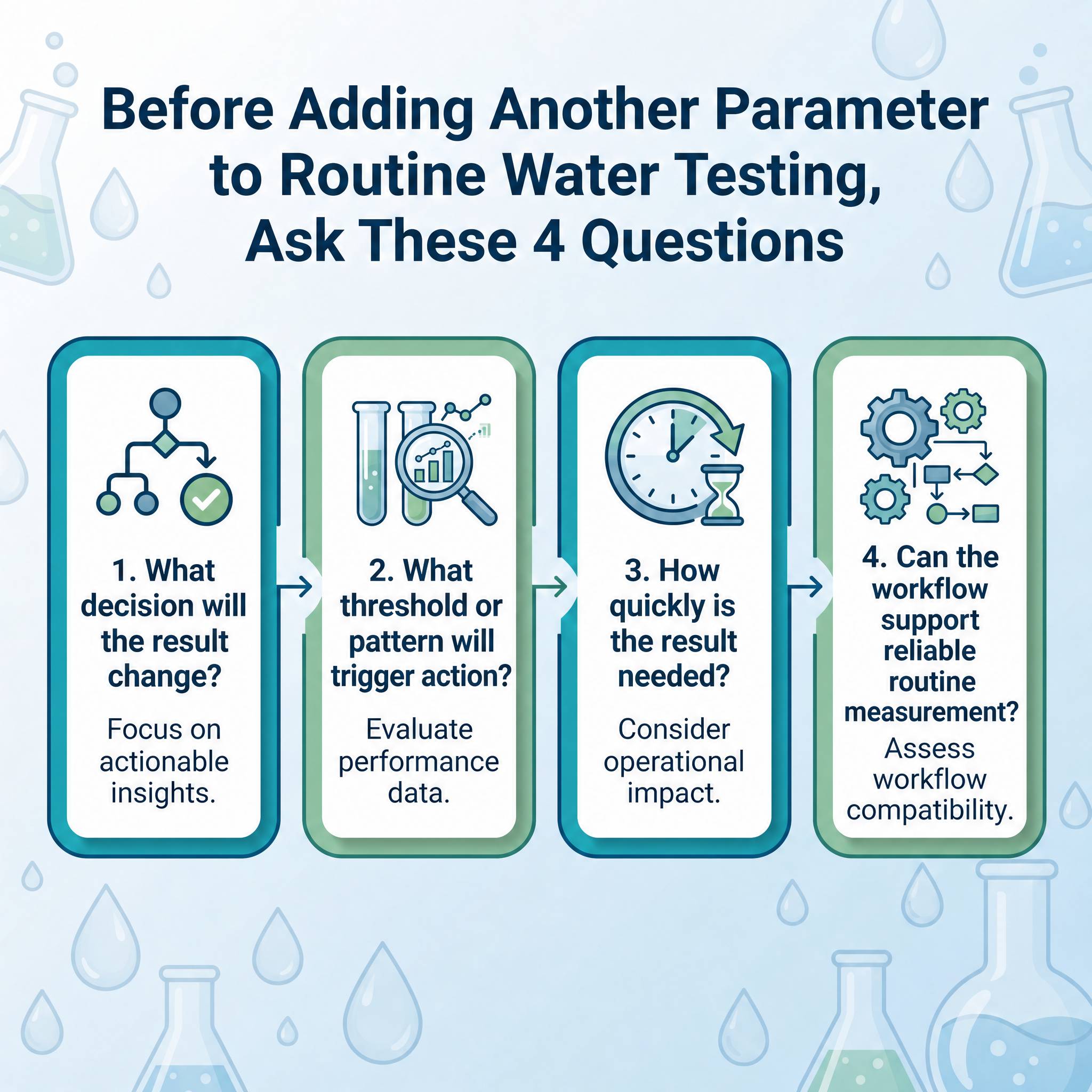
From an engineering perspective, parameters best suited for photometer water quality analyzers meet all of the following:
Evaluation Dimension | Best Matching Feature | Engineering Significance |
Method Standardization | Complies with clear national or industry standards, specifying fixed-wavelength endpoint determination | Data holds legal validity, enabling compliance audits |
Reaction Chemistry | Generates stable colored compounds with mature and controllable reaction conditions | Ensures process reliability, reduces method development risks |
Testing Frequency | High-frequency item for routine process monitoring or compliance testing | High return on investment, easy to enhance personnel proficiency |
Process Compatibility | Seamlessly integrates with pretreatment steps such as digestion, reduction, and distillation | Enables full-process quality control, improves throughput |
Operating Environment | Involves multiple operators on rotation, high personnel turnover, requires rapid training | Reduces training costs, ensures data consistency |
The core mission of photometer water quality analyzers is not to replace all optical instruments, but to deliver stable, low-risk, production-grade data where consistency matters most.
Conclusion
The Photometer water quality analyzer is optimized for known parameters, known chemistry, and known workflows. It can offer irreplaceable advantages for routine, standardized parameters such as COD, ammonia nitrogen, total phosphorus, total nitrogen, and nitrate. Their value lies not in optical complexity, but in workflow integration, error prevention, and regulatory alignment.
When applied to the right parameters, they deliver reliable, repeatable results while effectively supporting wastewater process control and environmental compliance. In water quality analysis, the most efficient instrument is not the one with the most features, but the one that best matches real laboratory needs.
For wastewater laboratories focused on routine compliance and process monitoring, a multi-parameter photometer water quality analyzer with built-in standard methods is a practical core instrument.
Example: iWannaMP Multi-Parameter Photometer Water Quality Analyzer