+852 46135220

In the field of water quality testing, it is easy to fall into a common assumption: more advanced instruments will naturally produce more accurate and more reliable test results. Higher optical resolution, wider wavelength coverage, greater automation, richer software functions, and more measurement modes all appear to represent real performance upgrades. In many purchasing decisions, instruments with longer specification lists and more comprehensive functions are often taken by default as the better choice.
However, in routine water analysis, more advanced instruments do not always lead to higher-quality water quality data. This does not mean that advanced water testing instruments have no value. In well-equipped central laboratories, with properly matched workflows, professionally trained operators, and clearly defined high-level analytical objectives, advanced water testing instruments can deliver major technical advantages. The core issue is that the quality of water quality data is never determined by instrument specifications alone. It is determined by the entire measurement system — including sample collection, reagent quality, digestion consistency, method selection, operator discipline, calibration practice, instrument maintenance, and the degree of fit between the instrument and the actual testing task.
In this article, “better instruments” refers to more advanced water testing instruments such as UV-Vis spectrophotometers, automated photometric systems, and other higher-specification laboratory instruments. “Better water quality data” refers not only to numerical precision, but also to data reliability, repeatability, method suitability, and decision-making value in routine water analysis.
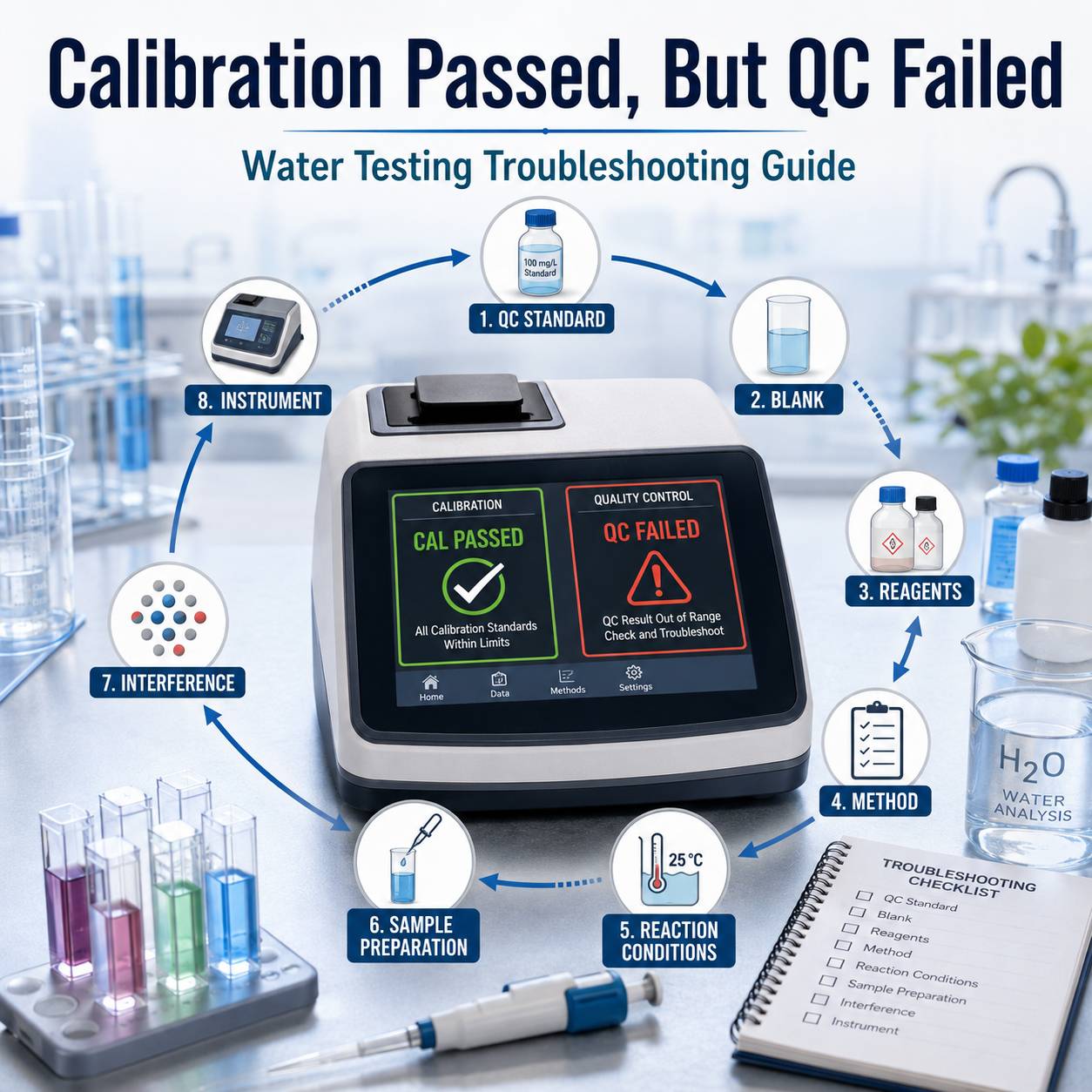
The key point is simple: in routine water quality testing, data quality is determined by the full testing system, not by instrument specification alone. If sampling, digestion, reagent control, calibration, operator consistency, and workflow discipline are weak, upgrading to a more advanced instrument may add cost without delivering more reliable results.
The Quality of Water Quality Data Is the Output of a System, Not an Inherent Property of a Single Instrument
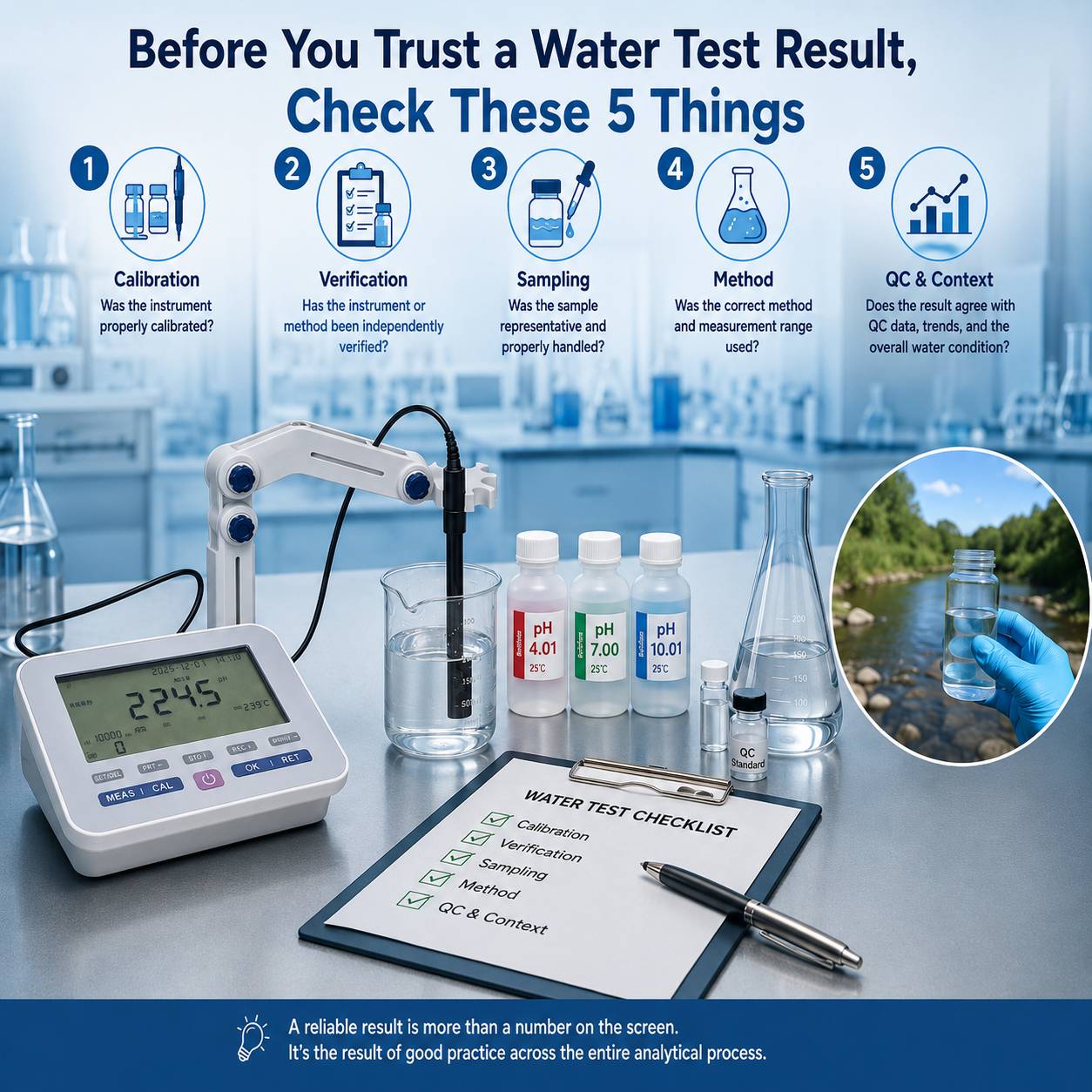
A valid water quality test report is never produced by the instrument alone. It is the result of a complete analytical chain, and every link in that chain directly affects the accuracy and reliability of the final result.
In routine water analysis, that full testing chain usually includes:
1.Representative sample collection
2.Sample preservation, storage, and transport
3.Necessary filtration or sample pretreatment
4.Preparation and quality control of reagents
5.Process control of sample digestion or color development
6.Consistency control of reaction or standing time
7.Establishment of calibration curves and blank correction
8.Instrument measurement
9.Result interpretation, recording, and compliance review
Widely recognized industry patterns in water testing error distribution show that sampling errors can account for 40% to 60% of total error, sample pretreatment contributes 20% to 30%, while the final instrument measurement step typically contributes only 10% to 20%. If any link in the chain is weak, upgrading the instrument alone will have only a very limited effect on overall data quality.
This system effect is especially visible in routine testing parameters such as COD, ammonia nitrogen, total phosphorus, residual chlorine, nitrate, and phosphate, where sampling quality, reagent stability, digestion control, and operator consistency often influence final result reliability more than instrument hardware alone.
A very common industry example is this: a laboratory replaces a basic visible-light photometer with an imported high-end UV-Vis spectrophotometer in order to improve the accuracy of COD, ammonia nitrogen, and total phosphorus measurements, expecting a major reduction in data deviation. But in actual operation, if the temperature difference between digestion positions exceeds ±2°C, for example when COD digestion is required to be controlled at 165°C ±2°C, digestion efficiency can deviate by more than 5%. If reagents are not stored properly and their active components degrade, the color reaction may become incomplete. If cuvettes are not properly matched, if the cell walls are contaminated with chromium ions or organic residues, or if the operator does not strictly control the reaction standing time, both random error and systematic error will still remain. Under such conditions, even if the laboratory owns a more capable instrument, data quality may show almost no obvious improvement. No matter how powerful the instrument is, it cannot fully compensate for systematic defects in other parts of the testing process.
Advanced Water Testing Instruments Raise the Ceiling of Analytical Capability — They Do Not Automatically Improve Data Reliability
One of the most common misunderstandings in water analysis is the confusion between an instrument’s analytical capability and a laboratory’s testing reliability.
A more advanced instrument typically offers the following performance advantages:
l A broader built-in method library
l Lower instrument detection limits (IDL)
l A wider applicable wavelength range
l Better optical system performance
l Stronger data management and traceability functions
l Editable automated measurement sequences
l Greater flexibility for multi-parameter testing
These features improve the upper limit of what the instrument is capable of doing — in other words, what the instrument can do. But the core of routine water testing depends much more on what the laboratory can do consistently and repeatedly well — that is, what the laboratory can keep doing reliably.
For most production-oriented laboratories, such as municipal wastewater plants, industrial water treatment laboratories, or drinking water plant labs, the core analytical objective is not to pursue the highest possible analytical sophistication. It is to generate stable, repeatable, decision-supporting data day after day under normal working conditions.
That means the key question in instrument purchasing is often not:
“What is the most advanced instrument we can buy?”
It is:
“Which instrument can our team operate correctly, consistently, and efficiently within our existing workflow?”
These are two completely different decision logics.
From a metrological perspective, the maximum permissible error (MPE) of an instrument refers to its calibration performance under ideal conditions, while the expanded uncertainty (U) of actual laboratory results is a combined outcome that includes all sources of error, such as personnel, environment, sample pretreatment, reagents, and the instrument itself. A technically more advanced instrument whose workflow is difficult to standardize may actually reduce day-to-day consistency. By contrast, a simple system that the operators know thoroughly, with a highly fixed operating procedure, often produces more reliable long-term trend data.
More Functions Often Mean More Potential Failure Points
Instrument “upgrading” is essentially achieved by adding functional modules, increasing automation, introducing greater operating flexibility, and making software more complex. But from the perspective of reliability engineering, every additional layer of complexity introduces new risk points and new modes of failure.
These new risks typically include:
l More complex operating procedures, greatly increasing the probability of human error
l More calibration and verification steps, making QC execution more difficult
l More customizable parameters, increasing the risk of incorrect settings and systematic error
l Significantly higher requirements for operator expertise and training
l Stricter requirements for maintenance frequency, procedures, and environment
l Much more difficult troubleshooting, often beyond the ability of non-original service engineers
l Longer downtime and repair cycles after failure
l Higher requirements for laboratory temperature, humidity, corrosion resistance, and vibration control
In national or municipal environmental monitoring laboratories with controlled environments, complete staffing, and mature QC systems, these risks can be managed. But in busy wastewater plant labs, small and medium-sized industrial water labs, or decentralized field testing situations, these issues often become major obstacles to data reliability.
According to core reliability engineering logic, the greater the complexity of a system, the shorter its mean time between failures (MTBF). A high-end spectrophotometer equipped with automatic sampling, automatic dilution, automatic parameter switching, and cloud-based data management may have five to ten times as many failure nodes as a basic single-parameter photometer. In environments such as wastewater plants, where corrosive gases like hydrogen sulfide and ammonia are present and humidity fluctuates significantly, the aging rate of optical systems, mechanical transmission components, and electronic parts in advanced water testing instruments can be more than three times faster than in a climate-controlled central laboratory.
In actual operation, many laboratories use advanced water testing instruments in a state where most advanced functions are underutilized, parameters are incorrectly configured, or only the most basic functions are used. In essence, the laboratory pays a high price for advanced functions it does not really use, while also increasing the risk of inconsistent operation. In other words, a more advanced instrument can sometimes make the testing workflow more fragile rather than more robust.
This is particularly relevant in municipal wastewater laboratories, industrial water treatment plants, small environmental testing labs, and decentralized field testing operations, where instruments must perform under time pressure, variable environmental conditions, and limited maintenance resources.
The Core of Routine Water Testing Is Instrument Fitness for Purpose
In routine water analysis, the most valuable instrument is often not the one with the most impressive paper specifications, but the one that is best matched to the laboratory’s real testing needs and operating conditions — in other words, an instrument selected according to fit-for-purpose design. This is also one of the core requirements for equipment selection under ISO 17025, General requirements for the competence of testing and calibration laboratories.
An instrument with good fitness for purpose must match the following conditions:
u The parameters most frequently tested in daily work, rather than occasional niche parameters
u The normal concentration ranges of target parameters
u The required daily sample throughput
u The skill level of the operators
u The laboratory’s capacity for maintenance and troubleshooting
u The compliance and consistency requirements of the test reports
u The environmental conditions of the testing site
u The long-term budget for reagents, consumables, maintenance, and spare parts
Take a practical example: a municipal wastewater plant laboratory mainly tests COD, ammonia nitrogen, total phosphorus, residual chlorine, and pH for daily process control, with around 20 to 30 samples per day. In this scenario, testing speed, operational simplicity, result repeatability, and method stability are far more important than broad analytical flexibility.
Under these conditions, a stable dedicated photometer combined with pre-prepared reagents often produces more reliable routine data than a high-end UV-Vis spectrophotometer. The reason is that the methods in dedicated instruments are already fixed according to standard requirements, so operators do not need to manually set wavelength, bandwidth, reading time, and other parameters each time, which greatly reduces human operational error. Meanwhile, the batch-to-batch variation of pre-prepared reagents can generally be controlled within ±2%, significantly better than the variation of self-prepared laboratory reagents, which is often 5% or higher. A high-end instrument may offer more functions, but every parameter change requires reconfiguration of the method, making operation more complex and increasing day-to-day variability risk.
This does not mean that simpler instruments are absolutely better in performance. It means they are better suited to that specific application scenario. That distinction is critical in instrument selection. For many laboratories, the best water quality analyzer is not necessarily the most advanced spectrophotometer or the most feature-rich multi-parameter system, but the instrument that best matches routine parameters, operator capability, daily sample load, maintenance capacity, and reporting requirements.
Even Excellent Optical Performance Cannot Compensate for Fatal Sampling Defects
One of the easiest reasons to overlook when data quality does not improve after an instrument upgrade is that the real source of error lies upstream of the measurement. Poor sampling practice can destroy data representativeness and reliability before the sample even enters the analyzer.
Common non-standard sampling practices in water testing include:
n Incorrect sampling point selection, failing to collect from a representative, well-mixed cross-section
n Sampling timing that does not match process fluctuation cycles, making the sample unrepresentative of average water quality
n Use of instantaneous grab samples that are not representative, instead of compliant composite samples
n Sampling containers or tools not properly blank-treated, leading to contamination during collection
n Failure to mix the sample thoroughly after collection, resulting in uneven analyte distribution
n Failure to add preservatives or control storage conditions as required, leading to degradation of target components
n Holding the sample beyond the maximum allowable time specified by the method before analysis
For example, if influent samples in a wastewater plant are taken only from a single point at the surface of the channel rather than as a composite from left, center, and right positions and upper, middle, and lower layers of a standard cross-section, the COD concentration in the sample may deviate by more than 30% from the true average influent value. If residual chlorine samples are not immediately fixed on site with sodium thiosulfate, the residual chlorine can decay by more than 20% within 10 minutes. In such cases, using the most advanced instrument to measure a non-representative or compositionally changed sample will still produce invalid data — only with greater apparent precision around the wrong answer.
A core concept must be clearly understood here: instrument precision is absolutely not the same as overall result accuracy. If the sample itself is not representative, then even if the repeatability of the result is excellent and the numbers look very “beautiful,” the data still cannot reflect the true condition of the water. That kind of false confidence based on wrong data is more dangerous than obvious analytical noise.
More Accurate Measurement Cannot Eliminate the Inherent Limits of the Method
Every water testing method has inherent application boundaries, including chemical interference, effective detection range, dependence on reaction conditions, matrix effects, and limitations related to special sample types. These built-in method limits do not disappear just because the instrument is upgraded.
Typical industry examples include:
1.In COD testing, positive interference from chloride is an inherent defect of the method. Mercuric sulfate can only mask chloride up to 1000 mg/L. Above that concentration, no matter how advanced the spectrophotometer is, a chloride correction method must be used or the result will be seriously biased high.
2.In photometric methods, turbidity and color in the sample create background interference in absorbance measurement. This is determined by the method principle itself and must be addressed through pretreatment, blank compensation, or similar corrective approaches. The instrument cannot avoid it directly.
3.Complex sample matrices directly affect digestion recovery. For example, industrial wastewater with high salinity or high organic content may show digestion efficiency significantly different from that of standard samples. This matrix effect must be corrected through spike recovery checks or matrix-matched calibration. Instrument upgrading cannot solve it.
4.When sample concentration exceeds the linear range of the method, dilution or a different method must be used. Extending the instrument range cannot break through the method’s inherent linear interval.
5.Many rapid testing methods are essentially screening methods rather than standard arbitration methods. No matter how precise the instrument is, they cannot replace the legal authority of standard methods.
When users expect the instrument itself to “solve” these inherent method limitations, disappointment is inevitable. In reality, more reliable water quality data comes from a deep understanding of the method and effective control of its limitations, not simply from upgrading the hardware.
A laboratory that truly understands method applicability, interference factors, and QC requirements will often produce more reliable data with ordinary instruments than laboratories that purchase high-end equipment but do not improve their analytical discipline.
If the Workflow Cannot Provide Proper Support, Even the Best Instrument Has No Real Value
This is one of the most realistic truths in water testing laboratories: many instruments are technically excellent, but their stable operation depends on a complete supporting workflow, including:
ü Regular calibration and intermediate checks to ensure metrological performance remains under control
ü Proper reagent and consumable management to prevent errors caused by expired or contaminated materials
ü Strict maintenance procedures that are fully implemented in practice
ü Systematically trained and professionally competent certified operators
ü Complete and executable standard operating procedures (SOPs) fully aligned with real operations
ü A full internal quality control system, including abnormal data review and corrective actions
ü Stable laboratory environmental conditions that meet instrument operating requirements
If a laboratory does not have these supporting conditions, the instrument can never achieve its nominal theoretical performance. This is what creates the common industry gap between an instrument’s theoretical capability and the laboratory’s actual output.
Sales materials for instruments usually focus on theoretical performance potential: higher accuracy, higher resolution, more powerful software, more comprehensive method libraries. But in daily laboratory operation, the real question is execution:
l Can operators perform the full procedure correctly and consistently every day?
l Can they quickly identify QC failures and find the root cause?
l Can the maintenance team promptly diagnose and resolve abnormal instrument deviations?
l Can instrument maintenance and intermediate checks be carried out on time?
l Can the current workflow sustainably maintain the operational discipline required by the method?
If the answer to these questions is no, then even a major investment in advanced water testing instruments will still not produce more reliable water quality data.
More Reliable Data Usually Comes From Better Process Control, Not Just Better Hardware
When laboratories truly achieve a fundamental improvement in data quality, the main reason is almost always better process control across the whole measurement workflow, not simply upgrading the instrument itself.
The process-control measures that genuinely improve data quality include:
u Establishing clear and practical sampling plans to ensure representativeness and compliance
u Standardizing SOPs to unify operational details across the full process and eliminate operator-to-operator variation
u Building a stable reagent management system with batch verification, proper storage, and expiry control
u Optimizing digestion and sample pretreatment workflows to ensure consistent and stable reaction conditions
u Standardizing blank tests and standard checks to achieve full-process quality monitoring
u Defining clear rules for calibration curve establishment, verification, and update frequency to prevent use of expired calibration curves
u Improving systematic training and certification systems for operators, with regular competency assessment
u Establishing strict QC acceptance criteria for duplicates, spike recovery, and control samples
u Fixing execution rules for routine maintenance, periodic servicing, and intermediate checks
u Building multi-level data review systems to detect and correct abnormal results in time
These tasks are far less attractive than buying a new instrument, but they often contribute much more to result consistency than instrument upgrades do. In routine water testing, the greatest gains in data quality usually come from controlling avoidable variation. And that avoidable variation is almost never caused mainly by insufficient optical performance.
Why Many Laboratories Overpurchase Instrument Capability
A large number of laboratories buy instruments that are more advanced than their workflow can support. There are five main reasons for this:
1. Mistaking “higher-end” for “lower-risk”
Many buyers assume that purchasing a more advanced instrument is the safer and lower-risk choice. In reality, if instrument complexity increases faster than the laboratory’s ability to control operations, the result is often higher risk of data loss of control.
2. Focusing on occasional needs instead of routine core work
Many laboratories select instruments to meet a few difficult testing requirements that may appear only a handful of times per year, while ignoring the routine tests that make up over 90% of daily workload. As a result, most of the instrument’s advanced capability remains idle, while day-to-day suitability is poor.
3. Underestimating training and maintenance cost
The life-cycle cost of an instrument is never just the purchase price. Annual maintenance cost for advanced water testing instruments is often 5% to 10% of the purchase value, in addition to ongoing staff training investment. The hidden costs of over-specified instruments in routine water analysis are often seriously underestimated at the procurement stage.
4. Assuming hardware can compensate for workflow weaknesses
This is one of the most common and most expensive mistakes in the industry. Many laboratories blame poor data quality on insufficient instrument performance while ignoring the core weaknesses in sampling, pretreatment, and operator practice, trying to solve systemic problems through hardware upgrades alone. The result almost never meets expectations.
5. Purchasing based on paper specifications instead of workflow fit
In many tenders, specification scoring carries too much weight. This leads buyers to focus excessively on paper specifications while ignoring how well the instrument matches the laboratory’s real workflow, staff capability, and testing needs. A more impressive specification sheet has never automatically meant a better laboratory decision.
Key Questions Buyers Must Answer Before Upgrading
Before choosing a more advanced water testing instrument, buyers should first answer the following practical engineering questions in order to avoid blind purchasing:
1. What is the real source of our current data quality problem?
Has instrument metrological performance truly become the bottleneck, or do the main problems still lie upstream in sampling, digestion, operator consistency, calibration control, or method mismatch?
2. What decisions does our data actually need to support?
Do we need highly flexible analytical development capability, or do we need stable, compliant routine process-control data?
3. Can our operators correctly and consistently use the additional functions?
If less than 20% of the high-end functions can be used reliably and correctly, is the upgrade really justified?
4. Can our current workflow support the maintenance, calibration, and QC requirements of the instrument?
If the supporting conditions are not in place, actual operating performance will inevitably fall far below nominal theoretical performance.
5. Is our purchasing decision based on real routine testing needs, or on a blind pursuit of “high-end” positioning?
This question is often uncomfortable, but necessary.
Advanced water testing instruments Still Have Irreplaceable Value — But Only in Suitable Scenarios
None of the analysis above is meant to deny the value of advanced water testing instruments, nor to suggest that laboratories should avoid advanced equipment. On the contrary, advanced water testing instruments have clear and irreplaceable value in the following scenarios, where their performance advantages can directly translate into better data quality:
l Testing requirements cover multiple parameters and trace pollutants, with very high demands for detection limits and interference resistance
l The laboratory needs to conduct method development, non-standard testing, or arbitration testing
l Operators have strong analytical chemistry backgrounds and substantial practical experience
l The laboratory has already established a mature ISO 17025 quality system with strong process-control capability
l The daily workflow is well standardized and operational discipline is stable
l The laboratory needs to manage multiple complex analytical methods efficiently and requires high traceability and compliance
l The laboratory needs to connect with digital management systems and has clear requirements for data integration and automated management
In these scenarios, improved instrument performance can directly promote an upgrade in laboratory capability and data quality.
The core conclusion is never that “advanced water testing instruments are useless,” but rather this: the performance advantages of an instrument create real value only when the laboratory’s supporting capability is sufficient to convert those advantages into stable analytical performance.
Conclusion
Better instruments do not always produce more reliable water quality data, because the quality of water quality data is never determined by the instrument alone. It is the combined result of method suitability, sample representativeness, operator consistency, sample pretreatment control, calibration discipline, maintenance execution, and workflow fit.
If the surrounding support system has weaknesses, then even the most advanced analyzer will still leave the laboratory struggling with unreliable data. At the same time, a routine instrument that is highly matched to the actual testing task and managed under good operating discipline can produce highly effective, stable, and reliable results.
Therefore, when evaluating water testing instruments, the true goal is never simply to purchase the most advanced system on paper. The real goal is to build the most reliable complete measurement system for the decisions that matter most. Because in routine water analysis, more reliable data does not come from the instrument with the most impressive specifications, but from the measurement system with the highest overall controllability.