+852 46135220

Chemical Oxygen Demand (COD) is one of the most widely used parameters in water and wastewater testing. It is routinely monitored in municipal wastewater plants, industrial discharge control, environmental laboratories, and process water monitoring because it can quickly reflect the total amount of oxidizable substances in a sample.
Many users know that COD is a common testing parameter, but far fewer truly understand how COD photometric testing actually works. In practice, COD testing is not simply “putting a digestion vial into an instrument and reading a number.” It is a combination of chemical digestion, controlled oxidation, and photometric measurement. Together, these steps convert the organic pollution load in water into a numerical concentration result.
Understanding this working principle is important for laboratories, distributors, and end users alike. It helps explain why COD testing requires digestion, why reagent vials are used, why different ranges exist, and why good results depend not only on the instrument, but also on sample handling and method discipline.
In simple terms, COD photometric testing works by digesting the water sample with a strong oxidizing reagent under high temperature and acidic conditions, then using a photometer to measure the resulting color change. The measured optical signal is converted into a COD value through a stored calibration program.
What COD Actually Measures
COD represents the theoretical amount of oxygen required to oxidize oxidizable substances in a water sample. In most practical water applications, this mainly reflects:
l Organic matter in wastewater
l Reducing inorganic substances
l Pollution load in influent or effluent
l The overall pollution burden in water treatment monitoring
COD is usually reported in mg/L O₂ (milligrams of oxygen per liter).
It is important to understand that COD is not a direct measurement of one specific compound. It is a composite parameter. That is why it is so useful in routine control: laboratories do not need to measure many individual organic compounds one by one, but can instead use COD as a fast operational indicator of total oxidizable load.
COD remains one of the most important routine parameters in water and wastewater analysis because it provides a fast indication of total oxidizable pollution load. In municipal wastewater treatment, industrial discharge monitoring, and environmental laboratories, COD is often used to track pollution trends, evaluate treatment efficiency, and identify abnormal process changes before more detailed analysis is performed.
In other words, COD does not identify which specific pollutants are present. It indicates the total oxidizable load of the sample under defined test conditions.
Why COD Cannot Be Measured Directly by a Photometer Alone
A photometer measures light absorbance or transmittance at selected wavelengths. By itself, it cannot directly “see” COD as a property. COD must first be converted into a measurable chemical change.
That is why COD testing always includes two main stages:
Digestion reaction: Oxidizable substances in the sample react with a strong oxidizing agent under acidic conditions and high temperature.
Photometric determination: After digestion, the chemical change caused by that oxidation reaction is measured optically by the photometer.
So when people say they are doing “COD photometric testing,” the photometer is not directly measuring the organic pollution itself. It is measuring the result of a controlled chemical reaction that corresponds to the COD level.
The Basic Chemical Principle Behind COD Testing
The standard COD digestion method is based on oxidation with potassium dichromate under strongly acidic conditions, usually using sulfuric acid.
During digestion:
u The sample is mixed with COD reagents in a sealed vial
u Oxidizable substances in the sample are chemically oxidized
u Dichromate is reduced during the reaction
u The amount of dichromate consumed, or the amount of reduced chromium formed, is proportional to the COD level
In practical operation, the sample is heated at high temperature, usually 148°C or 150°C, for about 20 minutes to 2 hours, depending on the reagent system and method design.
This heating step is necessary because many organic compounds do not oxidize quickly at room temperature. Digestion creates a controlled environment strong enough to oxidize a wide range of substances consistently.
Because COD depends on a defined digestion chemistry rather than a universal physical property, it should be understood as a method-defined parameter rather than a direct physical measurement.
What the COD Reagent Vial Actually Does
A COD reagent vial is far more than just a sample container. It is a pre-designed reaction system. Typically, the vial contains:
l potassium dichromate as the oxidizing agent
l concentrated sulfuric acid to create strongly acidic conditions
l catalysts such as silver sulfate in some methods
l mercury sulfate in some traditional methods to reduce chloride interference
l stabilizers or color-forming chemicals depending on the measurement range
The purpose of using a sealed vial is to ensure:
ü fixed reagent composition
ü fixed reaction volume
ü safer digestion handling
ü better repeatability between tests
ü a simplified workflow for routine users
Because COD testing depends heavily on reaction conditions, the vial-based reagent format helps standardize the method and reduce operator variation.
Step-by-Step: How COD Photometric Testing Works in Practice
1. A Small Volume of Sample Is Added to the COD Vial
The operator uses a pipette to add a defined volume of water sample into the COD reagent vial. This step is critical because the COD result depends on the exact sample volume. Even a small pipetting error can significantly affect the final result, especially in low-range testing. For high-COD samples, dilution may be necessary before adding the sample to the reagent vial, so that the result remains within the measurement range of the method.
2. The Sample and Reagents Are Digested at High Temperature
After sealing, the reagent vial is placed into a COD reactor or digestion block. During digestion:
l organic matter and other oxidizable substances react with dichromate
l dichromate is chemically reduced
l the reaction proceeds under high temperature and strongly acidic conditions
l complex organic matter is broken down and oxidized
This is the stage where the actual COD chemistry takes place. Without digestion, the photometer would have nothing meaningful to measure. The digestion process is precisely the key step that converts pollution load into an optical signal.
3. The Digested Vial Produces a Measurable Color Change
After digestion and cooling, the color state of the reaction mixture is related to the COD concentration. Depending on the reagent design and measurement range, the photometric system may measure:
l the remaining dichromate
l the reduced chromium species formed during the reaction
l or another related colorimetric change built into the reagent chemistry
In simple terms, the higher the COD, the more oxidizing agent is consumed, and the stronger the measurable change produced in the digested vial. This optical change is exactly the signal that the photometer reads.
4. The Photometer Measures Absorbance at a Specific Wavelength
The cooled vial is placed into the photometer, and the instrument measures light absorbance at one or more selected wavelengths. The instrument then compares the measured absorbance with the stored calibration curve for that COD method, and converts the optical signal into a COD concentration, usually displayed as mg/L COD or mg/L O₂.
That is why the photometer must be compatible with the specific COD reagent system being used. The wavelength, calibration logic, cuvette specifications, and method program all need to match the chemistry.
Why Different COD Ranges Exist
COD in real water samples can vary enormously.
For example:
l treated drinking water or clean surface water may have very low COD
l municipal wastewater may have medium COD
l industrial wastewater may have very high COD
Because of this, COD photometric testing is usually offered in multiple ranges, such as:
u low range
u medium range
u high range
This is for several reasons:
ü photometric absorbance has an effective working range
ü reagent composition may be optimized for different concentration levels
ü accuracy and resolution requirements vary by application
ü high-concentration samples may saturate low-range methods
Selecting the correct test range is essential. A sample that is too concentrated for the chosen reagent vial may produce inaccurate or out-of-range results. A sample that is too weak for a high-range reagent vial may have insufficient resolution.
Why Digestion Time and Temperature Matter So Much
In COD photometric testing, digestion is not a minor preparation step. It is the core of method performance. If digestion temperature is too low, digestion time is too short, or heating is uneven:
u oxidation may be incomplete
u repeatability may worsen
u recovery may become unstable
u results from different batches may not be comparable
That is why a dedicated intelligent digestion instrument is important. A good digestion instrument for COD should provide:
ü stable block temperature
ü uniform heating at all positions
ü reliable time control
ü safe vial placement
Many users underestimate this point and focus only on the photometer, but the quality of COD results depends not only on optical measurement, but equally on digestion consistency.
What the Photometer Is Actually Calculating
The photometer is not “calculating COD from first principles” every time. In most routine systems, it uses a stored method program based on prior calibration. This program includes:
l the correct wavelength setting
l the calibration relationship between absorbance and COD concentration
l any blank correction or factor correction defined by the method
l conversion into engineering units for display
Therefore, the instrument is converting the measured optical response into a COD value based on a validated chemical method. That is why COD photometric testing should be viewed as a method-specific analytical system, rather than just a general optical reading.
Why COD Testing Is So Popular in Routine Water Laboratories
Despite the digestion step, COD photometric testing remains one of the most practical routine methods in water analysis. Its advantages include:
ü relatively fast turnaround compared with BOD
ü strong operational relevance for wastewater control
ü excellent suitability for routine trend monitoring
ü easy standardization using reagent vials
ü compatibility with compact laboratory photometers
ü practical use in municipal, industrial, and environmental laboratories
From an operational perspective, COD is valuable because it helps users answer practical questions such as:
u Is influent pollution load increasing?
u Is treatment performance stable?
u Is industrial discharge becoming stronger?
u Is the effluent likely to move out of compliance?
u Has a process upset occurred?
That is exactly why COD has become a classic routine parameter: it supports decision-making, not just data collection.
COD photometric testing is especially suitable for laboratories and operators who need fast, standardized, and routine monitoring of pollution load. Typical users include municipal wastewater plants, industrial wastewater treatment facilities, environmental laboratories, and process water monitoring teams that need actionable data for daily control rather than highly specialized compound-by-compound analysis.
Important Interferences and Practical Limitations
Although COD photometric testing is widely used, it is not without limitations.
Chloride Interference
High chloride concentration may cause positive interference because chloride can also be oxidized under COD digestion conditions. Some COD reagent systems use mercury sulfate to reduce chloride interference, but this creates additional safety and waste disposal considerations. When dealing with saline or high-chloride samples, users must understand the chloride tolerance of the method before trusting the result.
Incomplete Oxidation of Certain Compounds
Not all organic compounds are oxidized equally under COD test conditions. COD is a powerful practical indicator, but it is still a method-defined parameter rather than an absolute measurement of all possible organics. This means COD is highly useful, but not universal in the literal sense.
Sample Homogeneity
Wastewater samples containing suspended solids, oils, sludge particles, or non-uniform contamination may produce misleading results if sampling and mixing are poor. The COD value only represents the actual condition of the portion of sample introduced into the reagent vial.
Range Mismatch
Using the wrong COD reagent vial range may cause under-reading, over-reading, or insufficient resolution. High-concentration samples should be diluted properly when necessary.
Operation and Safety
COD reagents are strongly acidic and may contain hazardous chemicals. Good laboratory practice, personal protective equipment, and proper waste handling are essential.
Why COD Results Depend on More Than the Instrument
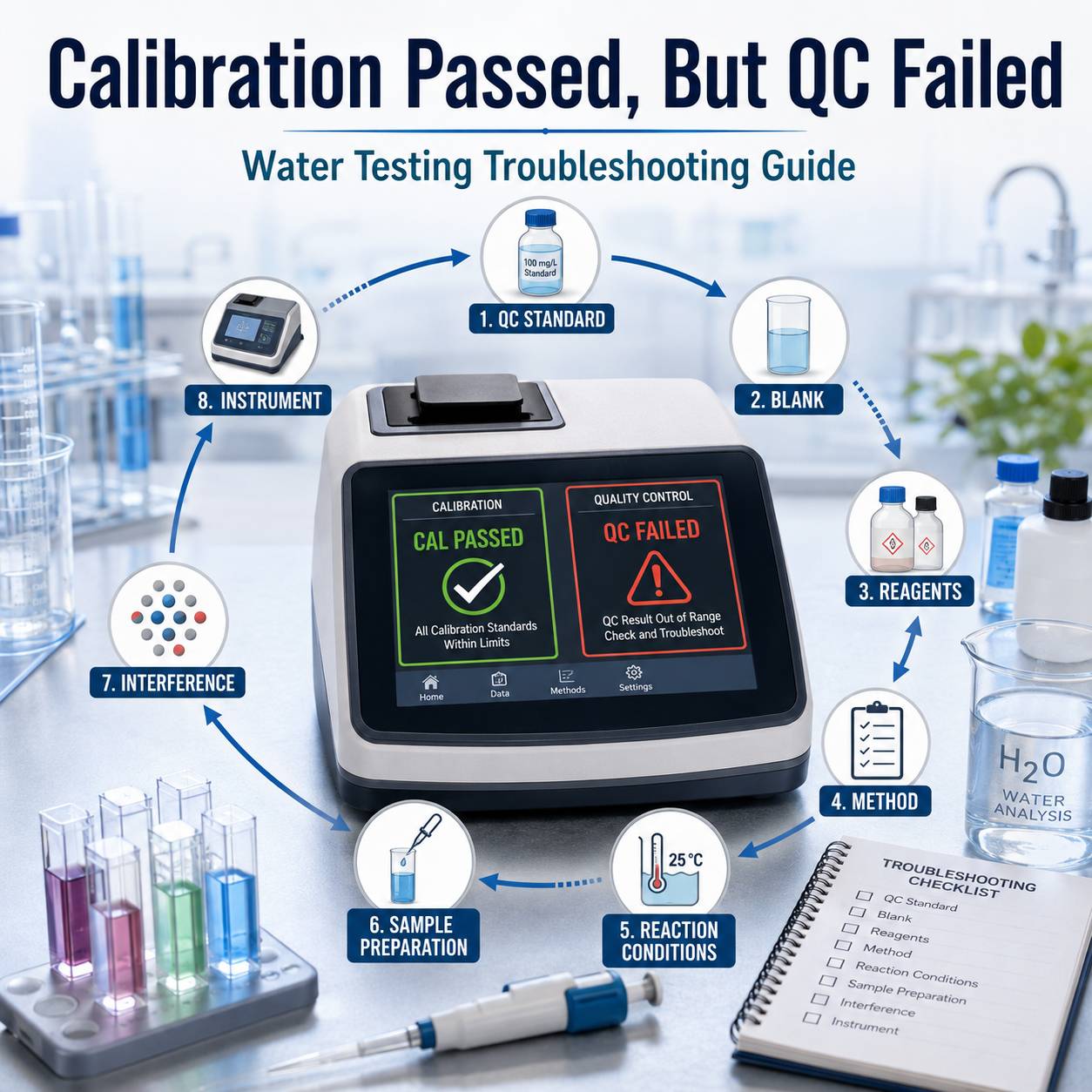
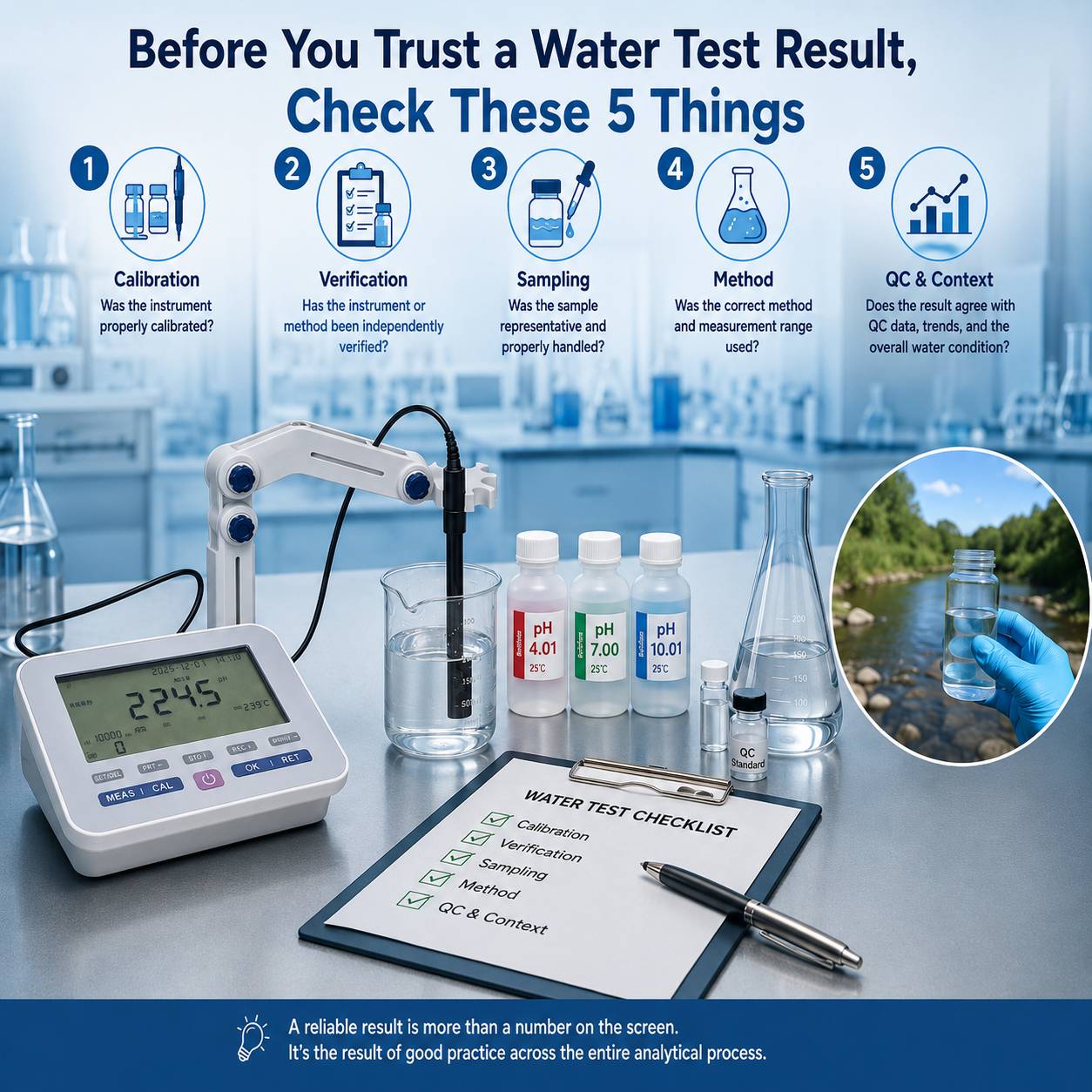
Some of the most common problems in routine COD testing are not caused by the photometer itself, but by method execution errors. Common mistakes in routine COD testing include using the wrong reagent range, insufficient sample mixing, inaccurate pipetting, incomplete digestion, poor vial cleaning before measurement, and overlooking chloride interference. In practice, these errors can affect result reliability more than users expect.
In reality, COD performance depends on the entire testing system:
l reagent quality
l correct sample volume
l proper digestion temperature and time
l good vial handling
l correct range selection
l sample representativeness
l photometer optical stability
l method calibration
That is why a reliable COD testing workflow should be evaluated as a complete solution, rather than as a single instrument purchase.
For many laboratories, the best setup is a matched system consisting of:
u a COD digestion reactor
u a compatible photometer
u validated COD reagent vials
u clear operating procedures
u routine quality control practices
Typical Workflow in a Routine Laboratory
In a routine water laboratory, COD photometric testing usually follows this process:
1.Collect and mix the sample properly
2.Select the appropriate COD reagent vial range
3.Add the defined sample volume
4.Seal and digest the vial in the reactor
5.Allow the vial to cool
6.Clean the outside of the vial if necessary
7.Insert the vial into the photometer
8.Read the result using the stored COD method
9.Record, interpret, and compare the result with process targets or discharge limits
This workflow is one of the reasons why photometric COD testing remains attractive. It combines relatively high analytical value with manageable routine operation.
COD Photometer vs. Spectrophotometer: Does It Matter Here?
In many routine COD applications, a dedicated photometer water analyzer is fully sufficient, as long as:
l it supports the required COD reagent vial methods
l its wavelength and optical design match the chemistry
l it has stable method programs
l it is suitable for routine laboratory use
A more advanced spectrophotometer may offer broader flexibility, but for routine COD control, flexibility is not always the first priority. More important factors are:
ü method compatibility
ü repeatability
ü ease of operation
ü robustness in daily testing
ü fit with the laboratory’s actual parameter menu
In other words, COD testing usually depends more on method execution quality than on having the most complex optical instrument.
So, “How to choose the right COD analyzer” is practical question for routine water labs.
How to Understand COD Photometric Testing Correctly
The most useful way to understand COD photometric testing is this:
COD photometric testing is a digestion-based chemical method that uses optical measurement to quantify the result of an oxidation reaction.
It is not:
l a direct optical reading of pollution
l a simple color test without chemical reaction
l a measurement that depends only on the instrument
It is a controlled analytical process in which chemistry creates the signal, and the photometer converts that signal into a usable number. Once this is understood, many practical questions become clearer:
u why digestion is necessary
u why reagent quality matters
u why low-range and high-range reagent vials are different
u why reactor performance affects accuracy
u why sample handling is so important
FAQ
1. Is COD measured directly by the photometer?
No. The photometer measures the optical change created after chemical digestion, not COD directly as a physical property.
2. Why is digestion necessary in COD testing?
Digestion oxidizes the substances in the sample and creates the measurable chemical change required for photometric analysis.
3. Can COD photometric testing be used for all water samples?
It can be used for many routine water and wastewater applications, but users must consider interferences, concentration range, and sample matrix.
4. Does a better photometer always guarantee better COD results?
Not by itself. COD accuracy depends on the full testing system, including reagent quality, digestion consistency, correct range selection, and proper sample handling.
Conclusion
COD photometric testing works by combining strong chemical oxidation with photometric measurement. The sample is digested in a reagent vial containing dichromate under acidic and high-temperature conditions. Oxidizable substances consume the oxidizing agent and produce a measurable chemical change. After digestion, the photometer measures the resulting optical signal and uses a stored calibration method to convert it into a COD value. That is the real working logic behind routine COD reagent vial testing.
For most routine laboratories, the key to better COD testing is not simply choosing a photometer with more features. It is understanding the chemistry, selecting the correct reagent range, maintaining consistent digestion conditions, and using a matched testing workflow that fits the real monitoring task.
In routine water quality analysis, COD is valuable not because it can perfectly measure everything, but because it provides a practical, standardized, and operationally meaningful indication of pollution load. That is exactly why COD photometric testing remains one of the most important methods in daily water laboratory work.
Within its engineered operating envelope, a multi-parameter photometer water quality analyzer and smart digestion instrument for COD testing remain the most efficient tools for routine wastewater analysis.
Example: iDea12 Benchtop Smart Digestion Instrument iWannaMP Multi-Parameter Photometer Water Quality Analyzer