+852 46135220

In wastewater testing, COD and ammonia nitrogen are two of the most commonly measured parameters. COD tells us something about the oxygen demand caused by organic matter and other oxidizable substances. Ammonia nitrogen tells us something about nitrogen pollution, biological treatment performance, and potential toxicity risk.
At first glance, they seem to describe different parts of wastewater quality. But in real wastewater treatment practice, COD and ammonia nitrogen are often read together because they help answer a more important question: Is the wastewater treatment system really under control?
A single COD result may show whether organic pollution is high or low. A single ammonia nitrogen result may show whether nitrification is working or not. But when these two parameters are interpreted together, they provide much deeper information about influent characteristics, biological treatment balance, process stability, aeration demand, and effluent risk.
In simple terms, COD and ammonia nitrogen are read together because COD shows the organic and oxidizable pollution load, while ammonia nitrogen shows the nitrogen load and nitrification pressure. When both parameters are interpreted together, operators can better understand whether a wastewater treatment process is overloaded, oxygen-limited, biologically unstable, or at risk of effluent non-compliance.
What Does COD Tell Us in Wastewater Testing?
COD stands for Chemical Oxygen Demand. It measures the amount of oxygen required to chemically oxidize organic matter and some inorganic reducing substances in water.
In simple terms, COD gives an indication of the total oxidizable pollution load in wastewater. A high COD value often suggests that the wastewater contains a significant amount of organic pollutants, such as:
l Food processing residues
l Industrial organic compounds
l Detergents
l Oils and grease
l Dyes and chemicals
l Decomposed biological materials
l Domestic sewage organics
In wastewater treatment, COD is especially important because organic matter consumes oxygen during biological degradation. If COD is too high, the treatment system may require more aeration, longer retention time, higher microbial activity, and better process control.
However, COD does not tell us exactly what the pollutants are. It does not distinguish between easily biodegradable organic matter and refractory organic compounds. This is one reason why COD must be interpreted carefully. COD is useful, but it is not a complete picture by itself.
What Does Ammonia Nitrogen Tell Us in Wastewater Treatment?
In practical wastewater reporting, ammonia nitrogen is often expressed as nitrogen mass concentration rather than only the concentration of NH₃ or NH₄⁺ itself. The balance between free ammonia and ammonium is affected by pH and temperature. This is why ammonia nitrogen data should not be interpreted without considering the actual sample condition and treatment process environment.
In wastewater, ammonia nitrogen mainly comes from:
l Human and animal waste
l Protein decomposition
l Urea hydrolysis
l Food processing wastewater
l Agricultural runoff
l Chemical manufacturing
l Landfill leachate
l Industrial nitrogen-containing compounds
Ammonia nitrogen is important because it affects both water quality and treatment performance. In receiving water bodies, excessive ammonia nitrogen can contribute to oxygen depletion, eutrophication, and aquatic toxicity. In wastewater treatment plants, ammonia nitrogen is closely related to nitrification. During nitrification, specific bacteria convert ammonia into nitrite and then nitrate. This process requires oxygen, stable pH, suitable temperature, and healthy microbial activity.
So when ammonia nitrogen remains high in treated effluent, it may indicate problems such as:
l Insufficient aeration
l Low dissolved oxygen
l Poor nitrifying bacteria activity
l Short sludge age
l Low temperature
l Toxic inhibition
l pH imbalance
l Hydraulic overloading
l Sudden influent shock
This is why ammonia nitrogen is often used as an important indicator of biological treatment stability.
Why COD and Ammonia Nitrogen Should Not Be Read Separately
COD and ammonia nitrogen represent different pollution dimensions. But wastewater treatment is not controlled by one parameter alone. A biological treatment system must remove both organic carbon and nitrogen compounds. These two processes are connected.
COD vs Ammonia Nitrogen: What Is the Difference?
Parameter | What It Mainly Indicates | Why It Matters in Wastewater Treatment |
COD | Organic and chemically oxidizable pollution load | Helps evaluate organic loading, oxygen demand, and treatment pressure |
Ammonia nitrogen | Nitrogen pollution and nitrification demand | Helps evaluate nitrification performance, biological stability, and effluent risk |
COD + Ammonia nitrogen together | Carbon load and nitrogen load relationship | Helps operators understand oxygen demand, process balance, and treatment reliability |
When COD changes, it may affect microbial activity, oxygen demand, and denitrification potential. When ammonia nitrogen changes, it may affect aeration demand, nitrification stability, and effluent compliance risk.
Reading COD and ammonia nitrogen together helps operators understand not only what the water contains, but also how the treatment process may respond.
For example:
u High COD may increase oxygen demand.
u High ammonia nitrogen also increases oxygen demand.
u Low COD may limit denitrification.
u High ammonia nitrogen with low COD may indicate poor carbon-to-nitrogen balance.
u Low COD with high ammonia nitrogen may suggest that organic removal is working, but nitrification is not.
u High COD and high ammonia nitrogen together may indicate influent shock or insufficient treatment capacity.
This combined interpretation is much more useful than looking at either parameter alone.
COD Shows Organic Load, Ammonia Nitrogen Shows Nitrogen Load
One of the simplest ways to understand the relationship is this: COD helps describe the carbon pollution load. Ammonia nitrogen helps describe the nitrogen pollution load.
In many wastewater systems, especially biological treatment systems, carbon and nitrogen balance matters. Microorganisms need carbon, nitrogen, phosphorus, oxygen, and other nutrients to grow and degrade pollutants.
If there is too much organic carbon, the system may become overloaded. If there is too much ammonia nitrogen, nitrification may become difficult. If COD is too low but ammonia nitrogen is high, there may not be enough carbon source for denitrification. This is especially important in systems designed for nitrogen removal.
In many municipal and industrial wastewater plants, operators often consider the relationship between organic carbon and nitrogen when evaluating whether the biological process is balanced. COD and ammonia nitrogen are therefore not only compliance parameters. They are also process control indicators.
What It Means When COD and Ammonia Nitrogen Are Both High
When both COD and ammonia nitrogen are high, the wastewater usually has a heavy pollution load. This may happen in:
l Untreated domestic sewage
l Food and beverage wastewater
l Livestock wastewater
l Landfill leachate
l Pharmaceutical wastewater
l Chemical wastewater
l Industrial discharge with mixed organic and nitrogen compounds
From a treatment perspective, this situation means the system may face two major oxygen demands at the same time. The first is oxygen demand for organic matter degradation. The second is oxygen demand for ammonia nitrification.
If aeration capacity is insufficient, both COD removal and ammonia nitrogen removal may become unstable. In this situation, operators may need to check:
n Influent loading
n Aeration performance
n Dissolved oxygen level
n Sludge concentration
n Sludge age
n Hydraulic retention time
n Toxic shock risk
n Process capacity
High COD and high ammonia nitrogen together often indicate that the system is under strong treatment pressure. In practice, this combination usually requires operators to check whether the aeration system, biological sludge activity, hydraulic retention time, and nutrient removal capacity are still suitable for the actual influent load.
The key question is not only whether the values are high, but whether the plant has enough biological and operational capacity to handle them.
What It Means When COD Is High but Ammonia Nitrogen Is Low
High COD with low ammonia nitrogen usually means the wastewater contains a high organic load but relatively low nitrogen load. This can occur in some industrial wastewaters, such as:
l Beverage wastewater
l Sugar processing wastewater
l Some food processing wastewater
l Certain chemical or dyeing wastewater
l Wastewater rich in carbohydrates or organic solvents
This situation may suggest that organic pollution is the main issue. However, it does not automatically mean the wastewater is easy to treat. Some high-COD wastewater contains readily biodegradable organic matter. Other high-COD wastewater may contain refractory compounds that are difficult to degrade biologically.
Therefore, COD alone cannot tell whether the organic matter is biodegradable. In this case, operators may need to consider additional parameters such as BOD, TOC, color, toxicity, or specific industrial indicators.
For biological treatment, very high COD may still require sufficient aeration and stable microbial activity. If the COD is mostly non-biodegradable, the system may show poor COD removal even if ammonia nitrogen is not a major issue.
What It Means When COD Is Low but Ammonia Nitrogen Is High
This is a very important situation in wastewater testing. Low COD with high ammonia nitrogen may indicate that organic removal is relatively effective, but nitrification is not working well. It may also indicate that the wastewater contains nitrogen-rich compounds but insufficient biodegradable carbon.
In biological nitrogen removal systems, this condition can create a process imbalance. For nitrification, ammonia needs to be oxidized by nitrifying bacteria. For denitrification, nitrate needs to be reduced by denitrifying bacteria, and these bacteria usually need a carbon source.
If COD is too low, there may not be enough carbon for denitrification. If ammonia nitrogen is high, but COD has already been removed, the system may still fail to achieve complete nitrogen removal. Possible causes include:
u Insufficient dissolved oxygen
u Low nitrifying bacteria population
u Short sludge retention time
u Toxic inhibition
u Low temperature
u Unstable pH
u Poor process design
u Lack of carbon source for denitrification
This is one reason why COD and ammonia nitrogen are often read together. A “good” COD result does not always mean the wastewater treatment process is fully under control. This is one of the most common reasons why relying only on COD can be misleading in wastewater monitoring. The organic load may look acceptable, but the nitrogen removal process may still be unstable or incomplete.
What It Means When COD and Ammonia Nitrogen Are Both Low
When both COD and ammonia nitrogen are low, it usually suggests that the wastewater has been effectively treated. This is often the expected result in final effluent monitoring.
However, even this result should be interpreted with context.
For example:
l Was the sample taken at the correct location?
l Was the plant operating normally at the time?
l Were there any dilution effects?
l Was the flow rate normal?
l Were the test methods suitable for the concentration range?
l Were there any abnormal influent changes before or after sampling?
Low COD and low ammonia nitrogen are generally positive indicators. But wastewater testing is not only about one sample result. Stable long-term trends are more meaningful than a single “good” value.
A treatment system is considered reliable not because it produces one acceptable result, but because it consistently maintains control under changing influent conditions.
COD and Ammonia Nitrogen Help Evaluate Biological Treatment Performance
In many wastewater treatment plants, biological treatment is the core process. Microorganisms remove organic matter and convert nitrogen compounds through different biological pathways. COD is closely linked to organic matter removal. Ammonia nitrogen is closely linked to nitrification.
When these two results are tracked together across the treatment process, they can help evaluate where problems may be occurring. For example:
1. Influent COD and ammonia nitrogen
Influent testing helps determine the incoming pollution load. If influent COD or ammonia nitrogen suddenly increases, the treatment system may experience shock loading.
2. Aeration tank monitoring
In the aeration tank, COD removal and ammonia oxidation are both related to oxygen supply and microbial activity. If ammonia nitrogen remains high in the aeration tank, nitrification may be weak.
3. Secondary effluent monitoring
Effluent COD and ammonia nitrogen help evaluate whether the biological treatment process is meeting discharge expectations.
4. Final discharge monitoring
Final effluent results are important for compliance, but they should also be connected to process data.
A final result tells what happened. Process monitoring helps explain why it happened. This is why many operators do not only test COD and ammonia nitrogen at the outlet. They monitor them at different process points.
COD and Ammonia Nitrogen Together Help Identify Process Problems
When COD and ammonia nitrogen trends are observed together, they can help diagnose different types of wastewater treatment problems.
COD Trend | Ammonia Nitrogen Trend | Possible Interpretation |
High COD | High ammonia nitrogen | Influent shock, overloading, insufficient treatment capacity |
High COD | Low ammonia nitrogen | Organic pollution is main issue; nitrogen load may be low |
Low COD | High ammonia nitrogen | Organic removal works, but nitrification may be poor |
Low COD | Low ammonia nitrogen | Treatment may be stable, but trend confirmation is needed |
COD fluctuates strongly | Ammonia nitrogen also fluctuates | Unstable influent or process disturbance |
COD stable | Ammonia nitrogen suddenly increases | Possible nitrification inhibition or aeration issue |
This type of combined interpretation is useful because wastewater treatment failures rarely appear through one parameter alone. For example, a plant may still remove COD well but fail ammonia nitrogen control. Another plant may have acceptable ammonia nitrogen but poor COD removal due to refractory organics. By reading both parameters together, operators can avoid oversimplified conclusions.
How COD and Ammonia Nitrogen Affect Oxygen Demand and Aeration
Another reason COD and ammonia nitrogen are often read together is that both are linked to oxygen demand. COD directly represents chemical oxygen demand. Ammonia nitrogen creates oxygen demand during nitrification. When ammonia is oxidized to nitrate, oxygen is consumed.
This means that high ammonia nitrogen can increase aeration requirements significantly.
In a biological wastewater treatment plant, aeration is often one of the largest energy costs. If operators only focus on COD, they may underestimate the total oxygen demand of the system. If ammonia nitrogen is high, the aeration system must support not only organic degradation but also nitrification.
This is why COD and ammonia nitrogen are both important for evaluating aeration load, energy demand, and process stability.
How COD and Ammonia Nitrogen Reflect Carbon-to-Nitrogen Balance
In biological nitrogen removal, the relationship between organic carbon and nitrogen is very important. COD can be used as a practical indicator of available organic carbon, although not all COD is biodegradable. Ammonia nitrogen represents nitrogen load. Therefore, the COD-to-nitrogen relationship should be treated as a practical screening indicator, not an exact measure of biodegradable carbon availability. For advanced nitrogen removal, BOD, nitrate, nitrite, total nitrogen, alkalinity, and process configuration may also need to be evaluated.
When the COD-to-nitrogen balance is not suitable, treatment performance may suffer. If COD is too high, the system may prioritize organic removal and consume oxygen rapidly. If ammonia nitrogen is too high, nitrification may require more oxygen and longer sludge age. If COD is too low, denitrification may lack sufficient carbon source. This is especially important in wastewater systems that need to remove total nitrogen.
In such systems, a low COD/ammonia nitrogen relationship may indicate that an external carbon source may be required for better denitrification. However, this judgment should not be made from one result alone. Operators should combine COD, ammonia nitrogen, nitrate, nitrite, total nitrogen, dissolved oxygen, pH, alkalinity, sludge age, and process conditions.
COD and ammonia nitrogen are important starting points, but they are not the entire diagnosis.
Why Routine Testing Often Prioritizes COD and Ammonia Nitrogen
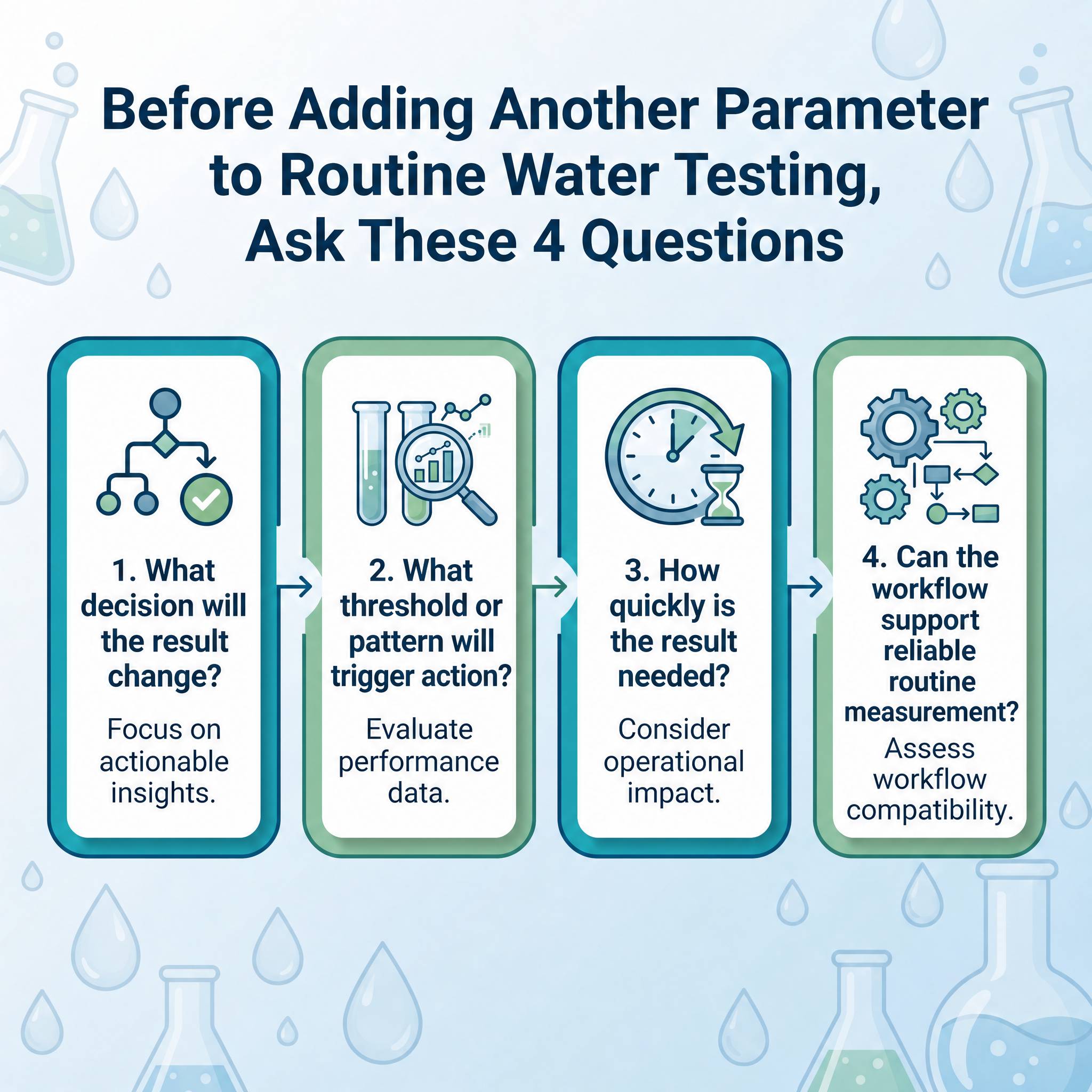
Many wastewater laboratories cannot test every possible parameter every day. Routine testing must focus on parameters that are practical, meaningful, and directly connected to treatment decisions. COD and ammonia nitrogen are often prioritized because they meet these conditions.
They are:
l Widely applicable
l Closely related to pollution load
l Important for regulatory monitoring
l Useful for biological treatment control
l Practical for routine laboratory testing
l Suitable for trend analysis
l Relevant to operational decisions
For municipal wastewater plants, COD and ammonia nitrogen help assess organic and nitrogen removal. For industrial wastewater systems, they help evaluate process load and treatment risk. For environmental monitoring, they help identify pollution characteristics.
For laboratory testing, they provide essential information without requiring overly complex analysis.
This is why COD and ammonia nitrogen are among the most common routine wastewater testing parameters.
Why One Normal Result Does Not Mean the System Is Stable
One common mistake in wastewater testing is treating a single normal result as proof that the system is fully controlled. For example:
u COD is within the limit, so the process is considered stable.
u Ammonia nitrogen is acceptable, so nitrification is assumed to be healthy.
u One final effluent sample looks good, so no further investigation is needed.
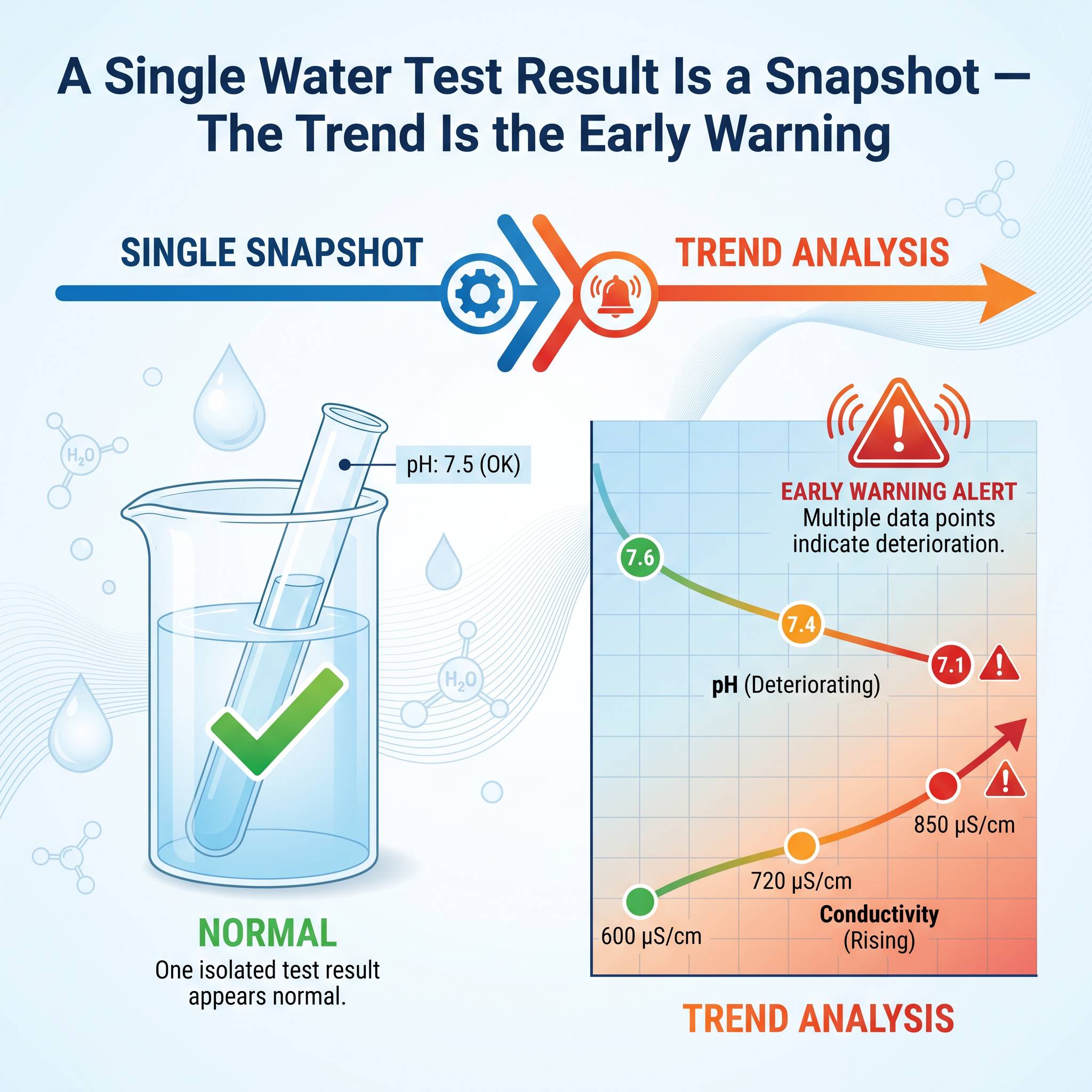
This can be misleading. Wastewater quality changes with time, flow, industrial discharge, weather, production cycles, temperature, and biological conditions. A single COD or ammonia nitrogen value is only a snapshot. A trend is more useful.
For example:
n COD may slowly increase before an organic loading problem becomes obvious.
n Ammonia nitrogen may rise before nitrification failure becomes severe.
n COD may remain stable while ammonia nitrogen begins to increase.
n Both may fluctuate after influent shock or toxic inhibition.
Routine monitoring should therefore focus not only on isolated results, but also on patterns.
COD and ammonia nitrogen become more powerful when they are used for trend interpretation.
Common Testing Considerations for COD
COD testing is usually performed using digestion and colorimetric measurement. For routine wastewater laboratories, COD analyzers, digestion reactors, photometers, or spectrophotometers are commonly used. However, COD testing can be affected by several factors.
These include:
l Sample homogeneity
l Digestion temperature
l Digestion time
l Chloride interference
l Reagent range selection
l Suspended solids distribution
l Pipetting accuracy
l Color or turbidity interference
l Instrument calibration
l Blank correction
For high-chloride wastewater, chloride interference can cause COD results to appear higher if not properly controlled. For wastewater with high suspended solids, poor sample mixing may cause poor repeatability. For low-concentration effluent, using the wrong reagent range may reduce accuracy.
Therefore, COD results should always be interpreted together with proper sampling and method control. The number itself is important, but the reliability of the number is equally important.
Common Testing Considerations for Ammonia Nitrogen
Ammonia nitrogen testing is commonly performed by colorimetric methods such as Nessler reagent or salicylate methods, depending on regulatory and laboratory requirements. Ammonia nitrogen measurement can also be affected by sample and method conditions.
Possible factors include:
l Sample preservation
l pH condition
l Temperature
l Turbidity
l Color interference
l Residual chlorine
l High salinity
l Reagent reaction time
l Calibration curve quality
l Instrument wavelength accuracy
In wastewater samples, matrix effects can be significant. Industrial wastewater may contain substances that interfere with color development. Highly colored or turbid samples may require pretreatment or method adjustment.
For accurate ammonia nitrogen results, the method must match the sample type and concentration range. This is especially important when ammonia nitrogen is used for compliance monitoring or process troubleshooting.
Instrument Considerations for Routine COD and Ammonia Nitrogen Testing
For routine wastewater laboratories, COD and ammonia nitrogen are often measured by colorimetric methods. COD usually requires a digestion step before optical measurement, while ammonia nitrogen is commonly measured through reagent-based color development. In this workflow, the reliability of the result depends not only on the instrument, but also on sample preparation, digestion consistency, reagent quality, wavelength selection, calibration, and operator practice.
But how to choose the right COD analyzer for a wastewater treatment plant? A suitable COD and ammonia nitrogen testing setup should therefore match the sample concentration range, laboratory workload, required accuracy, and daily operation habits. For many routine wastewater laboratories, a practical combination of digestion equipment, photometer or spectrophotometer, and validated reagent methods is often more useful than simply choosing the most advanced instrument. That’s why better instruments do not always create better water data.
How to Interpret COD and Ammonia Nitrogen Results More Effectively
To make COD and ammonia nitrogen results more useful, wastewater laboratories and operators should focus on several practical principles.
1. Test at meaningful process points
Do not only test final effluent. Influent, biological treatment stages, and final discharge may all provide useful information.
2. Compare trends, not only single values
One result is a snapshot. A trend shows whether the system is stable, improving, or deteriorating.
3. Match the method to the sample
High-strength wastewater and low-concentration effluent require different reagent ranges and quality control approaches.
4. Connect results with operating conditions
COD and ammonia nitrogen should be interpreted together with dissolved oxygen, pH, temperature, sludge age, flow rate, and process changes.
5. Watch for abnormal combinations
Low COD with high ammonia nitrogen, or stable COD with rising ammonia nitrogen, may reveal problems that single-parameter interpretation may miss.
6. Use data for decisions
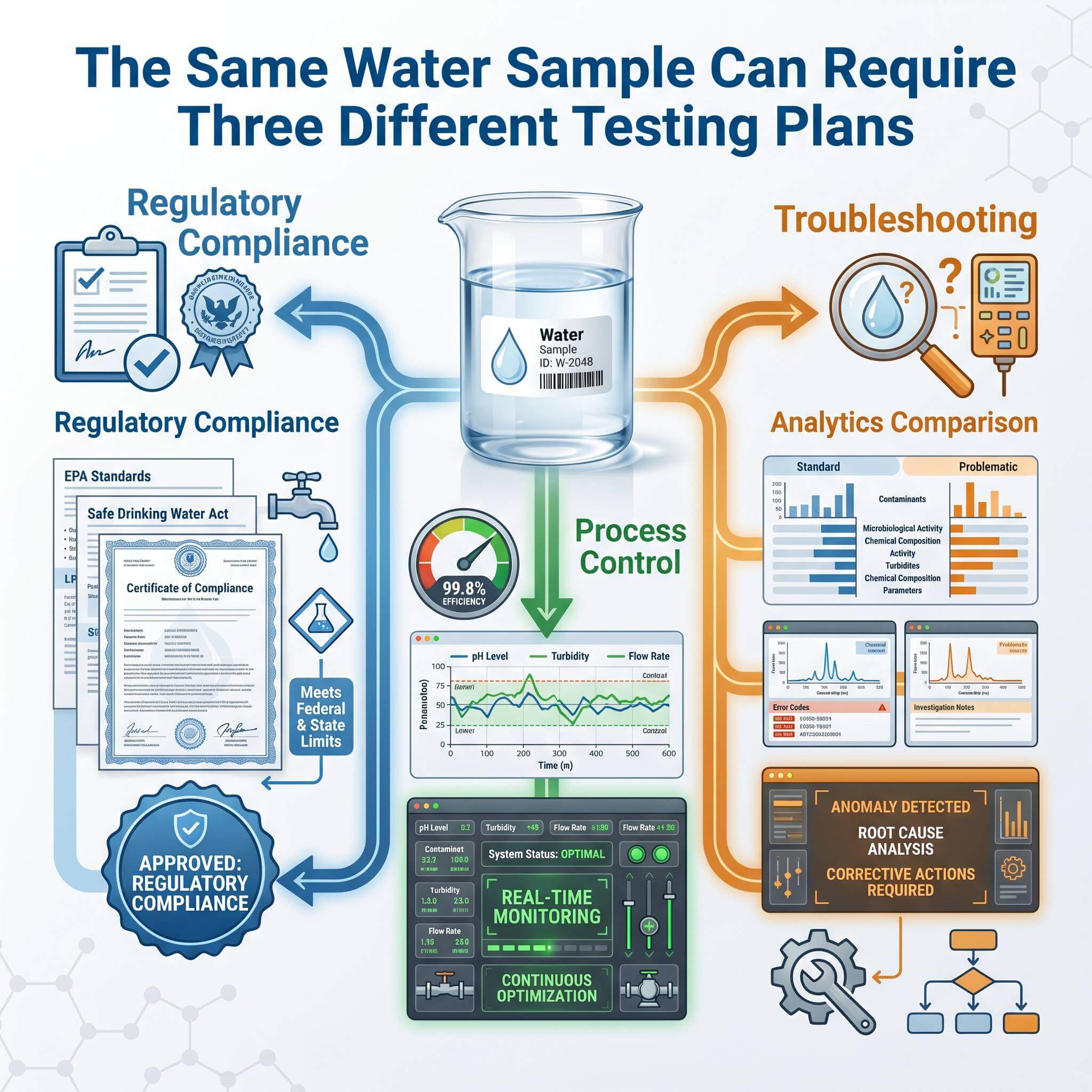
Testing is not only for reporting. Good wastewater testing should help operators adjust aeration, check process stability, identify shock loads, and prevent compliance failures.
Conclusion: COD and Ammonia Nitrogen Tell a Better Story Together
COD and ammonia nitrogen are often read together because they describe two essential dimensions of wastewater pollution. COD shows the organic and oxidizable load. Ammonia nitrogen shows nitrogen pollution and nitrification demand. When interpreted together, they help wastewater operators and laboratories understand influent characteristics, biological treatment balance, aeration demand, process stability, and effluent risk.
A COD result alone may tell whether organic load is high or low. An ammonia nitrogen result alone may tell whether nitrogen removal is under pressure. But together, they provide a more practical view of how the wastewater treatment system is performing. This is why COD and ammonia nitrogen are not just routine test items. They are core indicators for understanding whether wastewater treatment is truly under control.
For routine wastewater analysis, the goal is not simply to measure more parameters. The goal is to measure the right parameters, interpret them correctly, and connect the data with real treatment decisions. COD and ammonia nitrogen are two of the most important parameters for doing exactly that.
For laboratories and operators, the real value of COD and ammonia nitrogen testing is not only compliance reporting, but also understanding whether the wastewater treatment process is biologically stable, operationally balanced, and ready for real treatment decisions.