+852 46135220

In many water quality testing projects, the first question is often: “Which parameters should we test?”
At first, this sounds reasonable. Water quality testing is usually described by parameters: pH, turbidity, conductivity, chlorine, COD, ammonia nitrogen, hardness, iron, nitrate, phosphate, and many others. But in routine water quality analysis, starting with a parameter list can easily lead to the wrong testing program.
A better question should come first: “What problem are we trying to understand, control, or prevent?”. Because routine water testing is not about measuring as many parameters as possible. It is about generating useful data for a specific decision.
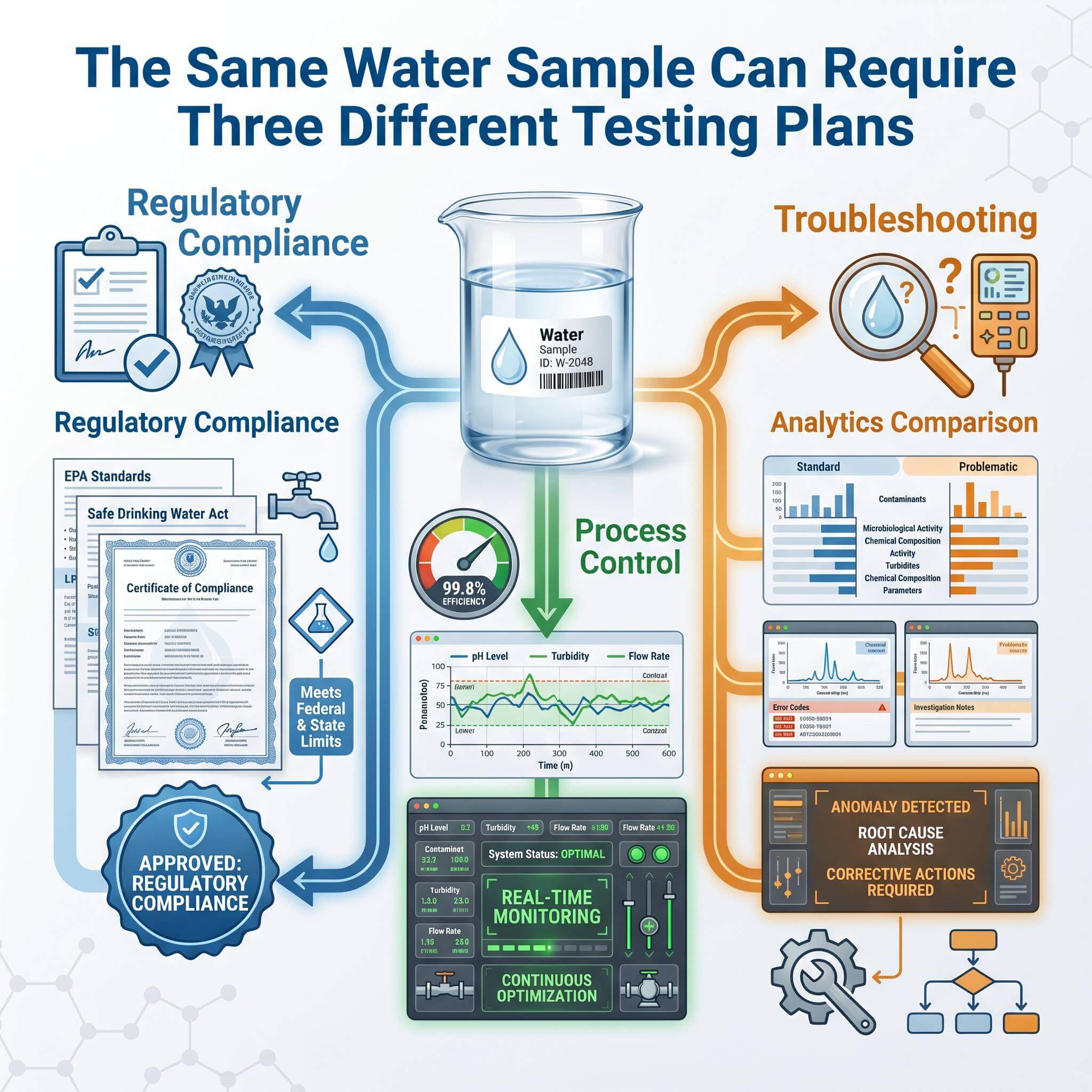
In routine water quality testing, the best parameter list should be built from the water application, the main risk, and the decision that the result must support. A drinking water system, a wastewater plant, a boiler system, a cooling tower, and an RO system may all need water testing, but they do not need the same routine parameters. A practical routine water testing program should answer four basic questions:
l What water system is being tested?
l What problem or risk needs to be controlled?
l Which parameters can indicate that risk reliably?
l What action will be taken when a result is abnormal?
This is why routine water quality testing should start with the problem first, and the parameter list second.
The Problem With Starting From a Parameter List
Many laboratories and water users build their routine test programs by copying a standard list of parameters. For example:
l pH
l Conductivity
l Turbidity
l Chlorine
l Hardness
l Alkalinity
l Iron
l Ammonia
l COD
l Nitrate
l Phosphate
This approach looks complete, but it may not be practical. Some parameters may be unnecessary for the actual application. Some important parameters may be missing. Some parameters may be tested too frequently, while others are only needed when a specific problem appears.
The result is a testing program that produces data, but not always useful decisions.
A long parameter list can also create hidden problems:
u More reagents to manage
u More methods to maintain
u More operator training required
u More QC checks needed
u More chances for error
u More time spent interpreting results
u Higher operating cost without better control
In routine water testing, more data does not automatically mean better water quality management.
Routine Testing Should Support a Decision
Every routine water test should help answer a practical question. For example:
n Is the water safe for its intended use?
n Is the treatment process working?
n Is the system stable?
n Is contamination entering the system?
n Is corrosion or scaling likely?
n Is the discharge within control limits?
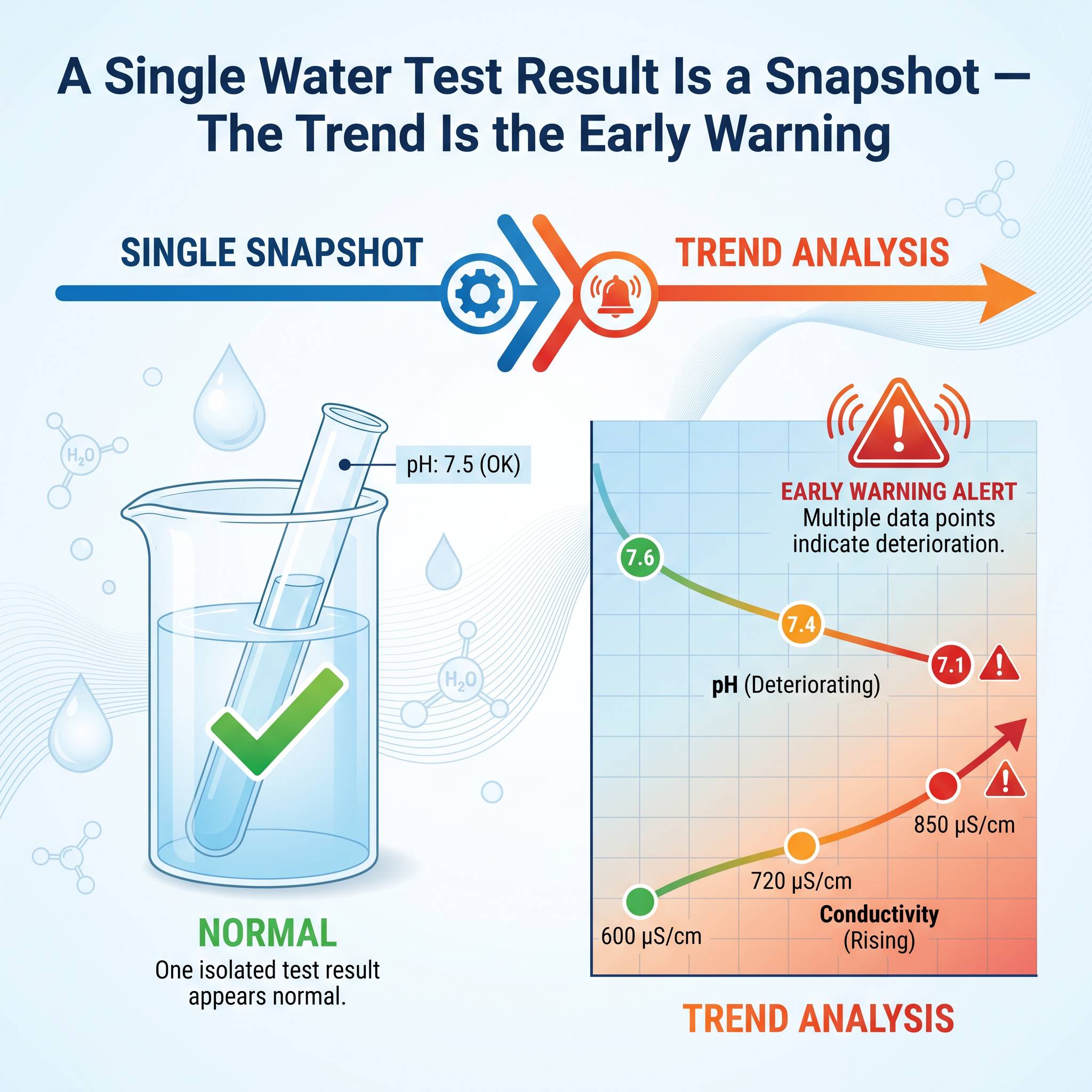
n Has something changed since the last test?
n Does the result require action?
If a parameter does not help answer one of these questions, it may not belong in the routine testing program. This does not mean the parameter is unimportant. It means it may not be necessary for routine monitoring. There is a big difference between: “This parameter matters scientifically.” And “This parameter should be tested every day in this specific workflow.”
A good routine testing program is not built from the most complete parameter list. It is built from the most relevant decision logic. A useful way to evaluate any routine parameter is to ask: “What will this result change?”
If the result will change a treatment setting, confirm a control point, trigger an investigation, support compliance reporting, or identify a system change, then the parameter has a clear routine purpose. If the result will only be recorded but never used for action, the parameter may belong in occasional investigation testing rather than daily routine testing. This distinction is especially important for small and medium-sized laboratories, where staff time, reagent management, QC records, and instrument maintenance must be controlled carefully.
Example 1: Drinking Water Routine Testing
For drinking water, many users want to test “everything” because safety is important. But routine drinking water testing usually starts with basic control indicators. Typical routine parameters may include:
l pH
l Turbidity
l Free chlorine or total chlorine
l Conductivity or TDS
l Color
l Temperature
l Microbiological indicators, depending on the testing program
These parameters do not explain every possible water quality risk. But they are useful because they help monitor basic treatment performance, disinfection control, distribution stability, and possible changes in water condition. For example, free chlorine is not tested because it tells everything about water quality. It is tested because it helps answer a very specific question: Is there enough disinfectant residual to help maintain microbial safety in the distribution system? Turbidity is also not only a visual parameter. It can indicate filtration performance, particle breakthrough, or changes in source water or distribution conditions. Conductivity cannot identify every contaminant, but it can quickly show changes in dissolved ion content.
In this case, the routine parameter list should start from the drinking water control problem: Is the water treatment and distribution system still under control?
Not simply: How many parameters can we measure?
Example 2: Wastewater Routine Testing
Wastewater testing has a different problem. For many wastewater laboratories, the key questions are:
n How strong is the organic load?
n Is the biological treatment process stable?
n Is nitrogen removal working?
n Is the discharge moving toward compliance limits?
n Is the influent changing?
n Is there a shock load or process upset?
That is why routine wastewater testing often focuses on parameters such as:
l COD
l BOD, where required
l Ammonia nitrogen
l Total nitrogen
l Total phosphorus
l pH
l Suspended solids
l Conductivity
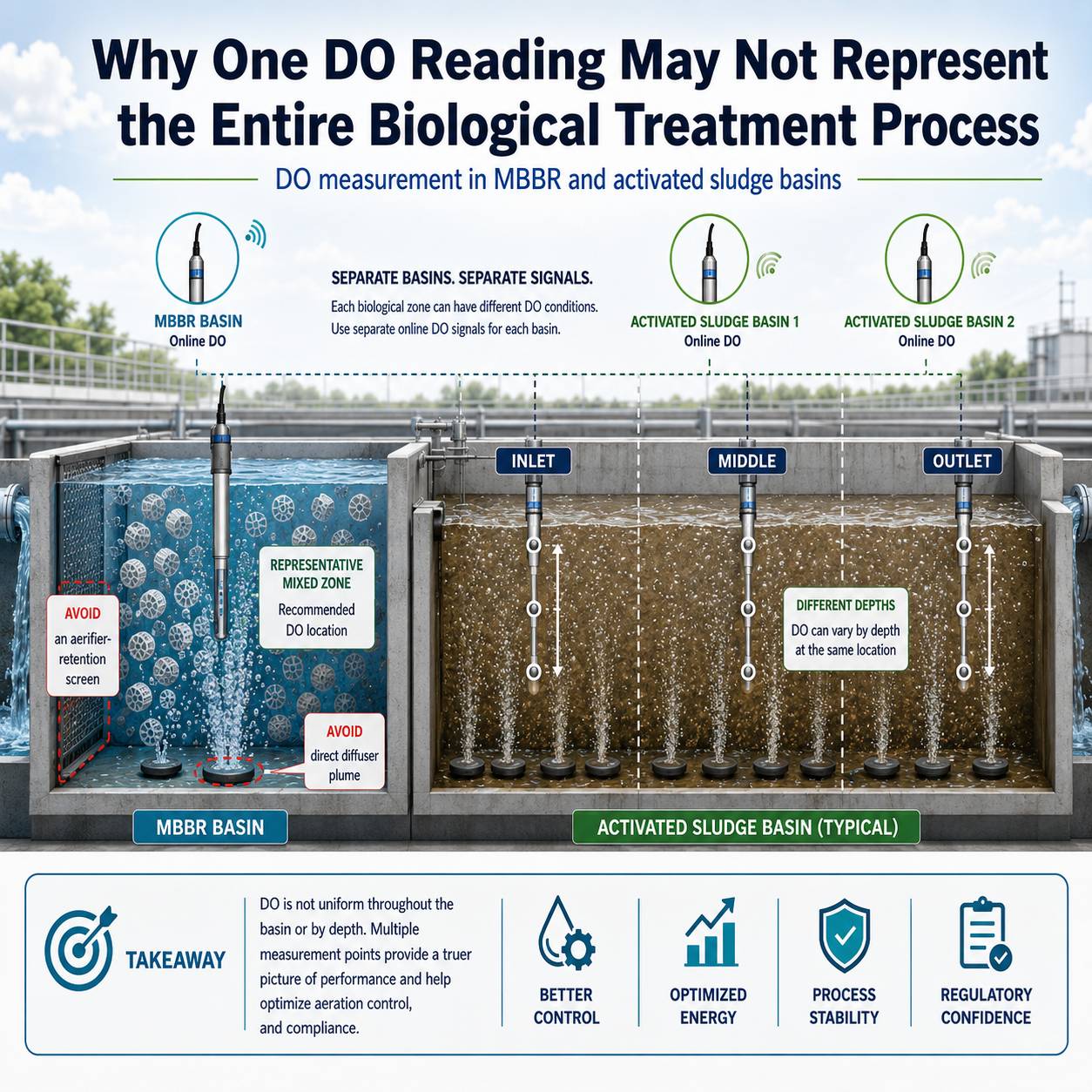
l Dissolved oxygen for process control
l Sludge-related indicators in treatment operation
Here, COD is not tested simply because it is a common parameter. It is tested because it helps estimate organic pollution load and treatment efficiency. Ammonia nitrogen is not just another number. It helps evaluate nitrification performance and nitrogen-related process stability. pH is not only a basic parameter. In wastewater treatment, pH affects biological activity, chemical reactions, precipitation, and toxicity risk.
So the wastewater routine testing program should not begin with a generic water parameter list. It should begin with the treatment and discharge problem: What do we need to know to control the process and avoid non-compliance?
Example 3: Boiler Water and Cooling Water
Industrial water systems often show why parameter selection must begin with the problem. In boiler water, the key risks are usually:
n Scaling
n Corrosion
n Carryover
n Poor chemical dosing control
n Steam system contamination
Therefore, routine testing may focus on parameters such as:
l pH
l Conductivity
l Hardness
l Alkalinity
l Silica
l Phosphate
l Iron
l Dissolved oxygen, depending on system requirements
In cooling water, the main concerns may be:
n Scaling
n Corrosion
n Biological growth
n Concentration cycles
n Treatment chemical control
So the routine parameters may include:
l pH
l Conductivity
l Hardness
l Alkalinity
l Chloride
l Iron
l Free chlorine or biocide residual
l Microbiological indicators, depending on the system
Both are “industrial water,” but the testing priorities are not the same. A parameter that is critical in one system may be secondary in another. This is why routine testing should always ask: What failure mode are we trying to prevent?
If the risk is scaling, hardness, alkalinity, conductivity, silica, and temperature-related interpretation may matter more. If the risk is corrosion, pH, dissolved oxygen, iron, conductivity, chloride, and chemical residuals may be more important. If the risk is biological growth, disinfectant residual, microbiological checks, temperature, and system cleanliness may be more relevant.
The parameter list should follow the risk, not the other way around.
Example 4: RO and Ultrapure Water
For reverse osmosis and ultrapure water systems, users may assume that “clean water” needs fewer tests. But the opposite can be true. When dissolved solids are very low, small changes become more important. Parameters such as conductivity, resistivity, TOC, silica, boron, particles, and microbial indicators may become critical, depending on the application.
For RO systems, routine monitoring often focuses on:
l Feed water conductivity
l Permeate conductivity
l Rejection rate
l pH
l Hardness or scaling indicators
l Chlorine residual before membrane protection
l Pressure and flow data
l Silica or specific ions when relevant
For ultrapure water, the key question may not be whether the water looks clean. It may be: Is the water clean enough for a sensitive process? In that case, a “normal” drinking water parameter list is not enough. The parameter selection must match the process requirement.
Again, the starting point is not: Which parameters are commonly tested in water?
The starting point is: What quality risk would damage this process?
Problem-First Parameter Selection Examples
Water testing problem | Common routine parameters | Main decision supported |
Drinking water disinfection control | Free chlorine, total chlorine, pH, turbidity, temperature | Is disinfection performance under control? |
Wastewater organic load monitoring | COD, BOD, suspended solids, pH | Is the treatment process receiving or removing organic load effectively? |
Nitrogen removal in wastewater | Ammonia nitrogen, nitrate, total nitrogen, pH, DO | Is nitrification or denitrification working properly? |
Boiler water scaling risk | Hardness, alkalinity, conductivity, silica, phosphate | Is the boiler system protected from scale formation? |
Cooling water control | pH, conductivity, hardness, alkalinity, chloride, biocide residual | Is the cooling system stable against scaling, corrosion, and biological growth? |
RO membrane protection | Feed conductivity, permeate conductivity, chlorine residual, hardness, silica, pressure and flow | Is the membrane protected and performing correctly? |
Ultrapure water monitoring | Resistivity, TOC, silica, particles, microbial indicators | Is the water suitable for a sensitive process? |
This table is only a general example. The final routine parameter list should always be adjusted according to the water source, treatment process, regulatory requirement, sample matrix, and operational risk.
Why the Same Parameter Can Have Different Meanings
One common mistake in routine water testing is assuming that the same parameter always has the same meaning. For example, pH is tested in many water applications. But its meaning changes depending on the system. In drinking water, pH may relate to corrosion control, disinfection performance, taste, and distribution stability. In wastewater, pH may affect biological treatment, chemical dosing, precipitation, and toxicity. In boiler water, pH may be directly related to corrosion and scaling control. In laboratory reagent water, pH measurement itself can be difficult and may not be the best primary indicator of purity.
The parameter name is the same, but the decision behind the result is different. This is why a routine testing program should not only define parameters. It should define the purpose of each parameter.
A practical routine testing table should include:
l Parameter
l Why it is tested
l Where the sample is taken
l How often it is tested
l What method is used
l What control range or limit applies
l What action is required when the result is abnormal
Without this logic, the laboratory may collect results without knowing what the results are supposed to trigger.
The Danger of Copying Another Laboratory’s Parameter List
It is common for one laboratory to copy another laboratory’s test list. This may seem efficient, but it can create problems. Two laboratories may both test “industrial wastewater,” but their actual conditions may be completely different:
u Different industries
u Different raw materials
u Different treatment processes
u Different discharge limits
u Different contaminants
u Different sample matrices
u Different operator skill levels
u Different instruments and methods
u Different reporting requirements
A parameter list that is suitable for one site may be incomplete or excessive for another.
For example, a food processing wastewater lab may focus heavily on COD, BOD, suspended solids, ammonia, phosphorus, pH, and fat/oil-related indicators. A metal finishing wastewater lab may need much stronger attention to heavy metals, cyanide, chromium species, pH control, and complex matrix interference. Both are wastewater laboratories, but the routine testing logic is very different.
Copying the parameter list without copying the decision context can lead to poor testing design.
Routine Parameters vs Investigation Parameters
Another important distinction is the difference between routine parameters and investigation parameters. Routine parameters are tested regularly because they support ongoing control. Investigation parameters are tested when something abnormal happens or when a specific risk needs to be studied.
For example, emerging pollutants, trace metals, PFAS, pesticides, pharmaceutical residues, or complex organic compounds may be very important in some contexts. But they may not belong in the daily routine testing program for every water laboratory.
This does not mean they are unimportant. It means they usually require a different testing purpose, different instruments, different sampling procedures, different detection limits, and often a more specialized laboratory workflow. That’s why some water parameters never belong in routine analysis — even if they matter.
Routine testing should not try to answer every possible water quality question. Routine testing should answer the questions that are needed regularly for control, compliance, and operational decision-making. When the problem changes, the parameter list should change. That’s why most water laboratories only test 5-8 parameters in routine water analysis.
How to Choose Routine Water Testing Parameters
To choose routine water testing parameters, the laboratory should not begin with the longest available test menu. It should begin with the water quality problem. A simple selection logic is:
1.Define the application
Drinking water, wastewater, boiler water, cooling water, RO water, ultrapure water, aquaculture water, and industrial process water all have different testing priorities.
2.Identify the main risk
The risk may be microbial safety, organic pollution, scaling, corrosion, nutrient discharge, membrane fouling, disinfection failure, or process contamination.
3.Select indicators that can show the risk
For example, hardness and alkalinity may indicate scaling risk, while COD and ammonia nitrogen may indicate wastewater treatment load and nitrogen removal performance.
4.Match the frequency to the urgency
Some parameters need continuous or daily monitoring. Others may only need weekly, monthly, seasonal, or event-based testing.
5.Choose a method the laboratory can perform reliably
The best method is not only accurate on paper. It must also fit the operator skill level, sample matrix, reagent control, QC requirements, throughput, and reporting needs.
This approach helps laboratories build a routine water testing program that is practical, reliable, and decision-oriented.
Why “More Parameters” Can Make Routine Testing Weaker
Adding more parameters can sometimes improve understanding. But in routine testing, unnecessary parameters can also weaken the workflow. A larger test list means the laboratory must manage more methods, more reagents, more calibration or verification steps, more QC records, and more interpretation rules. If the team cannot properly maintain the workflow, data quality may decrease. This is especially important for small and medium-sized laboratories.
A laboratory may buy a multi-parameter instrument with many available methods, but only use a small number of them correctly. The unused or rarely used methods may not add real value. That’s why “More Parameters” doesn't always lead to better water quality data.
Routine testing should be simple enough to operate consistently, but complete enough to support the decision. That balance is more important than the total number of available parameters.
A Simple Question for Every Routine Parameter
Before adding a parameter to a routine testing program, ask: If this result is abnormal, what action will we take? If there is no clear action, the parameter may not be ready for routine monitoring. This question helps separate useful routine testing from unnecessary data collection.
For example:
u If pH is abnormal, adjust dosing or investigate process change.
u If conductivity increases, check contamination, concentration cycles, or source water change.
u If COD rises, check influent load, treatment performance, or possible discharge risk.
u If ammonia increases, check nitrification, contamination, or process upset.
u If chlorine residual drops, check dosing, demand, contact time, or distribution conditions.
u If hardness increases, check scaling risk and softening performance.
Good routine testing creates a connection between result and response. Without that connection, the laboratory may only be producing numbers.
Conclusion: Start With the Problem, Then Choose the Parameters
Routine water quality testing should not begin with the longest possible parameter list. It should begin with the actual water quality problem.
A practical testing program should define the water application, identify the main risk, select relevant parameters, choose reliable methods, and connect every result to a clear decision. For some laboratories, the right routine program may include only five to eight core parameters. For others, it may require a broader test menu. The important point is not the number of parameters, but the purpose behind each one.
In routine water quality analysis, a useful result is not just a number on a report. It is a number that helps the user understand the system, control the process, confirm treatment performance, or take action before a small problem becomes a serious one.